
Does your dog sprint to the treat jar, gobble the reward in two seconds, and then stare at you as if you're hiding the next one? You're not alone, and it's a completely understandable habit. The good news is that treat time can do so much more than fill a few seconds. With a handful of simple dog treat enrichment ideas, you can turn a quick snack into a game that keeps your dog's brain busy, their body moving, and their tail wagging. Let's walk through five practical ways to make it happen at home, using things you probably already have.
Table of Contents
- Quick Takeaways
- Start With Small, High-Value Rewards
- Turn Mealtime Into a Puzzle
- Set Up a Snuffle Mat for Scent Games
- Try Hide and Seek and Indoor Games
- Keep Training Sessions Short and Upbeat
- Compare Your Enrichment Options
- Keep Treat Time Safe and Supervised
- Frequently Asked Questions
- References
Quick Takeaways
Here's a quick snapshot of what you'll learn. Keep it handy as you set up your first games.
| Key Insight | Explanation |
|---|---|
| Keep the pieces small | Pea-sized rewards keep the fun going without pushing your dog past their daily treat allowance. |
| Save the best for the game | Reserve your most aromatic chips for puzzles and searches, and use everyday treats for basic practice. |
| Slow the eating down | A muffin tin or box puzzle turns a snack gobbled in seconds into a few minutes of problem solving. |
| Let the nose lead | Snuffle mats and scent games use the sense your dog relies on most to understand the world. |
| Keep sessions short | A few focused minutes is often plenty, and ending on a success leaves your dog keen for the next round. |
| Supervise every DIY item | Remove any cardboard, rope, or fleece your dog starts to chew or swallow, and rebuild the game with safer materials. |
Start With Small, High-Value Rewards
Before you add any games, take a close look at the treats themselves. Many owners reach for a handful of biscuits and then wonder why the fun fizzles out after a minute. Size and value make a bigger difference than most people expect.
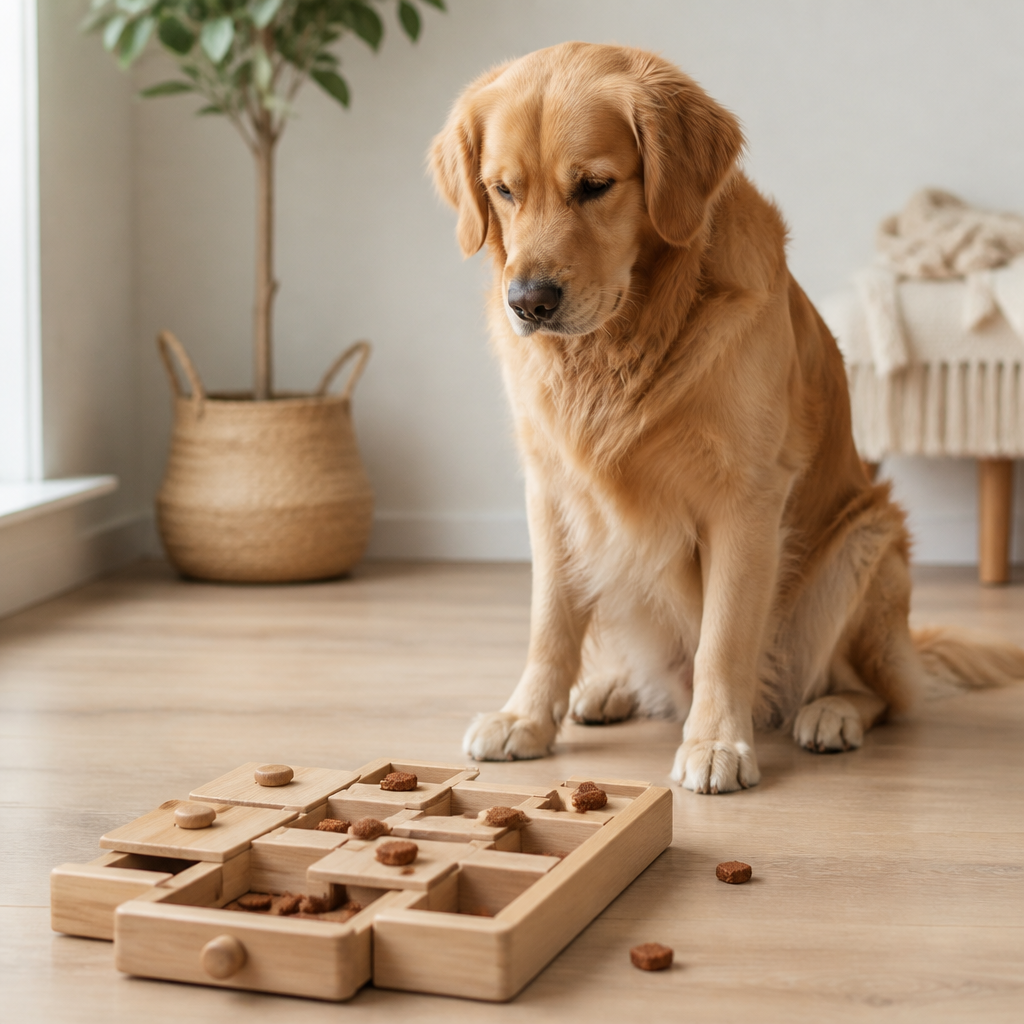
Positive treat training guidance from Dogs Inc. suggests starting with soft, pea-sized treats. Small pieces keep dogs focused, are quick to eat, and help you avoid overfeeding. That same logic carries straight over to enrichment, where you'll be handing out more rewards than during a quick training session.
High-value rewards matter too. The same guidance mentions treats such as bits of cheese, and the principle is simple: a reward your dog genuinely wants is worth the effort. Our air-dried chicken, beef, and turkey chips are a natural fit because they're single-ingredient and have a strong, meaty aroma that many dogs find hard to ignore. You can break a chip into smaller pieces to get that pea-sized size without losing the flavour.
Sort Your Treats Into Two Tiers
A simple way to organise your rewards is to split them into two tiers. Everyday treats go into a jar for obedience practice and quick praise. Your top tier, the chips your dog gets only during games, stays in a separate bag so it keeps its appeal.
Leerburg's guide to using food rewards in training notes that treats should be small enough to use during training, and it recommends varying the amounts you give. In practice, that means a slightly bigger reward for a harder task and a smaller one for an easy repeat. Your dog learns that effort pays off, and you avoid turning every moment into a feast.
Pre-Portion Before You Play
Counting out the day's rewards before you start saves a lot of guesswork. Put your portioned pieces in a small bowl or sandwich bag, and keep the rest sealed away. When the bag runs out, the games finish, which keeps things tidy and your dog's intake on track.
Pro tip: Keep a clean, dry sandwich bag by your puzzle station so you can grab a fresh portion without rummaging through the treat jar.
Turn Mealtime Into a Puzzle
Mealtime is one of the easiest moments to add enrichment, because your dog is already hungry and paying attention. The ASPCA's guidance on canine DIY enrichment describes food puzzles as a way to slow eating and provide mental stimulation, and many of them can be built from household items.
Think of each meal as a small problem to solve. The trick is starting easy so your dog wins early, then making the puzzle a little harder as confidence grows. No rush, and no need to build the perfect setup on day one.
Muffin Tin Puzzle With Chips and Toys
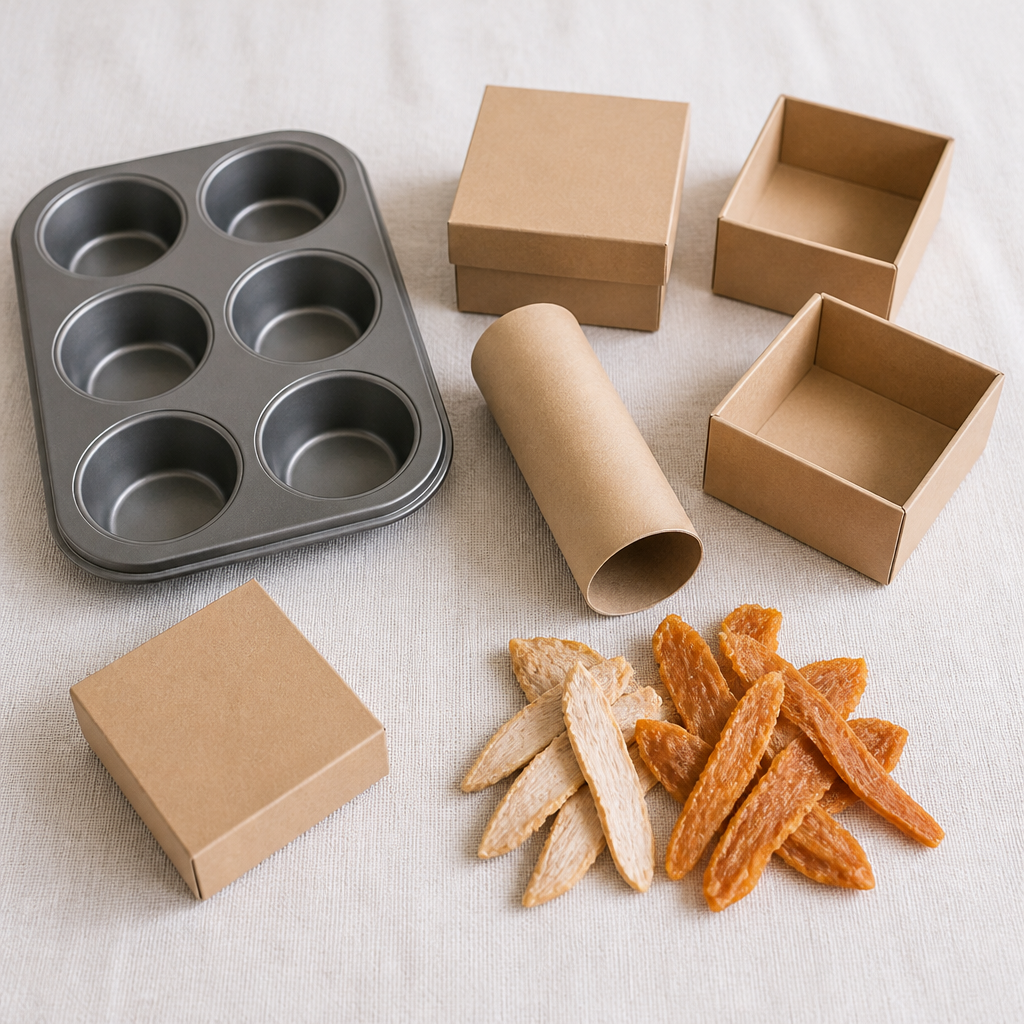
The muffin tin is a favourite for good reason. Distribute kibble, or a mix of kibble and a few crumbled chips, across several cups, then place a tennis ball or another safe toy on top of each one. Your dog has to nudge or move the toys to reach the food.
Start with a few cups filled and the toys set loosely so the food is easy to find. Once your dog works out the pattern, fill more cups and settle the toys a little more firmly. Choose toys too large to swallow, and remove any that start to get chewed apart.
Box and Paper Roll Puzzles
For a box puzzle, you need three boxes that nest inside each other. Place a smelly treat in the smallest box, fold the top closed, and nest it inside the next size up. Your dog has to open each layer to reach the reward, which is a satisfying progression for a curious dog.
Paper rolls are even quicker to prepare. Fold one end of a toilet paper or paper towel roll, drop in a few treats, and fold the other end. A dog who loves shredding will likely make short work of it, so supervise closely and keep this one for short sessions.
Pro tip: A common mistake is building a puzzle that's too hard on the first try. If your dog gives up, lift the lid a little or leave one treat sitting on top to rebuild momentum.
Set Up a Snuffle Mat for Scent Games
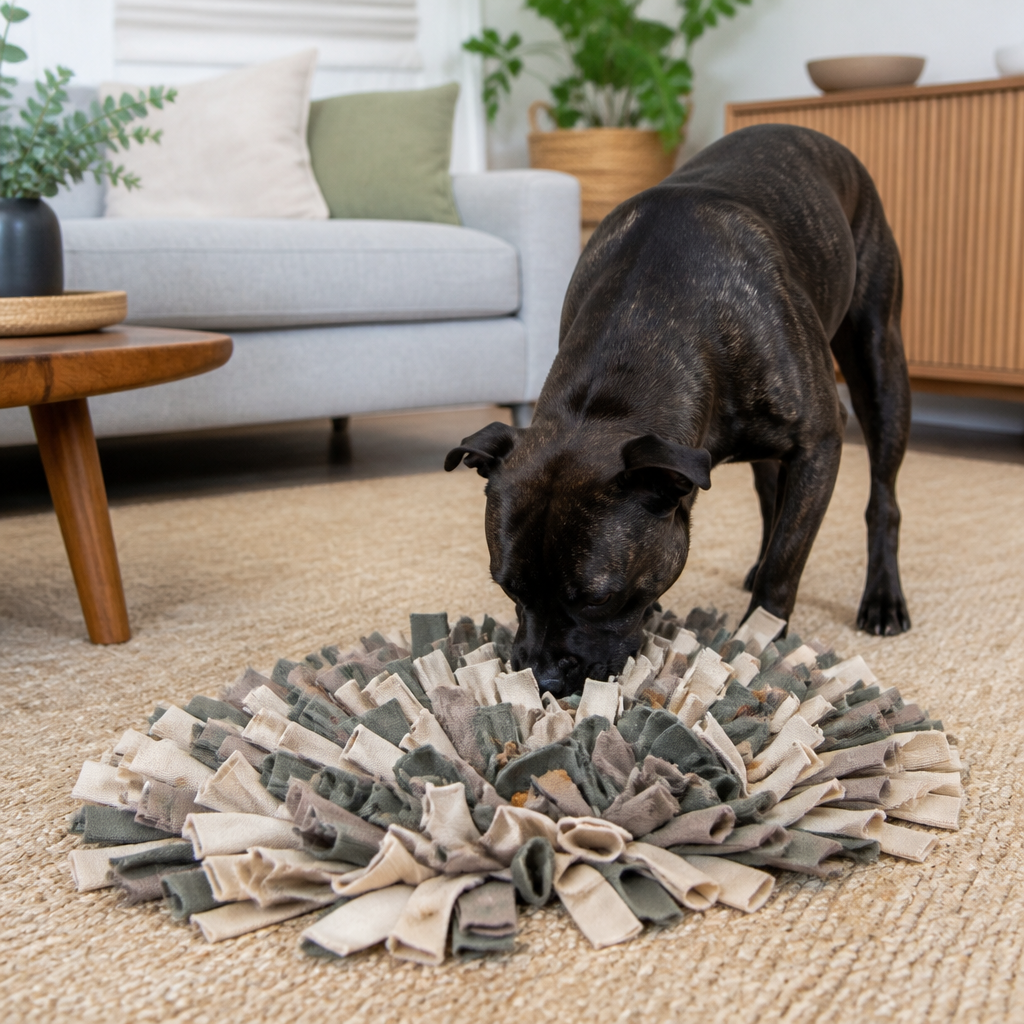
If your dog loves sniffing every blade of grass on the walk, a snuffle mat gives them a chance to do the same thing indoors. The ASPCA notes that sniffing can be stimulating and calming, and that it helps a dog gather information about their environment. A snuffle mat puts that natural skill to work.
The mat itself is easy to make. You can use a high-pile bathroom mat, or tie fleece strips onto a rubber mat, then hide kibble or chips throughout it. Nothing fancy is required.
Making a Simple Snuffle Mat at Home
Choose a mat that stays flat on the floor, because a slippery one will slide every time your dog digs. Hide only a few pieces at first, and push them down between the fibres so your dog has to sniff and dig to find them. Over time you can add more.
Keep an eye on the mat as your dog works. Loose strands can be pulled off and swallowed, so trim anything that starts to come away, and put the mat away after each session. A tightly woven mat with a rubber backing is a safer choice for dogs who like to tug.
Starting Scent Games Indoors
Scent games take the snuffle idea into the room. Show your dog a high-value chip, say "find it," and tuck it somewhere easy, like behind a couch leg. When your dog finds it, celebrate with praise and let them enjoy the reward.
Work up slowly. Start in one room with the treat in plain view, then hide it under a cushion, then around a corner. Each step makes the search a bit harder, and your dog's nose gets a real workout. Many dogs seem to enjoy this even more than a plain bowl of food.
Try Hide and Seek and Indoor Games
When the weather turns wet or too windy for long outings, dogs can feel cabin fever just as much as we do. An indoor enrichment guide written by a certified canine enrichment specialist notes that a bored dog may turn to chewing, barking, or whining to fill the time.
Indoor games give that energy somewhere to go. A few minutes of treat-based play can take the edge off, especially on a wet spring afternoon when the backyard is off limits. You don't need much space or any special equipment to get started.
Indoor Agility With Treat Rewards
The ASPCA's environmental enrichment ideas include an indoor agility course built from furniture and household items, with high-value treats as rewards. Set up a simple path with a couple of low obstacles, such as a folded blanket to step over, a rolled towel, and two chairs to weave around.
Place a chip on each obstacle as a reward for effort, rather than saving everything for the end. Keep the setup low and stable, and never ask your dog to jump from or over anything that could tip. Confidence builds faster when the course feels safe.
Treat Hunts for Rainy Days
A treat hunt is the simplest version of indoor play. Hide a handful of pieces around one room, release your dog, and let them search. Keep it short, because a long hunt with lots of hidden food can leave some dogs overexcited.
Rotate the rooms and the hiding spots to keep things fresh. If you have a safe, comfortable crate or kennel, you can hide a few treats near it as well, but always check the items you use first. A little planning goes a long way.
Keep Training Sessions Short and Upbeat
Training and enrichment share a lot of common ground. Both rely on rewards, both benefit from clear timing, and both work best when your dog stays keen. A dog who gets a few minutes of fun and then loses interest is giving you a clear signal, and the kind thing is to stop there, not push on.
Enrichment doesn't need to be elaborate. A few pieces of food, a simple box, and a patient moment can give a dog more satisfaction than an expensive toy.
Pair Every Reward With a Clear Marker
Marker training, sometimes called clicker training, uses a short sound or word to mark the exact moment your dog does the right thing, followed by a treat. Leerburg's guide to food rewards covers this method, and it's one of the easiest ways to make your rewards feel meaningful.
Choose a marker you'll always use, such as "yes" or a click, and say it the instant your dog gets the behaviour right. Your dog learns that the marker means "that's exactly what I wanted," and the treat that follows becomes the payoff they're hoping for.
End Each Session on a Win
Finish each session while your dog still wants more. If a puzzle or hunt has become frustrating, make the next round easier, and close with something your dog already does well. The last reward of the day should land on a success.
Pro tip: Keep a short list of two or three cues your dog already nails, and finish every session with one of them so your dog leaves feeling proud.
Compare Your Enrichment Options
Not every setup suits every dog. A nervous puppy, a food-driven terrier, and a senior dog with stiff joints will each get something different from the same game. This comparison can help you pick a sensible starting point.
| Enrichment Option | Best For | Watch Out For |
|---|---|---|
| Muffin tin puzzle | Fast eaters and dogs learning to work for their food | Toys small enough to swallow, and tins that slide on hard floors |
| Snuffle mat | Sniffing lovers, rainy days, and calmer sessions | Loose fibres that can be pulled out and swallowed |
| Box or paper roll puzzle | Beginners and quick, low-cost fun | Cardboard that gets chewed or softened, so replace it often |
The muffin tin works well when you want a clear, structured puzzle that's easy to adjust. It's a good choice at dinner time for a dog who eats too quickly. The snuffle mat suits quieter sessions, since sniffing is calming for many dogs, and it's ideal for a wet day when a chasing game might get too wild.
Box and roll puzzles are the cheapest and quickest option, but they wear out fast. Think of them as a first step rather than a long-term setup.
Choosing Your First Setup
If your dog is a fast eater, start with the muffin tin at mealtime. If your dog loves sniffing or you're stuck indoors, try the snuffle mat first. Once that one feels easy, add a second setup to keep things interesting.
Keep Treat Time Safe and Supervised
Every game in this article involves some level of supervision, and that's by design. The ASPCA's DIY guidance recommends closely and actively supervising your dog while homemade items are accessible, and removing any item your dog tries to swallow. It's a simple rule that makes a big difference.
Treat time should add to your dog's life, not add a risk. Watch how your dog handles each setup, and be ready to adjust the moment something doesn't feel right.
Watch for Chewing and Swallowing
Some dogs treat every puzzle as a chew toy. If pieces of cardboard, fleece, or rope start coming apart, stop the game and put the materials away. Replace anything damaged rather than hoping it holds together for one more round.
Also be mindful of how your dog eats. A dog who inhales food may need the puzzle removed once it's empty, so there's nothing left to tear apart or swallow.
Count Treats Into the Daily Diet
Games can quietly add up. Count the chips you use in enrichment as part of your dog's daily treat allowance, and trim a little from their regular meal to balance it. If your dog has a health condition or a sensitive stomach, check with your vet before adding new treats, and introduce new chips gradually.
Pro tip: Watch the fun level, not just the treat count. If your dog looks focused and happy, you're on the right track. If they start to look frantic, take a break and try again later.
Frequently Asked Questions
How many treats should I use in a puzzle game?
Count the pieces as part of your dog's daily treat allowance, and trim a little from regular meals to balance it. Small, pea-sized pieces make it much easier to stay on track without overfeeding.
Are DIY puzzles safe for every dog?
Not every dog is a safe match for DIY puzzles. Supervise closely, remove any item your dog starts to chew apart or swallow, and skip DIY projects for dogs who destroy everything they touch.
How often should I play treat games?
A few minutes once or twice a day is plenty for most dogs. Mix treat games in with regular walks, play, and rest so they're one part of a balanced day.
Can I use Treaty Treats chips in these games?
Yes. Our air-dried chicken, beef, and turkey chips are single-ingredient, so you can break them into small pieces for a snuffle mat or muffin tin. Keep the pieces small and count them as part of the daily allowance.
What if my dog ignores the puzzle?
Don't worry, it happens to many dogs at first. Make the game easier, use a more aromatic reward, and show your dog where the food is for the first few rounds before hiding it again.
We'd love to hear from you, so tell us which idea your dog tried first and how it went.
References
Follow Us
Subscription Subscribe to our newsletter and receive a selection of cool articles every weeks

Real Talk & Tail Wags

best dog treats Australia
Cheap dog treats can cause tummy upset, weight gain, and hidden costs. Learn what bargain snacks contain and how to...

dog treat transition guide
Switching dog treats naturally? Follow this gentle dog treat transition guide to avoid tummy trouble and keep your dog happy....

air dried meat treats
Discover what protein-dense dog treats really mean for your pet's health, why air-dried meat treats deliver superior nutrition, and how...


