
You've made a great decision choosing natural treats for your dog. But maybe the first time you offered one, your pup ended up with a soft tummy or looser stools than usual, and now you're wondering if you did something wrong. You didn't. Switching dog treats naturally is genuinely one of the kindest things you can do for your dog's health, and a little digestive grumbling during the changeover is common and very manageable. The secret is a slow, patient introduction that gives your dog's gut time to catch up with your good intentions. This guide walks you through exactly how to do that.
Table of Contents
- Why Dogs Get Upset Stomachs When Treats Change
- Quick Takeaways
- The Step-by-Step Dog Treat Transition Guide
- Reading Your Dog's Signals During the Switch
- Why Single-Ingredient Treats Make This Easier
- Treat Transition Approaches Compared
- Dogs Who Need Extra Care During the Transition
- Frequently Asked Questions
- References
Why Dogs Get Upset Stomachs When Treats Change
A dog's digestive system is genuinely good at processing food, but it relies on a stable community of gut bacteria to do the work efficiently. When the diet changes, even for the better, those bacteria need time to adjust. Think of it like reseeding a garden: the good stuff takes a little while to take root.
Most commercial treats your dog may have been eating contain fillers, artificial preservatives, and added flavourings. When you switch to something like a clean, single-ingredient air-dried meat treat, your dog's gut encounters a very different nutritional profile, typically much higher in protein and completely free of the synthetic compounds it was used to processing. That shift is a positive one long-term, but short-term it can cause some temporary looseness or gas.
Sudden changes, even to high-quality treats, can temporarily disrupt digestion. Patience during the introduction process helps ensure your dog enjoys their new snacks without any tummy troubles.
The good news is that this is almost always temporary. With a gradual introduction, most dogs settle into their new natural treats without any drama at all.
Quick Takeaways
| Key Insight | Explanation |
|---|---|
| Start with tiny portions | Offer just one small piece on the first day and watch closely for 24 hours before giving more. |
| Introduce one new treat at a time | Swapping multiple treats at once makes it impossible to identify what caused any reaction. |
| Give it 7 to 10 days | Most dogs adjust comfortably within a week to ten days of slow, consistent introduction. |
| Keep total treat volume the same | Don't add extra treats on top of the old ones. Swap, don't stack, to avoid overloading the gut. |
| Single-ingredient treats are the gentlest option | Fewer ingredients means fewer variables. If something disagrees, you know exactly what it is. |
| Loose stools for 1 to 2 days can be normal | A brief adjustment period is common. Persistent or worsening symptoms mean it's time to slow down or see your vet. |
| High-protein treats need even slower introductions for some dogs | Dogs switching from low-protein commercial treats may take a little longer to adapt to rich, meat-based options. |
Understanding these key points before you begin makes the whole process feel much less stressful. You're not navigating this blind, and your dog's gut is far more resilient than it might seem in those first few days.
The Step-by-Step Dog Treat Transition Guide
This dog treat transition guide is built around one principle: slow and steady is almost always successful. The steps below are adapted for dogs moving from conventional processed treats to premium, natural options like air-dried beef, chicken, or turkey chips.
Step 1: Start with a Single, Small Piece
On day one, offer just one small piece of the new treat, something roughly the size of your thumbnail or smaller. Don't replace the usual treat entirely yet. Just let your dog experience the new flavour and texture while you watch for any reaction over the next 24 hours.
Watch for signs like softer-than-normal stools, excessive gas, or a change in appetite. If everything looks fine the next morning, you're ready for step two.
Step 2: Build Up Gradually Over 7 to 10 Days
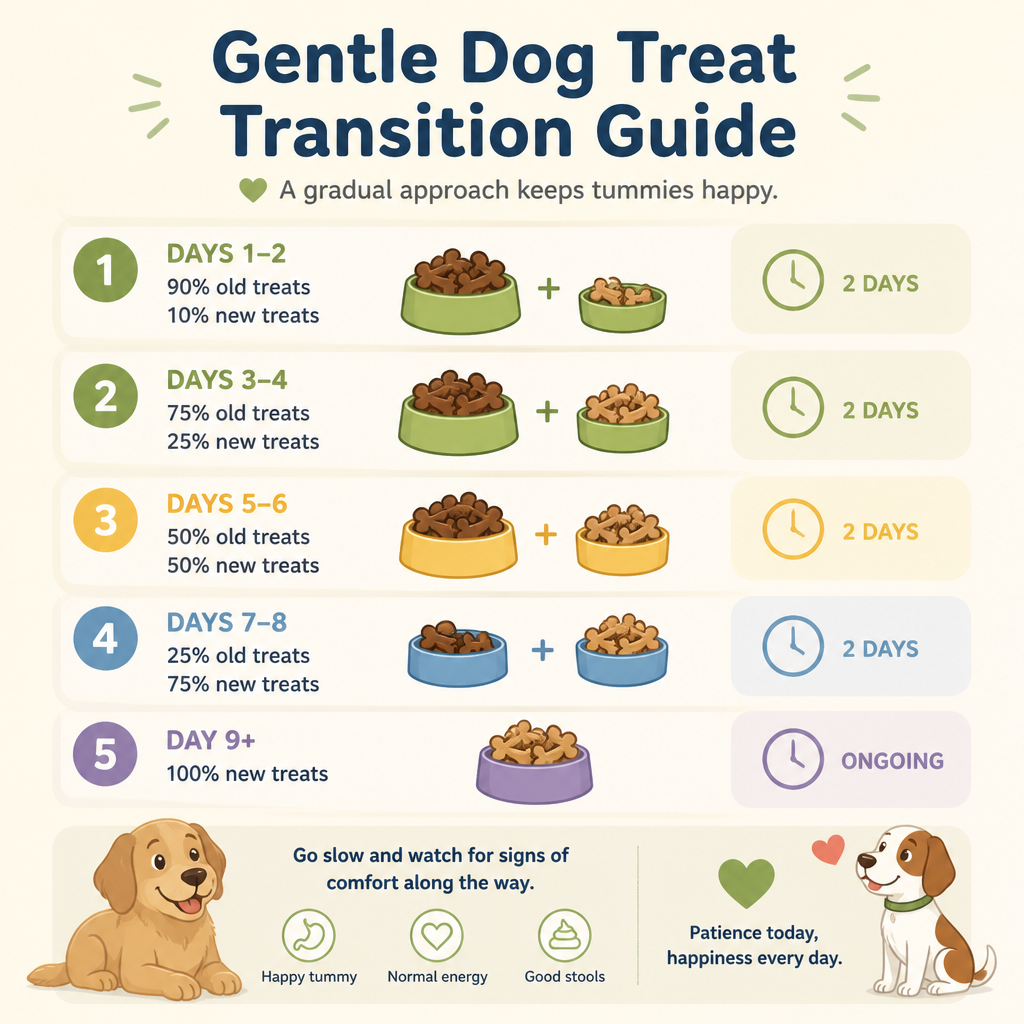
From day two onward, gradually increase the portion of the new treat while reducing the old one. A rough guide that works well for most dogs looks like this: start with about 25% new treat and 75% old, then shift to 50/50 by mid-week, then 75% new by day eight or nine, and fully transitioned by day ten.
If your dog has a sensitive stomach, extend this to 14 days without any rush. There's no prize for speed here, and a slower transition nearly always means a smoother one.
Step 3: Keep the Timing and Routine Consistent
Dogs are creatures of habit, and consistent feeding routines help prevent digestive upset even when the treats themselves are changing. Give treats at the same time of day, in the same setting, with the same calm energy. Predictability settles the gut as much as it settles the mind.
Pro tip: Break your natural treats into smaller pieces during the transition period. You'll use fewer treats per session, keep the protein load manageable for a gut that's still adjusting, and make the reward feel just as frequent to your dog.
Step 4: Stick to One New Treat at a Time
It's tempting to revamp your dog's entire treat drawer at once. Resist that urge during the transition. Introduce one treat at a time, let it settle for a week or so, and then bring in the next. This way, if any tummy trouble does appear, you know exactly which treat to pause on and which ones are already working well.
Reading Your Dog's Signals During the Switch
Your dog can't tell you in words how they're feeling, but they'll show you clearly if you know what to look for. During a treat transition, you're looking for a short, mild adjustment period, not a prolonged reaction.
Signs the Transition Is Going Smoothly
Healthy energy levels, a good appetite, and stools that look normal or only slightly softer for a day or two are all signs things are going well. Your dog being enthusiastic about the new treat is also a great signal that their body is accepting it.
Signs to Slow Down or Pause
If you notice vomiting, significant diarrhea that lasts more than two days, or a complete loss of appetite, that's your cue to slow the transition down considerably. Go back to mostly the old treat and try again at a slower pace. A transition happening too quickly is the most common cause of digestive upset, and the fix is simply more time.
If symptoms persist or seem severe, always check with your vet. Some dogs have underlying sensitivities that need professional guidance, and that's completely okay.
Pro tip: Keep a simple note on your phone during the transition. Jot down what treat you gave, how much, and how your dog's digestion looked the next day. This takes 30 seconds and gives you a clear picture of what's working, especially if you have a particularly sensitive pup.
Why Single-Ingredient Treats Make This Easier
One of the biggest advantages of switching to natural treats for dogs in Australia like Treaty Treats' air-dried chips is the ingredient simplicity. When a treat contains just one thing, say real chicken or real beef, with nothing else added, the transition becomes much more predictable.
With multi-ingredient commercial treats, if your dog has a reaction, you're left guessing which of the 15 listed ingredients caused it. Was it the artificial colour? The maltodextrin filler? The "natural flavouring" that isn't quite as natural as it sounds? You simply don't know.
With a single-ingredient treat, the guesswork disappears entirely. If your dog handles beef beautifully but shows mild sensitivity to chicken, you've learned something genuinely useful about their digestion, and you can make smarter choices going forward.
High-protein, air-dried meat treats are also naturally more nutrient-dense than most puffed or baked commercial treats. This means you need fewer of them to achieve the same reward effect, which actually makes managing the transition portion size much easier in practice.
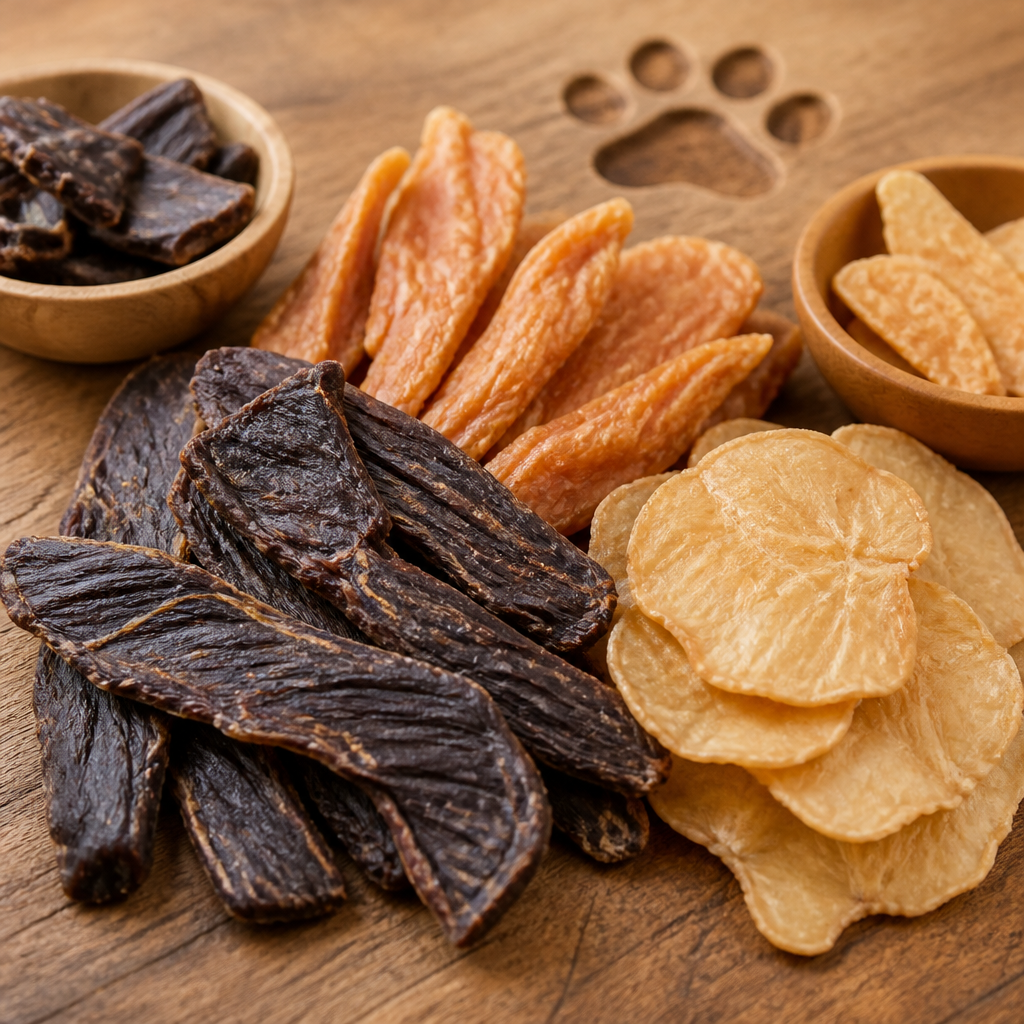
Treaty Treats' beef, chicken, and turkey chips are batch-made in-house from 100% human-grade meat with no fillers, preservatives, or additives. That clean profile is genuinely easier on a dog's gut than the long ingredient lists found in many conventional treat products, which is exactly why they're a smart first natural treat choice.
Treat Transition Approaches Compared
There are a few different strategies people use when switching their dog to new treats. Here's an honest look at how they stack up for minimising digestive upset.
| Approach | How It Works | Best For |
|---|---|---|
| Cold switch | Stop the old treat entirely and introduce the new one immediately. | Young, robust dogs with no history of digestive sensitivity. Higher risk of tummy trouble. Not generally recommended. |
| Gradual blend (7 to 10 days) | Slowly replace the old treat with the new one over about a week and a half, increasing the new treat percentage every few days. | Most dogs. Low risk of digestive upset. The most widely recommended approach for a reason. |
| Extended gentle transition (14 days or more) | The same gradual approach but stretched over two or more weeks with very small incremental increases. | Dogs with sensitive stomachs, food allergies, older dogs, or dogs with a history of digestive issues. The safest option for reactive digestive systems. |
In practice, the gradual blend works for the vast majority of dogs. The extended gentle transition is worth choosing if your dog has shown sensitivities before, or if you're moving them from heavily processed treats to a high-protein natural option for the very first time.
Dogs Who Need Extra Care During the Transition
Some dogs genuinely need a slower, more careful approach, and that's not a weakness, it's just their body's way of working. If your dog falls into any of these categories, build in a few extra days and don't rush the process.
Puppies and Senior Dogs
Puppies have developing digestive systems that are still establishing their gut bacteria. Senior dogs often have slower digestive function and less resilience to rapid changes. Both groups benefit from an extended, very gentle transition, starting with very small crumbles of the new treat rather than a whole piece.
Dogs with Known Food Sensitivities or Allergies
If your dog has already shown reactions to certain proteins or ingredients, single-ingredient treats are your best friend. Start with the protein your dog has the least history with, introduce it slowly, and give it a full two weeks before trying a second protein source. The transparency of a one-ingredient treat means you'll know quickly and clearly whether it's working.
Dogs Coming Off a Long History of Processed Treats
A dog that has eaten the same highly processed, additive-heavy treat for years will have a gut microbiome adapted to that environment. Switching to a clean, high-protein natural treat is a significant positive change, but the adjustment period may be a little longer. That's not a reason to avoid the switch; it's just a reason to be patient and kind with the timeline.
Remember: you're not just changing a snack. You're changing the nutritional foundation of your dog's treat routine, and that's genuinely worth taking slowly.
Frequently Asked Questions
How long does it take for a dog to adjust to new natural treats?
Most dogs adjust well within 7 to 10 days when the transition is done gradually. Dogs with sensitive stomachs or a long history of processed treats may need up to two weeks. If you're still seeing digestive issues after two weeks of a slow transition, it's worth checking in with your vet to rule out an underlying sensitivity to that specific protein.
Is it normal for my dog to have loose stools when switching to natural treats?
A day or two of slightly softer stools is very common and usually nothing to worry about. It reflects the gut bacteria adjusting to a new food source. What you don't want to see is persistent diarrhea lasting more than two days, vomiting, or your dog completely refusing to eat. If any of those happen, slow the transition right down and consult your vet if symptoms don't improve.
Can I switch my dog's treats without mixing old and new together?
Some dogs with very robust digestive systems tolerate a cold switch without any trouble, especially young adult dogs that have never had digestive issues. That said, a gradual transition is always the lower-risk option. There's no benefit to rushing, and a slow switch takes only a couple of minutes of extra thought each day.
Why do single-ingredient treats cause less digestive upset?
Single-ingredient treats contain no fillers, artificial preservatives, or synthetic additives that can irritate a dog's gut. The digestive system only has to process one thing, which is much simpler than breaking down a treat packed with 10 or 15 different components. If any reaction does occur, it's also much easier to identify the cause, since there's only one ingredient to evaluate.
How many natural treats should I give during the transition period?
Keep the total daily treat volume the same as what your dog was receiving before. The goal is to swap what you're giving, not add extra treats on top. As a general guideline, treats should make up no more than 10% of your dog's daily caloric intake. Because natural air-dried meat treats tend to be more nutrient-dense than puffed commercial treats, you'll often find you need fewer pieces to hit that mark.
What if my dog refuses the new natural treats at first?
Some dogs are suspicious of new textures and smells, especially if they've been eating highly flavoured commercial treats for a long time. Try crumbling a small amount of the new treat over their regular food so they get used to the scent first. You can also try a different protein. Treaty Treats' range includes beef, chicken, and turkey chips, so if your dog turns their nose up at one, another might be an instant hit.
We'd love to hear how your dog's natural treat transition goes. Share your experience in the comments below - did your pup take to their new treats straight away, or did you need a little extra time?
References
- Step-by-step guide to transitioning your dog to new treats safely
- Choosing and introducing treats for dogs with sensitive stomachs
- How to manage digestive symptoms when changing your dog's diet
- Natural dog treats that support gut health and digestion
Follow Us
Subscription Subscribe to our newsletter and receive a selection of cool articles every weeks

Real Talk & Tail Wags

dog treat enrichment ideas
Discover 5 practical dog treat enrichment ideas, from puzzle feeders to snuffle mats, that make treat time fun, rewarding and...

best dog treats Australia
Cheap dog treats can cause tummy upset, weight gain, and hidden costs. Learn what bargain snacks contain and how to...

air dried meat treats
Discover what protein-dense dog treats really mean for your pet's health, why air-dried meat treats deliver superior nutrition, and how...


