
You grab a treat to reward your dog, they scoff it happily, and everything seems fine - until later that night when you're cleaning up a mess or listening to your pup's stomach gurgle through the dark. Dog digestive problems from treats are more common than most owners realise, and the tricky part is that treats are often the last thing we suspect. This guide walks you through the five clearest warning signs to watch for, explains why certain ingredients are the usual culprits, and shows you what a genuinely gut-friendly treat looks like so your dog can keep enjoying snack time without the aftermath.
Table of Contents
- Quick Takeaways
- Sign 1: Loose Stools or Diarrhoea After Treats
- Sign 2: Vomiting or Regurgitation Shortly After Snack Time
- Sign 3: Excessive Gas and Bloating
- Sign 4: Itchy Skin, Paws, or Recurring Ear Infections
- Sign 5: Loss of Appetite or Low Energy After Treats
- Why Treat Ingredients Matter More Than You Think
- Choosing Treats for a Sensitive Stomach
- Frequently Asked Questions
- References
Quick Takeaways
| Key Insight | Explanation |
|---|---|
| Loose stools can appear within hours of a problematic treat | Dogs have a much faster digestive transit than humans, so reactions to a treat can show up the same day or the next morning. |
| Vomiting within 2 to 6 hours points directly to the treat | When vomiting consistently follows treat time, the timing is a clear signal the snack is irritating the stomach lining. |
| Excessive gas and bloating often come from fillers | Ingredients like corn, soy, and wheat are common in cheap treats and are hard for many dogs to digest properly. |
| Itchy paws and ear infections can be food sensitivity symptoms | Dog food sensitivity symptoms are not always digestive. Skin and ear reactions frequently point to a protein or additive intolerance in treats. |
| Reluctance to eat after treat time signals discomfort | If your dog skips their next meal or seems flat and lethargic, their gut may be struggling to process what was in the treat. |
| Artificial preservatives like BHA and BHT are common irritants | These synthetic chemicals are used to extend shelf life but have been linked to digestive upset and other health concerns in dogs. |
| Single-ingredient, natural dog treats are gentler on sensitive stomachs | Treats made from just one whole food source eliminate the guesswork and reduce the number of potential triggers dramatically. |
Spotting the connection between your dog's treats and their gut health is the first real step toward fixing the problem. Most owners adjust their dog's main meals and never think to look at the treats, but for a dog with a sensitive stomach, even a small daily treat can be the thing tipping the scales. Let's go through each sign carefully so you know exactly what to look for.
Sign 1: Loose Stools or Diarrhoea After Treats
This is the most common and most obvious sign that something in your dog's treats is not sitting right. If you notice that your dog's stools become softer, looser, or downright watery after treat time, the timing is telling you something important.
Dogs have a much faster digestive transit time than humans. Where a human might take one to three days to process food, a dog's system can move things through in under twelve hours. That means a treat given in the afternoon can produce a very clear result by that evening or the next morning.
What makes treats trigger diarrhoea?
The most frequent culprits are fillers like corn, soy, and wheat, which many dogs simply cannot break down well. Artificial preservatives and added sugars are also known irritants. If the treat contains multiple protein sources that your dog hasn't encountered before, that novelty alone can be enough to cause a reaction as the gut struggles to produce the right enzymes.
A common mistake is assuming the dog "just ate something outside" or blaming it on stress, especially when it happens regularly. If loose stools follow treats more than once or twice in a week, it's worth pulling the treats out completely for a few days and seeing whether things firm up. In most cases, they do, and that confirmation is all you need.
Pro tip: Keep a simple note on your phone for one week: jot down what treat your dog had and what their next bowel movement looked like. You don't need a detailed diary, just enough to spot a pattern. If the connection is there, you'll see it quickly.
Sign 2: Vomiting or Regurgitation Shortly After Snack Time
The occasional vomit after eating too quickly is normal for dogs. What's not normal is consistent vomiting that follows treat time, especially if it happens within two to six hours of the snack. That window points directly at the treat rather than the main meal.
Regurgitation, where food comes back up undigested shortly after swallowing, is slightly different and often indicates the treat caused irritation in the oesophagus or upper stomach before it even had a chance to digest. This can happen with treats that are too rich, too fatty, or packed with ingredients the dog's body doesn't recognise.
High fat content and its effect on the stomach
Treats that are particularly high in fat are one of the more underappreciated causes of vomiting in dogs. Fat slows gastric emptying and puts extra pressure on the digestive system, especially in dogs that are not accustomed to a fatty diet. Some processed treats pack a surprisingly high fat content, often from rendered by-products or added oils that have no nutritional benefit.
If your dog vomits after a specific treat two or more times, stop giving that treat immediately. Don't wait to see if they "get used to it". For most dogs with food sensitivities, repeated exposure tends to make the reaction more pronounced, not less.
Sign 3: Excessive Gas and Bloating
A gassy dog after a treat might seem funny at first, but if it's happening regularly, it's your dog's gut telling you something is fermenting in there that shouldn't be. Excessive gas and visible bloating after treat time are signs that the digestive system is struggling to break down certain ingredients properly.
Grains, legumes, and certain starches are the main offenders here. Many lower-cost treats use corn, wheat, soy, or pea protein as bulk ingredients. When these pass undigested into the large intestine, gut bacteria ferment them and produce gas as a byproduct. The result is a bloated, uncomfortable dog who may be reluctant to lie down or move around freely.
Dairy and artificial sweeteners
Dairy is another common trigger that often gets overlooked. Most adult dogs are lactose intolerant to varying degrees, meaning any treat that contains milk, cheese, or lactose as a flavouring agent can cause significant gas. Artificial sweeteners and corn syrup, found in some flavoured treats designed to appeal to owners rather than dogs, are equally problematic for digestion.
A treat with a long ingredient list gives your dog's digestive system more things to potentially react to. The simpler the ingredient list, the more confident you can be about what's going into your dog.
Persistent bloating that doesn't resolve within a few hours, or that's accompanied by a hard, distended abdomen and obvious distress, is a veterinary emergency and should be treated as such. But if it's garden-variety post-treat gassiness that comes and goes, a treat switch is usually the answer.
Sign 4: Itchy Skin, Paws, or Recurring Ear Infections
This one surprises a lot of people. We expect digestive problems to show up in the gut, but for many dogs, dog food sensitivity symptoms show up on the outside first. Chronic itchiness, paw licking, skin redness, and recurring ear infections are all well-recognised signs that a dog's immune system is reacting to something in their diet - and treats are a very easy thing to overlook.
Food allergies and intolerances in dogs often involve the immune system responding to a specific protein. The reaction can show up as itching across the abdomen, paws, face, and the area around the ears. In fact, ear infections that keep coming back even after treatment are one of the more telltale signs of an ongoing food sensitivity rather than a simple infection.
Distinguishing seasonal allergies from treat-related reactions
The practical challenge is separating food-based reactions from environmental or seasonal allergies. A helpful indicator is timing: if your dog's skin flares up year-round without a clear seasonal pattern, and especially if the itching started around the same time you introduced a new treat, food is a more likely cause than pollen or grass.
The most reliable way to identify treat-based skin reactions is through an elimination approach. Remove all treats for three to four weeks and observe whether the skin and ears settle. Then reintroduce treats one at a time to see what triggers the response. It takes patience, but it works far better than any at-home allergy test.
Pro tip: When your vet asks about your dog's diet to investigate a skin issue, make sure you mention every treat, dental chew, and training reward your dog receives, not just their main food. Treats are often the missing piece of the puzzle in food sensitivity investigations.
Sign 5: Loss of Appetite or Low Energy After Treats
If your dog is skipping their next meal after receiving a treat, or seems noticeably flat and low-energy for a few hours, their digestive system is likely working overtime on something it's struggling to process. A healthy treat should leave your dog feeling satisfied and energised, not off-colour.
Loss of appetite following treat time can happen for a couple of reasons. The treat may be sitting heavily in the stomach due to high fat, hard-to-digest starch, or simply too many ingredients for the gut to handle comfortably. Some dogs also develop a subtle discomfort that doesn't manifest as vomiting or diarrhoea, but still makes them reluctant to eat again for a while.
Low energy as an overlooked symptom
Lethargy and low energy after eating are easy to dismiss as a dog just "having a lazy day," but when it correlates with treat time, it's worth taking seriously. A dog whose body is managing an adverse reaction to food will often redirect energy away from activity and toward the gut, leaving them quieter and less playful than usual.
Some dogs also lose interest in food over time if treats have been regularly upsetting their stomach. They associate eating with discomfort, even if they don't overtly refuse food. If your dog used to be enthusiastic at mealtimes and has gradually become more indifferent, and particularly if their treat routine hasn't changed, the treats are worth examining.
Why Treat Ingredients Matter More Than You Think
Most dog owners spend a lot of time reading the labels on their dog's main food. Far fewer give the same attention to treats, even though treats can be given multiple times a day and add up to a significant portion of a dog's daily intake. The ingredients in those treats matter just as much.
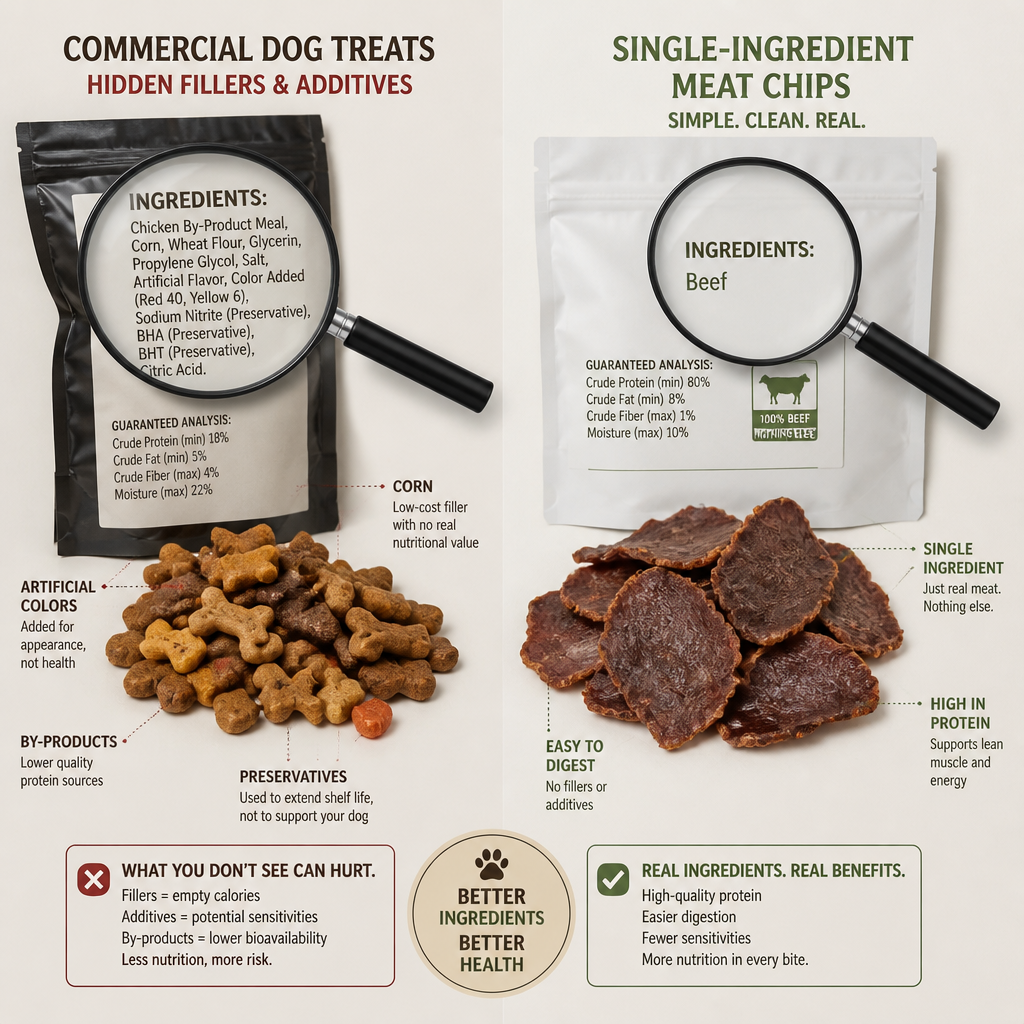
Many commercially produced treats contain a long list of additives that serve the manufacturer more than the dog. Artificial preservatives like BHA and BHT are used to extend shelf life. Artificial colours and flavour enhancers are included to make the treat look and smell appealing to owners. Cheap fillers like corn, wheat, and soy bulk out the treat at a low cost. None of these ingredients support your dog's health, and for a dog with any degree of sensitivity, they are a reliable recipe for gut trouble.
The problem with "natural" labelling on treats
One thing worth knowing: a treat labelled "natural" is not automatically safe for a sensitive stomach. The term is loosely used and doesn't guarantee that the product is free from fillers, multiple protein sources, or added sugars. Always look at the actual ingredient list rather than relying on front-of-pack claims. A genuinely clean treat will have a short, readable ingredient list where every item is a whole food you can recognise.
Choosing Treats for a Sensitive Stomach
Once you've identified that your dog's current treats are the problem, the next step is finding something that genuinely works. The good news is that natural dog treats for sensitive stomachs don't have to be complicated. In fact, the simpler the better.
Single-ingredient treats made from one whole food source are consistently the best choice for dogs with digestive sensitivities. With only one ingredient to consider, you know exactly what your dog is eating, and if a reaction does occur, you can identify and eliminate the trigger straightforwardly. There are no hidden additives, no fillers, and no guesswork.
Comparing treat types for sensitive stomachs
| Treat Type | Digestive Suitability | What to Watch For |
|---|---|---|
| Multi-ingredient processed treats | Low for sensitive dogs | Fillers, artificial preservatives, multiple protein sources, added sugars, artificial colours |
| Grain-free processed treats | Moderate, but not always safe | Often replace grains with legumes or starches that can still cause gas and bloating; may contain multiple proteins |
| Single-ingredient air-dried meat treats | High for most sensitive dogs | Ensure only one named protein with no additives; introduce one protein at a time to confirm tolerance |
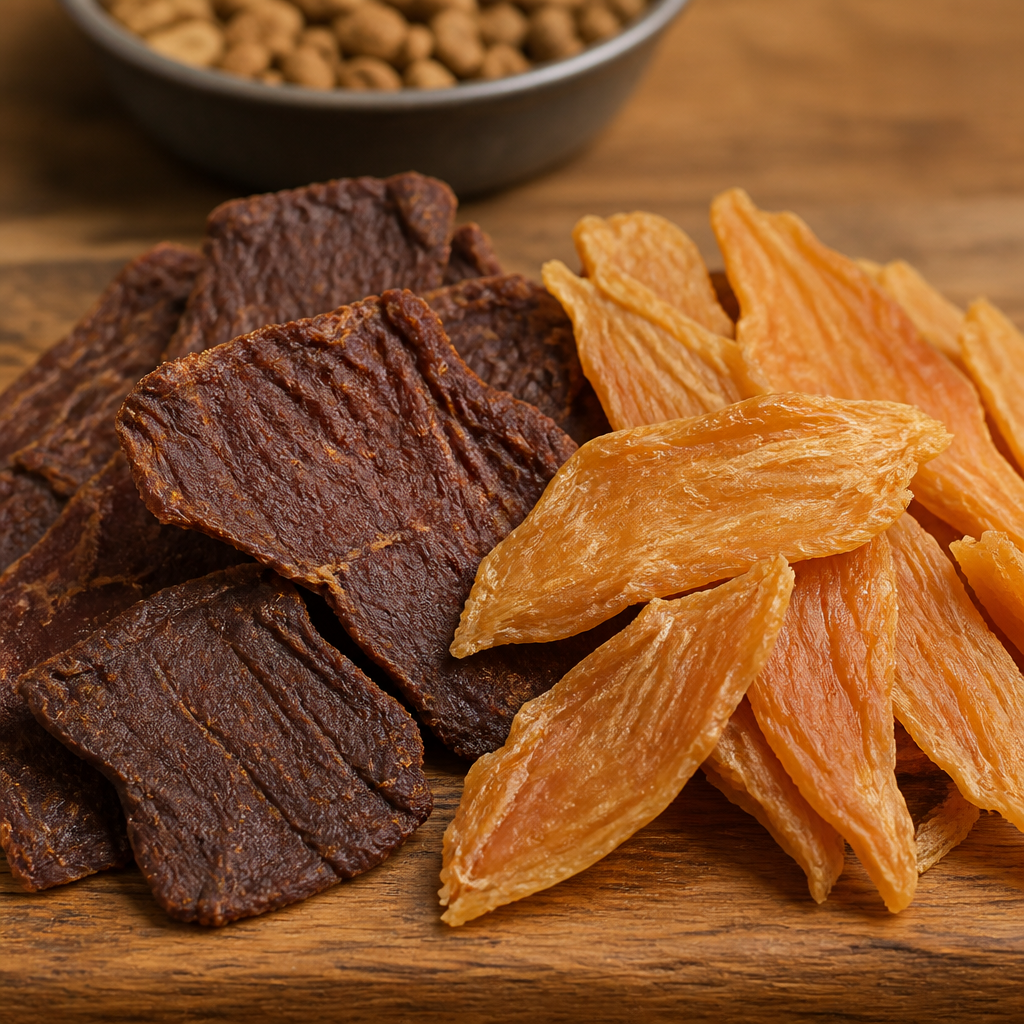
Air-dried single-ingredient treats, like the beef, chicken, and turkey chips from Treaty Treats, are made from 100% real, human-grade meat with nothing added. For dogs who've been reacting to their current treats, switching to a product like this gives you a clean slate. You know exactly what's going in, and the short ingredient list makes it easy to track how your dog responds.
It's also worth introducing any new treat slowly, even a simple one. Start with small amounts over the first few days so your dog's digestive system has time to adjust. This is especially important if your dog has had an extended period of gut irritation, as their system may be more sensitive than usual during recovery.
If you've recently made the switch to cleaner treats and want to share a little more at meal time, the Treaty Treats toppers range is a great way to add whole-food goodness to your dog's bowl without complicating their ingredient load.
Pro tip: When switching treats for a dog with digestive issues, don't mix old and new treats during the transition. Feeding them concurrently makes it impossible to tell which one is responsible if a reaction occurs. Go clean and give the new treat a fair trial on its own.
Frequently Asked Questions
How quickly can a treat cause digestive problems in dogs?
Reactions can appear within a few hours or as late as the next morning, depending on the dog and the ingredient involved. Because a dog's digestive transit time is faster than a human's, the window between treat and symptom is often the same day. If vomiting occurs, it typically appears within two to six hours of eating the treat. Loose stools may appear overnight or the following morning.
Can treats cause digestive problems even if my dog has eaten them before without issue?
Yes, and this is one of the more confusing aspects of food sensitivities in dogs. Sensitivities often develop over time with repeated exposure to an ingredient rather than appearing on first contact. Your dog may have eaten a treat for months without obvious signs, and then begin reacting as the cumulative effect builds. If symptoms appear, it's worth reassessing even long-standing treat choices.
What natural dog treats are best for a sensitive stomach?
Single-ingredient treats made from one named protein source, with no fillers, preservatives, or additives, are consistently the best option for dogs with sensitive stomachs. Air-dried or freeze-dried whole meat treats are well tolerated by most dogs because they are easy to digest and free from the common irritants found in multi-ingredient products. Introduce one protein at a time to identify what your individual dog tolerates best.
Should I see a vet if my dog has digestive problems from treats?
If symptoms are mild and clearly tied to a specific treat, switching to a cleaner option and monitoring for improvement is a reasonable first step. However, if symptoms are severe, persistent, or accompanied by blood in the stool, significant weight loss, or extreme lethargy, a vet visit is important. Your vet can rule out underlying health conditions and may recommend a proper elimination diet trial to identify specific food sensitivities.
How do I tell the difference between a food sensitivity and a food allergy in my dog?
Food sensitivities and food allergies produce overlapping symptoms, which makes them difficult to distinguish without veterinary input. In general terms, food allergies involve an immune response and often show up as skin reactions such as itching, hives, and ear infections. Food intolerances or sensitivities tend to cause primarily digestive symptoms like vomiting, diarrhoea, and gas. Both can occur together, and both can be triggered by treat ingredients. A food elimination trial guided by your vet is the most reliable way to identify the specific cause.
Are grain-free treats safe for dogs with sensitive stomachs?
Not necessarily. Grain-free treats are a step in the right direction for some dogs, but many grain-free products simply replace grains with legumes, peas, or tapioca, which can still cause gas and bloating in sensitive dogs. The real question is not whether a treat contains grain but whether it contains anything your dog's gut struggles to process. A single-ingredient treat made from pure meat sidesteps this issue entirely, since there's nothing in it other than the named protein.
How many treats per day is too many for a dog with digestive issues?
Even the cleanest, most natural treat should make up no more than about ten percent of your dog's daily calorie intake. For dogs with active digestive issues, starting with just one or two small treats per day during the initial switch gives you the clearest picture of how their system is responding. Once your dog has settled and is tolerating the new treat well, you can gradually increase based on their size and activity level.
Have you noticed a difference in your dog's digestion after switching to a simpler treat? We'd love to hear what worked for your pet, so share your experience in the comments below.
References
- American Kennel Club guide to food allergies and sensitivities in dogs, including skin and digestive symptoms
- PetMD overview of food allergies and intolerances in dogs, covering symptoms and diagnosis
- Volhard Dog Nutrition guide on sensitive stomach diets, signs of digestive issues, and ingredients to avoid in treats
- Skippers Pet Products breakdown of harmful ingredients commonly found in dog treats, including artificial preservatives
- Best Bully Sticks explanation of the digestive and health benefits of single-ingredient dog treats
Follow Us
Subscription Subscribe to our newsletter and receive a selection of cool articles every weeks

Real Talk & Tail Wags

dog treat enrichment ideas
Discover 5 practical dog treat enrichment ideas, from puzzle feeders to snuffle mats, that make treat time fun, rewarding and...

best dog treats Australia
Cheap dog treats can cause tummy upset, weight gain, and hidden costs. Learn what bargain snacks contain and how to...

dog treat transition guide
Switching dog treats naturally? Follow this gentle dog treat transition guide to avoid tummy trouble and keep your dog happy....


