
If you've ever stood in the pet treat aisle wondering why some bags cost twice as much as others, you're not alone. A lot of that price difference comes down to how the treat was made, not just what's inside. The process behind air dried dog treats, freeze-dried treats, and baked biscuits shapes everything from nutrient levels to texture, shelf life, and how your dog actually feels after eating. Once you understand what each method does to the ingredient, choosing the right treat for your pup becomes a lot less overwhelming.
Table of Contents
- How Each Process Works
- Quick Takeaways
- Nutrition Showdown: What Survives Each Process
- Texture, Palatability, and Your Dog
- Comparing the Three Processes Side by Side
- Which Treat Suits Which Dog
- What to Look for on the Label
- Frequently Asked Questions
- References
How Each Process Works
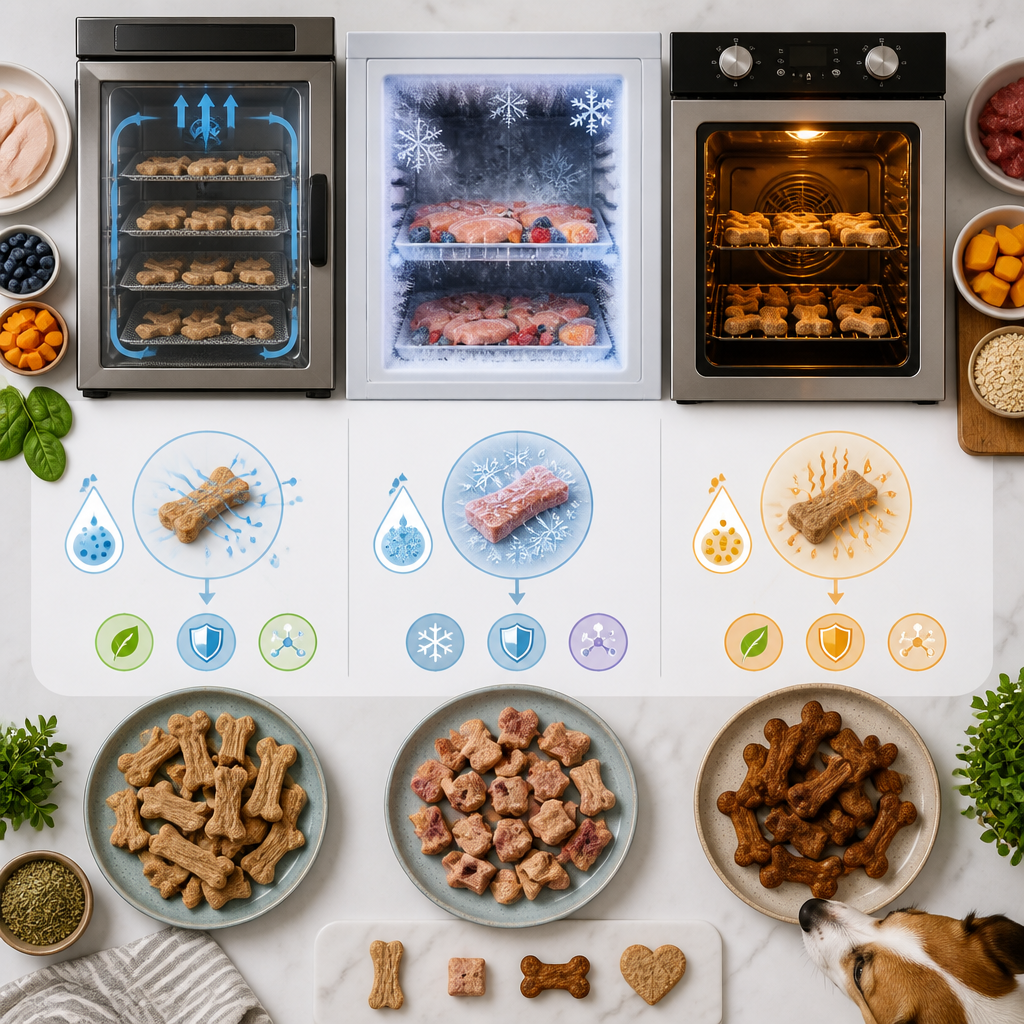
Before we compare outcomes, it helps to understand what actually happens inside each method. These three processes are genuinely different at a scientific level, and that's why the end products feel, smell, and nourish so differently.
Air Drying
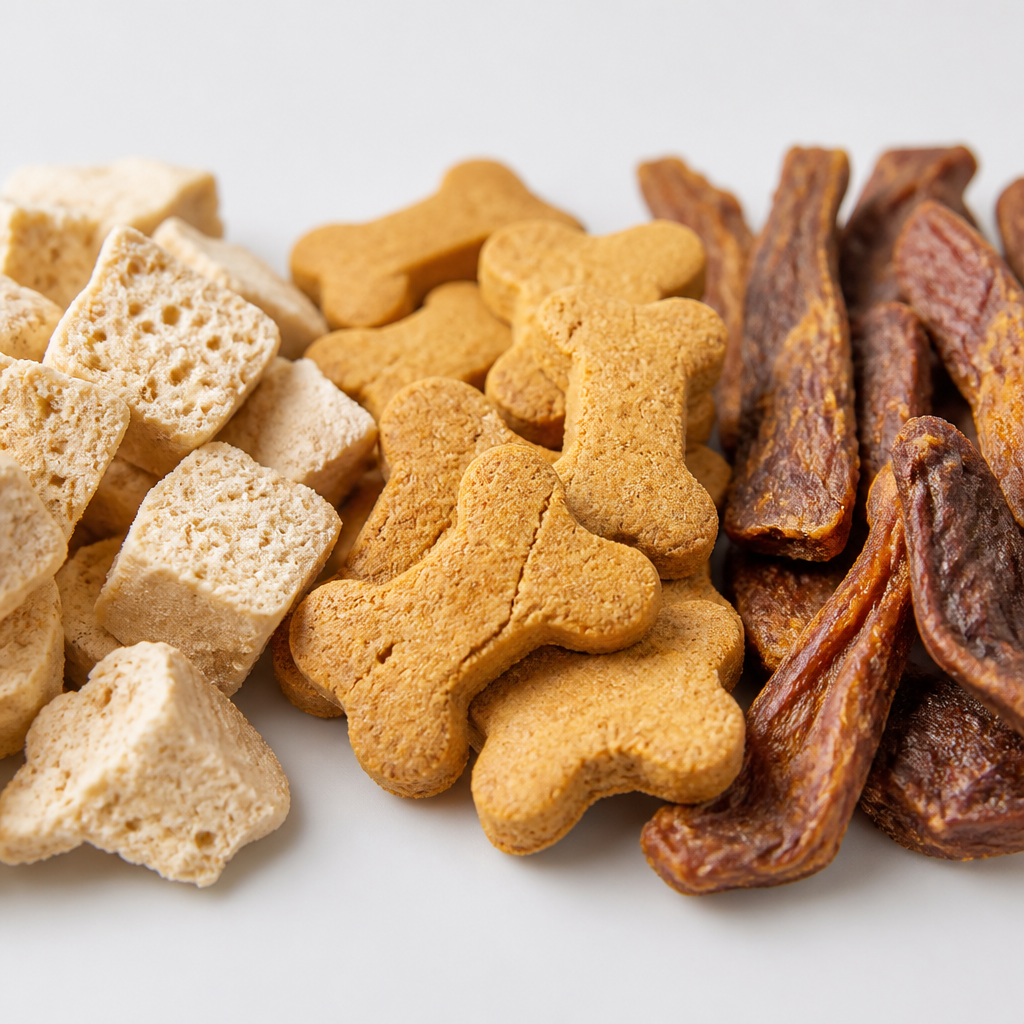
Air drying removes moisture gradually using warm, circulating air over an extended period. The low temperature means the ingredient isn't fully cooked in the traditional sense. Moisture slowly evaporates, concentrating the protein and flavour naturally. The result is a dense, chewy treat with a satisfying texture, often described as jerky-like. Because no high heat is applied, the ingredient retains much of its natural flavour and a strong, appealing aroma that dogs respond to enthusiastically.
This is the process behind every treat at Treaty Treats. Each batch is made in-house using single ingredients like beef, chicken, or turkey. No fillers, no binders, no preservatives. Just real meat, gently dried.
Freeze Drying
Freeze drying, also known as lyophilisation, works by first freezing the ingredient solid and then placing it in a vacuum chamber. Under low pressure, the frozen water skips the liquid stage entirely and converts directly to vapour. This sublimation process means the ingredient never encounters significant heat. The result is a light, crisp, almost airy treat that rehydrates quickly when it hits saliva.
Baking
Baking is the oldest and most familiar method. Ingredients are combined into a dough or mixture and exposed to high oven temperatures. The heat sets the shape, drives off moisture, and creates the firm, crunchy biscuit texture most of us recognise from traditional pet stores. Baking typically requires binders, fillers, and often flour or starch to hold the dough together, which is why baked treats almost always have longer ingredient lists.
Quick Takeaways
| Key Insight | Explanation |
|---|---|
| Air drying preserves protein without high heat | Low-temperature air drying keeps protein structures intact, making treats more bioavailable and nutrient-dense than baked alternatives. |
| Freeze drying retains the most delicate nutrients | Because no heat is used at all, freeze drying preserves heat-sensitive vitamins, enzymes, and amino acids at a higher rate than air drying. |
| Baking destroys heat-sensitive nutrients | High baking temperatures degrade vitamins like B-complex and C, and can damage certain amino acids, reducing the nutritional value of the final treat. |
| Air-dried treats suit sensitive stomachs well | Single-ingredient air-dried treats contain no fillers, grains, or additives, making them ideal for dogs with food sensitivities or digestive issues. |
| Baked treats almost always need fillers | To hold a baked dough together, manufacturers typically add wheat, corn, starch, or soy, increasing carbohydrate load and potential allergens. |
| Air-dried treats are the most practical for training | Their dense, chewy texture is easy to break into small reward pieces without crumbling, and they're durable in a treat pouch without going soft. |
| Process is only half the picture | The ingredient quality matters just as much as the method. A single-ingredient air-dried beef treat will always outperform a multi-filler freeze-dried product. |
It's worth pausing here, because that last point is one that gets overlooked often. Pet parents focus so much on the label buzzword, whether it says air-dried or freeze-dried, that they miss a basic check: what is the first ingredient? If it's not a named meat, the process doesn't save it.
Nutrition Showdown: What Survives Each Process
This is where the real difference shows up, especially if you're feeding a dog with health concerns, food sensitivities, or high-performance needs like working dogs or active breeds.
What Air Drying Does to Nutrients
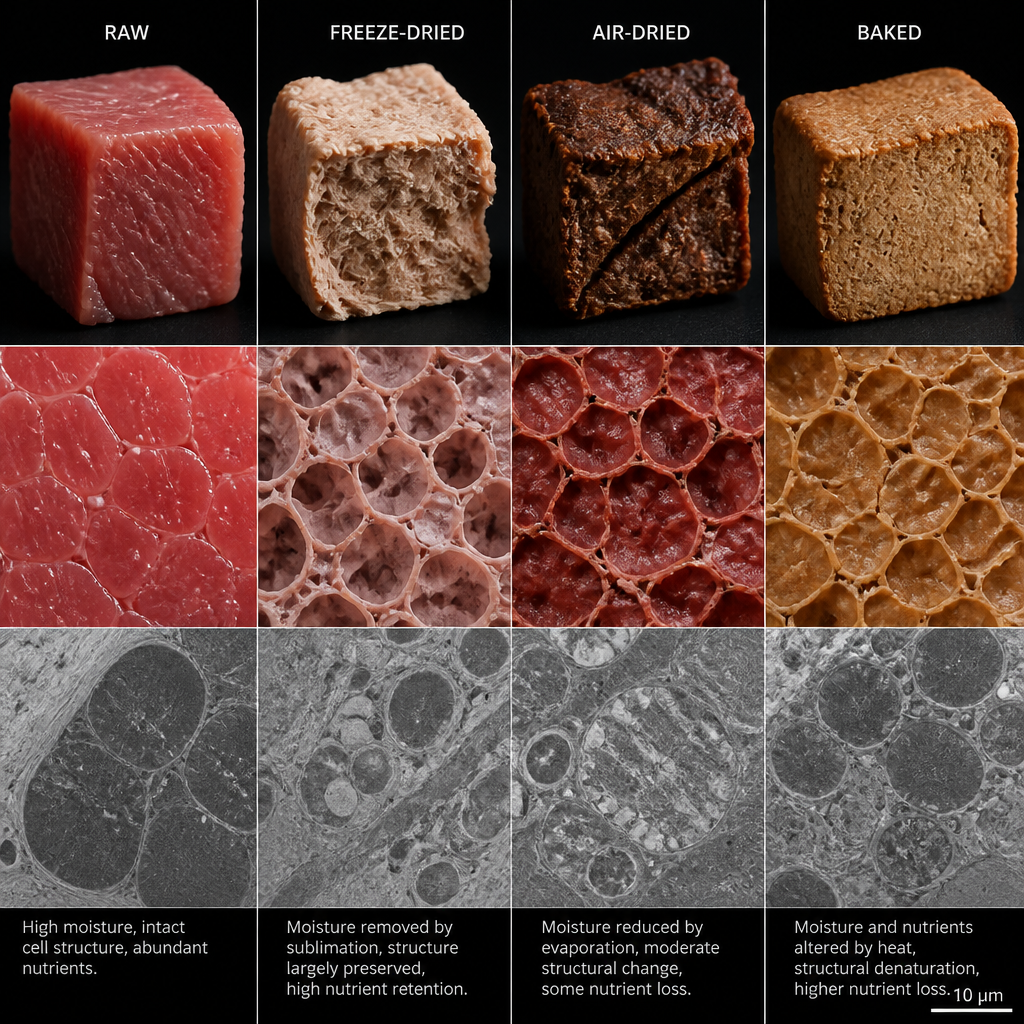
Air drying uses gentle warmth to remove moisture without destroying the ingredient's structure. Because no extreme heat is applied, proteins remain largely intact and bioavailable. Natural enzymes, many B vitamins, and beneficial compounds in the meat are well-preserved. Some minor degradation of the most heat-sensitive nutrients can occur over the extended drying time, but overall, air-dried treats retain far more nutrition than anything that goes through an oven.
A useful way to think about it: air drying concentrates nutrients as water leaves the ingredient. A small air-dried chip can carry more protein per gram than the original raw piece of meat.
What Freeze Drying Does to Nutrients
Freeze drying is the gold standard for nutrient preservation. Because the process never exposes the ingredient to heat, even the most fragile vitamins, amino acids, and enzymes remain largely intact. If your primary goal is maximum nutritional density with almost no processing impact, freeze drying wins on that measure. The trade-off is cost: the vacuum equipment is expensive, which is reflected in the price of freeze-dried products.
What Baking Does to Nutrients
Baking is the most damaging process of the three. High oven temperatures degrade heat-sensitive nutrients including certain amino acids, B vitamins, and vitamin C. The longer and hotter the bake, the more nutrition is lost. To compensate, many manufacturers add synthetic vitamins back in after baking, which is why you'll often see a long list of added vitamins and minerals on baked treat labels. The treat is essentially re-fortified to replace what the oven destroyed.
When high heat is applied during baking, heat-sensitive vitamins and amino acids are broken down. Filler ingredients added to hold the dough together further dilute the nutritional value of what started as a quality protein source. The further a treat moves from its raw ingredient, the less it resembles real food.
Pro tip: When you compare two treats by protein percentage, check whether the protein is from real meat or from plant-based protein concentrates. A baked treat with 25% protein from wheat gluten and a single-ingredient air-dried treat with 70% protein from real beef are not comparable, despite the numbers looking similar on the label.
Texture, Palatability, and Your Dog
Nutrition matters, but if your dog won't eat the treat, none of that matters. Texture and palatability are genuinely different across these three processes, and your dog's preference is worth paying attention to.
The Texture of Air-Dried Treats
Air-dried treats have a dense, chewy, jerky-like texture. Dogs get real engagement from the chewing action, which is satisfying both mentally and physically. The concentrated aroma from slowly dried meat is incredibly appealing to dogs, often more so than the lighter smell of freeze-dried or baked products. This smell intensity is a big reason air-dried treats work so well as training rewards. Your dog knows exactly what they're getting, and they want it.
At Treaty Treats, the air-drying process creates a naturally crunchy chip that holds together beautifully in a treat pouch, doesn't crumble all over your hands, and breaks easily into smaller pieces for training sessions without becoming dust.
The Texture of Freeze-Dried Treats
Freeze-dried treats are light, crispy, and airy. They dissolve quickly in the mouth, which makes them a fast reward for training. Some dogs absolutely love the crunch. Others, particularly small dogs, puppies, or seniors with dental sensitivity, may find the rapid crumble less satisfying. Because freeze-dried treats rehydrate quickly, they can become soft and sticky in a humid environment or a warm pocket, which can be a practical nuisance on walks.
The Texture of Baked Treats
Baked biscuits are firm, dry, and crunchy in a different way from the other two. They tend to be denser and harder than freeze-dried products, and some dogs with dental issues or jaw sensitivity find them uncomfortable to chew. Because they contain fillers to hold their shape, baked treats often have a more neutral, biscuit-like aroma rather than the strong meat smell that motivates dogs during training.
Comparing the Three Processes Side by Side
Here's a clear summary of how these three methods compare across the factors that matter most to health-conscious pet owners.
| Feature | Air Dried | Freeze Dried | Baked |
|---|---|---|---|
| Heat used in process | Low, gentle warmth | No heat at all | High oven temperatures |
| Nutrient retention | Very good | Excellent | Poor to moderate |
| Protein bioavailability | High | High | Lower due to heat damage |
| Typical ingredient list | 1 to 3 ingredients possible | 1 to 3 ingredients possible | Often 8 to 20+ ingredients |
| Texture | Dense, chewy, jerky-like | Light, crisp, airy | Firm, dry, hard biscuit |
| Aroma strength | Strong, concentrated meat smell | Moderate | Mild, biscuit-like |
| Suitability for training | Excellent, breaks into pieces easily | Very good, fast reward | Fair, harder to portion |
| Shelf life | Good, shelf stable | Very good, shelf stable | Good, shelf stable |
| Humidity sensitivity | Low to moderate | High, can go soft quickly | Low |
| Typical cost | Moderate | Higher | Lower |
| Suitable for sensitive stomachs | Yes, especially single-ingredient | Yes, especially single-ingredient | Often not, due to fillers |
The takeaway from that comparison is that air-dried treats hit a genuinely sweet spot. They preserve nutrition far better than baked treats, come in at a more accessible price than freeze-dried, and hold up better in practical, everyday use like training sessions, travel, and warm weather. For most dogs and most pet parents, that combination is hard to beat.
Pro tip: If you're using treats for training, portion size and texture durability matter as much as nutrition. Air-dried treats hold their shape in a warm pocket or treat bag, while freeze-dried products can become crumbly or sticky in humidity. On a warm Australian day, that distinction is very real.
Which Treat Suits Which Dog
No single format is perfect for every dog in every situation. Here's a practical guide to matching the process to your pup's needs.
Dogs with Sensitive Stomachs
If your dog has food sensitivities, digestive issues, or you're working through an elimination diet, the ingredient list matters more than the process. But the process still plays a role: baked treats almost always require binders and fillers, which adds potential allergens. Single-ingredient air-dried treats, like the beef, chicken, or turkey chips from Treaty Treats, give you complete clarity. You know exactly what went in. There are no hidden additives, no grain fillers, no preservatives. That simplicity is genuinely reassuring when your dog's gut is the issue. You can explore the full range of single-ingredient options to find the right protein for your dog's needs.
Dogs in Training
For training, you want a treat that's motivating, easy to handle, and fast to deliver. Air-dried treats tick all three boxes. The strong meat aroma keeps dogs engaged even in distracting environments. They break into small pieces without crumbling into dust on your hands. And because they're nutrient-dense, a small piece carries genuine reward value without contributing to a calorie surplus. Freeze-dried treats are also a good training option, but in warmer or more humid conditions they can become sticky or lose their texture.
Senior Dogs or Dogs with Dental Sensitivity
Air-dried treats, particularly thinner chips, are easier on aging teeth than hard baked biscuits. The chewy texture provides gentle engagement without the impact stress of a firm biscuit. If your senior dog has lost enthusiasm for hard treats, switching to air-dried is often an instant win. Freeze-dried treats, which dissolve quickly, are also a gentle option for seniors who struggle with chewing.
Dogs on a High-Protein Diet
Air-dried single-ingredient meat treats are naturally high in protein and low in carbohydrates, making them a clean complement to a raw, fresh, or protein-forward diet. Baked treats, by contrast, often derive a significant portion of their calories from carbohydrate-based fillers, which works against a high-protein feeding plan.
What to Look for on the Label
Once you know what the process does, you can make the ingredient list work for you. Here's what to check regardless of which format you're buying.
First Ingredient Should Be a Named Meat
Beef, chicken, turkey, lamb. Not "meat meal", not "animal derivatives", not "protein concentrate". A named, real protein as the first ingredient tells you the treat is genuinely meat-forward, not meat-flavoured.
Shorter Lists Are Usually Better
A treat with three or fewer ingredients is almost always a better choice than one with fifteen, all else being equal. The best air-dried treats need only one ingredient because the process itself creates shelf stability without preservatives. Treaty Treats takes this literally. The ingredient list on every treat is exactly one item: the meat itself.
Watch for Hidden Sugars and Preservatives in Baked Treats
Baked treats sometimes include sugars, glycerine, or synthetic preservatives to extend shelf life and improve palatability. These additives are not harmful in small amounts, but they're unnecessary when the process itself, done well, creates natural shelf stability. If you see a long list of preservatives on any treat, that's a signal worth questioning.
Pro tip: The words "natural preservatives" on a label can still mean added rosemary extract, mixed tocopherols, or citric acid. These aren't harmful, but they confirm the product needed help staying shelf-stable. A properly air-dried or freeze-dried single-ingredient treat doesn't need them at all.
Frequently Asked Questions
Are air-dried dog treats safe for daily feeding?
Yes, single-ingredient air-dried treats made from human-grade meat are safe for daily use as part of a balanced diet. As a general guide, treats should make up no more than about 10% of your dog's total daily calorie intake. Because air-dried treats are nutrient-dense, a small amount goes a long way, so it's easy to keep portions sensible without feeling like you're being stingy with your pup.
Do air-dried treats need to be refrigerated?
No. The moisture removal in the air-drying process is what creates natural shelf stability. Properly air-dried single-ingredient treats can be stored at room temperature, away from direct sunlight and humidity. Once opened, keeping them in a resealable bag or airtight container extends freshness. This is one of the practical advantages air-dried treats have over raw food, which does require refrigeration.
Are freeze-dried dog treats raw?
Yes, freeze-dried treats are generally considered raw because the process uses no heat. The ingredients are simply frozen and then moisture is removed through sublimation. This means the nutritional profile is very close to the original raw ingredient. It also means freeze-dried treats should be handled with the same basic hygiene care as raw meat, particularly if you have young children or immunocompromised household members.
Which process is best for dogs with allergies or food sensitivities?
For dogs with sensitivities, the number of ingredients matters more than the process. A single-ingredient air-dried beef or chicken treat gives you complete ingredient transparency. You know the only protein source, and you can match it to what your dog tolerates. Baked treats are generally the least suitable option for sensitive dogs because the recipe must include binders and fillers to hold shape, which introduces additional ingredients and potential allergens.
Why are freeze-dried treats more expensive than air-dried treats?
Freeze drying requires specialised vacuum chamber equipment that is significantly more expensive to operate than the warm-air systems used for air drying. That equipment cost is passed through to the product price. Both methods produce high-quality, minimally processed treats, but air drying offers excellent nutritional preservation at a more accessible price point, which is one reason it's become the preferred process for everyday treats.
Can cats eat air-dried dog treats?
Single-ingredient air-dried meat treats are often suitable for cats too, particularly when they're made from plain beef, chicken, or turkey with no added seasonings or additives. Cats are obligate carnivores with an even greater need for animal protein than dogs, so a pure meat treat aligns well with their dietary requirements. Always check the specific product, and if you're unsure, the team at Treaty Treats can point you toward options that suit both dogs and cats.
Is air-dried the same as dehydrated?
They're very similar but not identical. Both use low heat to remove moisture over time. Air drying typically uses cooler temperatures and may rely more on air circulation than dehydrating, which often uses slightly higher temperatures to speed the process. In practical terms for pet treats, the two are often used interchangeably, but true air drying at lower temperatures is considered the gentler of the two methods and better at preserving heat-sensitive nutrients.
We'd love to hear from you. What process does your dog's current favourite treat use, and have you noticed a difference in how they respond to it? Drop your thoughts in the comments.
References
- Freeze-dried vs. air-dried dog treats compared for taste, nutrition, and everyday use
- How air drying and freeze drying differ in texture, nutrition, and taste for pet treats
- Why air-dried dog treats are a worthwhile investment for your pet's health
- The air-drying process for dog treats explained, with benefits and palatability insights
- Freeze-dried dog treats versus traditional baked snacks: a nutritional comparison
Follow Us
Subscription Subscribe to our newsletter and receive a selection of cool articles every weeks

Real Talk & Tail Wags

dog treat enrichment ideas
Discover 5 practical dog treat enrichment ideas, from puzzle feeders to snuffle mats, that make treat time fun, rewarding and...

best dog treats Australia
Cheap dog treats can cause tummy upset, weight gain, and hidden costs. Learn what bargain snacks contain and how to...

dog treat transition guide
Switching dog treats naturally? Follow this gentle dog treat transition guide to avoid tummy trouble and keep your dog happy....


