Has your dog gone quieter lately, flopping on the couch when they used to race you to the front gate? It's natural to wonder whether the treat jar is part of the picture. When it comes to processed dog treats health risks, the honest answer sits somewhere between worry and reassurance. Let's look at what the research actually shows, where the evidence is still thin, and the practical steps that make a real difference for your dog.
Table of Contents
- Quick Takeaways
- What Counts as a Processed Treat
- What the Research Says About Processing
- Can Treats Really Make Your Dog Lethargic?
- Comparing Treat Types for Energy and Digestion
- Building a Low-Stress Treat Routine
- Choosing Treats for Sensitive Stomachs
- Reading Labels Without Getting Lost
- When Lethargy Is a Vet Question
- Frequently Asked Questions
- References
Quick Takeaways
| Key Insight | Explanation |
|---|---|
| Processed does not automatically mean harmful | Almost every treat is processed to some degree. The label alone doesn't tell you how it will affect your dog. |
| No solid study shows normal treats cause lethargy | Tiredness has many causes, so look at the whole picture before blaming the treat jar. |
| Calories add up quickly | A steady stream of rewards can shift your dog's energy balance, especially for smaller dogs. |
| Short ingredient lists are easier to check | Single-ingredient treats make it clear exactly what your dog is eating. |
| Change treats gradually | Sudden swaps can upset digestion, and an unsettled stomach often looks like tiredness. |
| Ongoing lethargy deserves a vet check | A change in energy that lasts several days needs a proper examination, not a diet guess. |
What Counts as a Processed Treat
Processing is a broad word. Cooking, drying, and shaping all count, which means almost every treat on the shelf has been processed in some way. The question that really matters is how much, and what was added along the way.
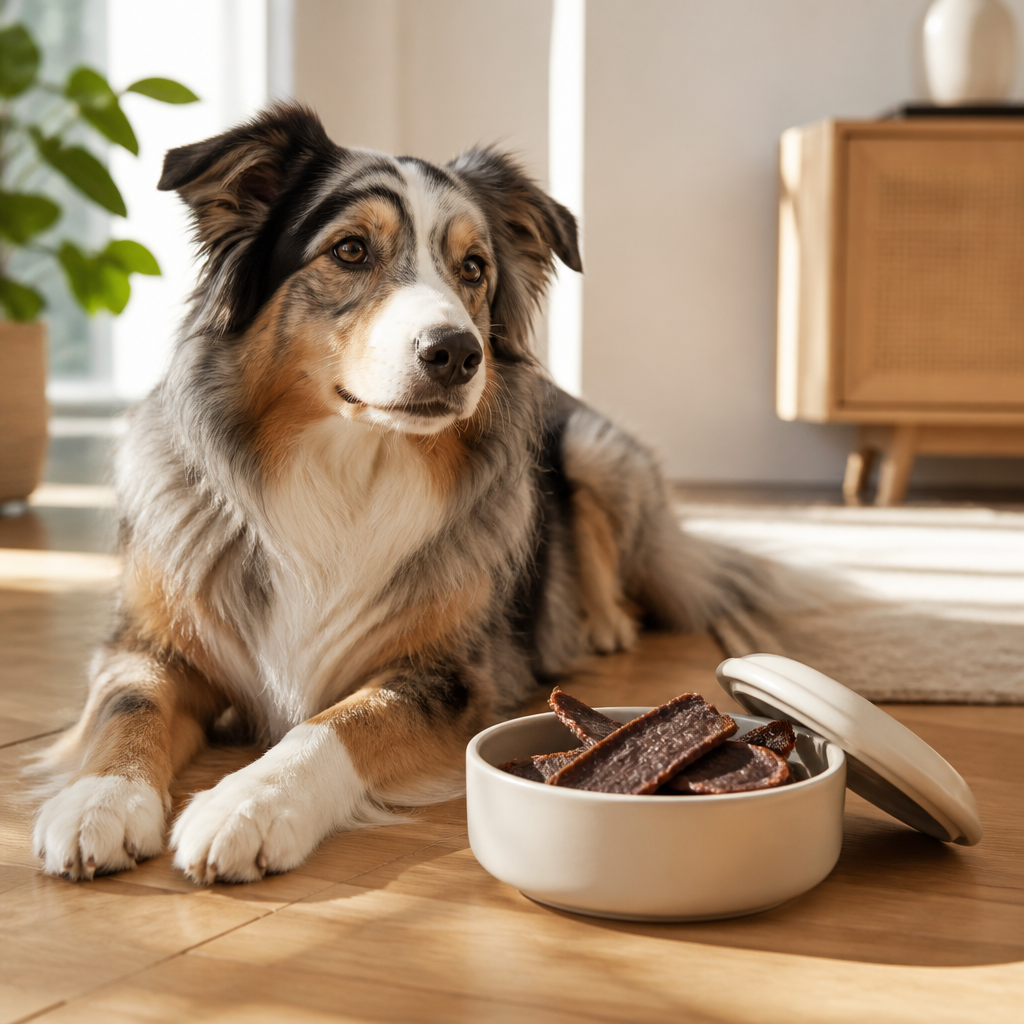
In practice, it helps to think of processing on a sliding scale. A single-ingredient air-dried chip sits at one end, with just the meat and the drying step between the farm and your dog's bowl. At the other end are treats built from many components, including binders, colourings, and flavour enhancers.
Single-Ingredient Versus Multi-Ingredient Treats
A single-ingredient treat lists one item, such as beef, and nothing else. A multi-ingredient treat might list meat meal, starches, gums, and a flavour enhancer. Neither label is a verdict on its own, but the shorter list gives you far more control over what your dog eats each day.
A common mistake is assuming that "natural" on the front of a pack covers everything inside. Read the ingredient panel. If you can't tell what something is, you can't judge how it might affect your dog.
Why Air-Drying Is Different From Baking
Air-drying removes moisture at low temperatures over a longer period. Baked or extruded treats often involve higher heat, pressure, and added binders to hold their shape. Our chips are batch-made in-house, and the drying step is what gives them their crunch without fillers or preservatives.
What the Research Says About Processing
The science on pet food processing is still catching up with the science on human food. A 2026 review in Frontiers in Veterinary Science asked whether the human definition of ultra-processed foods applies to dog and cat food. The authors argue that it doesn't map neatly onto pet products, and they call for a classification system built specifically for pet food.
That matters for your treat choices. A headline calling a product "ultra-processed" tells you less than you might think, because the category was not designed with pet treats in mind.
A label such as "ultra-processed" describes the manufacturing route, but it doesn't tell you everything about the nutrition inside the bag.
What Wet and Dry Foods Teach Us
A useful comparison comes from the wider pet food world. A dog food resource notes that wet foods, made at lower temperatures and with more moisture, are generally considered less processed and more natural than dry foods. That's a reminder that cooking method and moisture shape how a product is perceived, even before you read the ingredients.
Treats work in a similar way. Gentle drying tends to keep ingredients closer to their original form than high-heat processing does, which is one reason we favour air-drying for our range.
What the Research Doesn't Yet Tell Us
Honesty matters here. There isn't a solid body of research showing that a healthy dog's normal, single-ingredient treat causes lethargy. The current evidence is about how pet foods should be classified, not about tiredness in individual dogs, so any link you hear about deserves a careful read.
Can Treats Really Make Your Dog Lethargic?
If your dog has seemed flat lately, it's natural to look at what changed. Treats are an easy suspect because they're the one thing you hand out many times a day. Good news: the likely culprits are usually simple to address.
Treats can influence energy in a few indirect ways. The most common is simply too many calories. Digestive upset and, occasionally, an individual sensitivity to a particular ingredient can also play a part.
Calories and Energy Balance
Treats are extra food. A handful of rewards during training can add up faster than most owners expect, especially for small dogs whose daily needs are modest. Over time, a surplus can leave a dog less active and more prone to weight gain, which can look a lot like sluggishness.
Keep treats to a small slice of daily calories so the main meal still does the heavy lifting. Your vet can help you work out the right amount for your dog's size, age, and activity level.
Digestion, Additives, and Individual Sensitivities
A stomach that feels off can drain energy. Rich flavourings, sudden changes in treats, or a new ingredient can cause loose stools or mild discomfort, and a dog who doesn't feel well often naps more.
True ingredient sensitivities exist, though they're less common than many people assume. If you suspect one ingredient, remove it for a couple of weeks, then reintroduce it while watching closely. There's no rush, and there's no need to guess.
Comparing Treat Types for Energy and Digestion
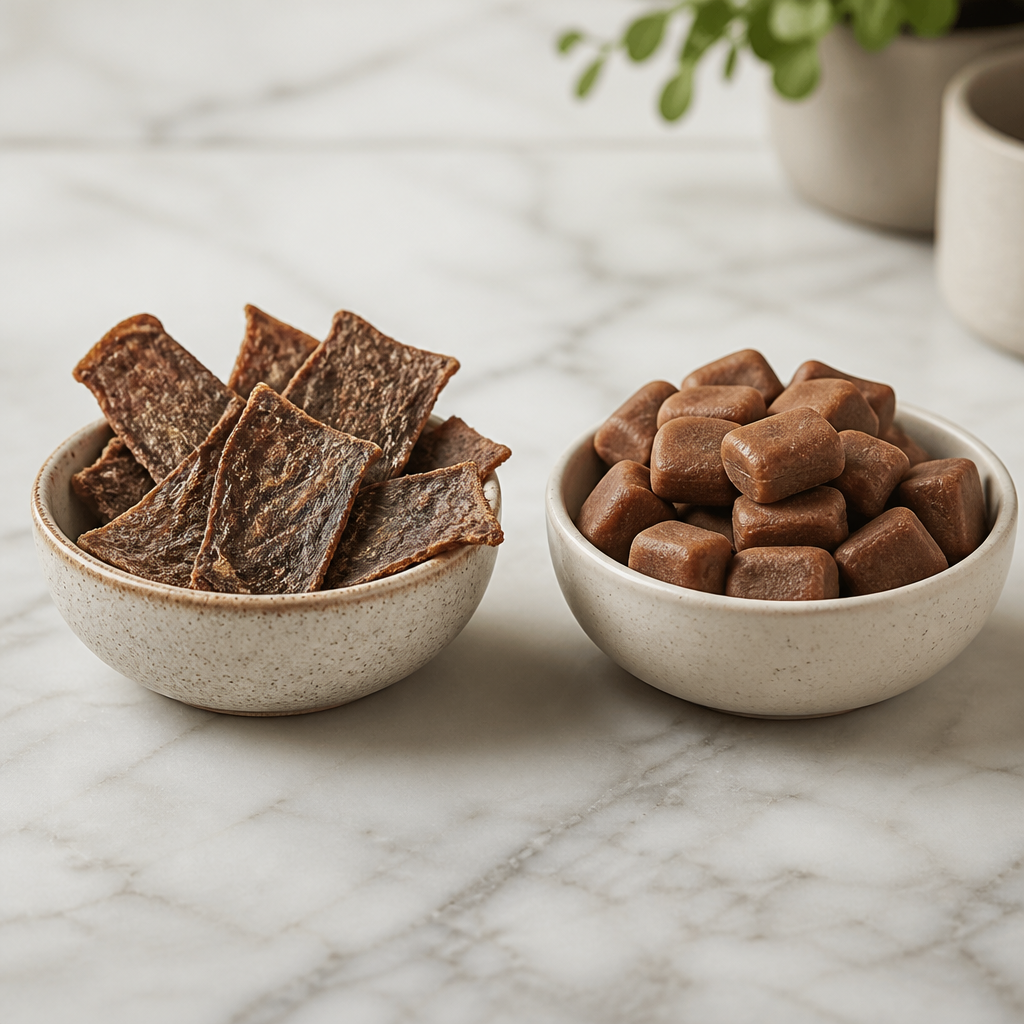
Choosing between treat styles is easier when you compare them side by side. Here is how three common types stack up for the things most owners care about: ingredient clarity, calorie control, and how gently they sit in the stomach.
| Treat Type | Typical Ingredients | Things to Watch For |
|---|---|---|
| Single-ingredient air-dried meat | One named meat with nothing added | Calories still count, so break chips into small pieces for training |
| Baked or extruded treats with binders | Meal, starches, binders, and flavour enhancers | Longer ingredient lists make it harder to pinpoint a trigger |
| Heavily flavoured chews | Smoke flavourings, colourings, and sweeteners | Strong additives can upset sensitive stomachs |
None of these is automatically bad. The aim is to learn which style your dog handles well, and to keep the total amount in check. If your dog is energetic and in training, a high-protein single-ingredient chip works well in small pieces. If your dog is a senior with a sensitive gut, a short ingredient list and smaller portions are usually the gentlest place to start.
Building a Low-Stress Treat Routine
Changing your dog's treats doesn't need a big overhaul. A few small habits can make a noticeable difference, and they're easy to keep up when life gets busy.
Counting Treats Toward the Day's Total
Try a simple rule: treats come out of the same daily budget as meals. If you train for fifteen minutes in the morning, subtract those pieces from breakfast. A basic kitchen scale and a note on the fridge are all you need to keep track.
Switching Treats Gradually
When you introduce a new treat, swap it in slowly over about a week. Start with a small amount of the new treat mixed into the old, then build up. This gives digestion time to adjust and makes it much easier to spot any reaction.
Pro tip: Break air-dried chips into pea-sized pieces for training. Your dog still gets the same reward, and the calorie count stays low.
Small tweaks like these usually feel easier than you expect, and your dog will notice the calmer routine too.
Choosing Treats for Sensitive Stomachs
If your dog has a sensitive stomach, you're probably reading labels more carefully than most people. That care pays off. Simpler recipes give you fewer variables to test when something seems off.
Start With One Protein
Dogs who react poorly often do better with one protein source at a time. A single-ingredient treat makes it clear what's in the mix, so if something upsets your dog, you know where to look first.
Watch Portion Size, Not Just Ingredients
Even gentle treats can cause trouble when they're given in large amounts. Smaller, more frequent rewards are often kinder to the gut than a big handful at once.
A common mistake is offering a new treat on a busy day, then blaming it for a rough afternoon. Pick a calm day for trials, and keep a simple log of what you gave and when.
Pro tip: Keep a two-week diary of treats, portions, and your dog's energy and toilet habits. Patterns show up quickly on paper, and they give your vet something concrete to work with.
Reading Labels Without Getting Lost
Labels can feel like a second language, but once you know a few clues they become much easier to read. Start with the ingredient list, then check the guaranteed analysis for a sense of protein and fat.
Ingredient Order Tells a Story
Ingredients are generally listed from highest to lowest proportion, so the first few items usually shape the product most. If the top of the list is a named meat, you're starting from a good place. If it's a long run of starches and fillers, expect less protein in every piece.
Words That Hide Extra Additives
Words like "flavour," "natural flavour," or "enhancer" can cover a range of ingredients. They aren't automatically harmful, but they're harder to trace if your dog reacts. Clear, specific names are much easier to work with.
In practice, look for short labels that name every ingredient. If a company can't tell you exactly what goes into its treats, that's a fair reason to keep shopping around.
When Lethargy Is a Vet Question
Sometimes the treat jar is the wrong suspect. Lethargy can come from pain, infection, heart or thyroid concerns, or simply getting older, and none of those are fixed by swapping one biscuit for another.
If your dog's energy has dropped for more than a few days, or it comes with changes in appetite, drinking, toilet habits, or breathing, book a vet visit. Please don't wait to see whether the next treat change helps.
Signs That Shouldn't Wait
Pale gums, collapse, trouble breathing, repeated vomiting, or refusing food for a day or more are reasons to call a vet promptly. A vet can run checks that no treat change ever could.
What to Bring to the Appointment
Bring a list of every treat, chew, and supplement your dog gets, with rough amounts. A quick photo of the packaging helps too. It gives your vet a clear picture and makes the visit more useful for both of you.
Frequently Asked Questions
Are processed dog treats harmful to my dog?
Not automatically. Processing varies widely, and the research has not yet shown clear harm from normal single-ingredient treats in healthy dogs. Focus on ingredient clarity, portion size, and how your own dog responds.
Can dog treats make my dog tired?
Treats can contribute indirectly, mainly through extra calories or digestive upset. Persistent tiredness is always a reason for a vet check, even if you think the treats are the cause.
How many treats is too many?
Keep treats to a small share of daily calories so the main meal stays the foundation of your dog's diet. Your vet can suggest a number based on your dog's weight and activity.
Does "natural" on a label mean a treat is healthy?
Not necessarily. The word on the front of a pack doesn't tell the whole story, so read the ingredient list and ask how the treat is made.
How should I switch to a new treat?
Mix a small amount into the old treat and increase it over about a week. Watch stools and energy levels as you go, and pause if anything changes.
Should I stop treats if my dog seems tired?
Pause any new or unusual treats while you watch closely. If tiredness lasts several days, book a vet visit rather than waiting it out.
Have you noticed a change in your dog's energy after switching treats? We'd love to hear what worked for you, so share your experience in the comments below.
References
Follow Us
Subscription Subscribe to our newsletter and receive a selection of cool articles every weeks

Real Talk & Tail Wags

human grade pet food Australia
Confused by “natural” and “human-grade” on Australian pet treat labels? Learn what each term really means, what the rules cover,...

artificial additives dog treats
Find out what artificial additives in dog treats do inside your dog's body, from digestion to the liver, and how...

dog socialisation treats
Learn how to use treats to help your dog socialise with other pets and strangers, with calm, step-by-step tips from...