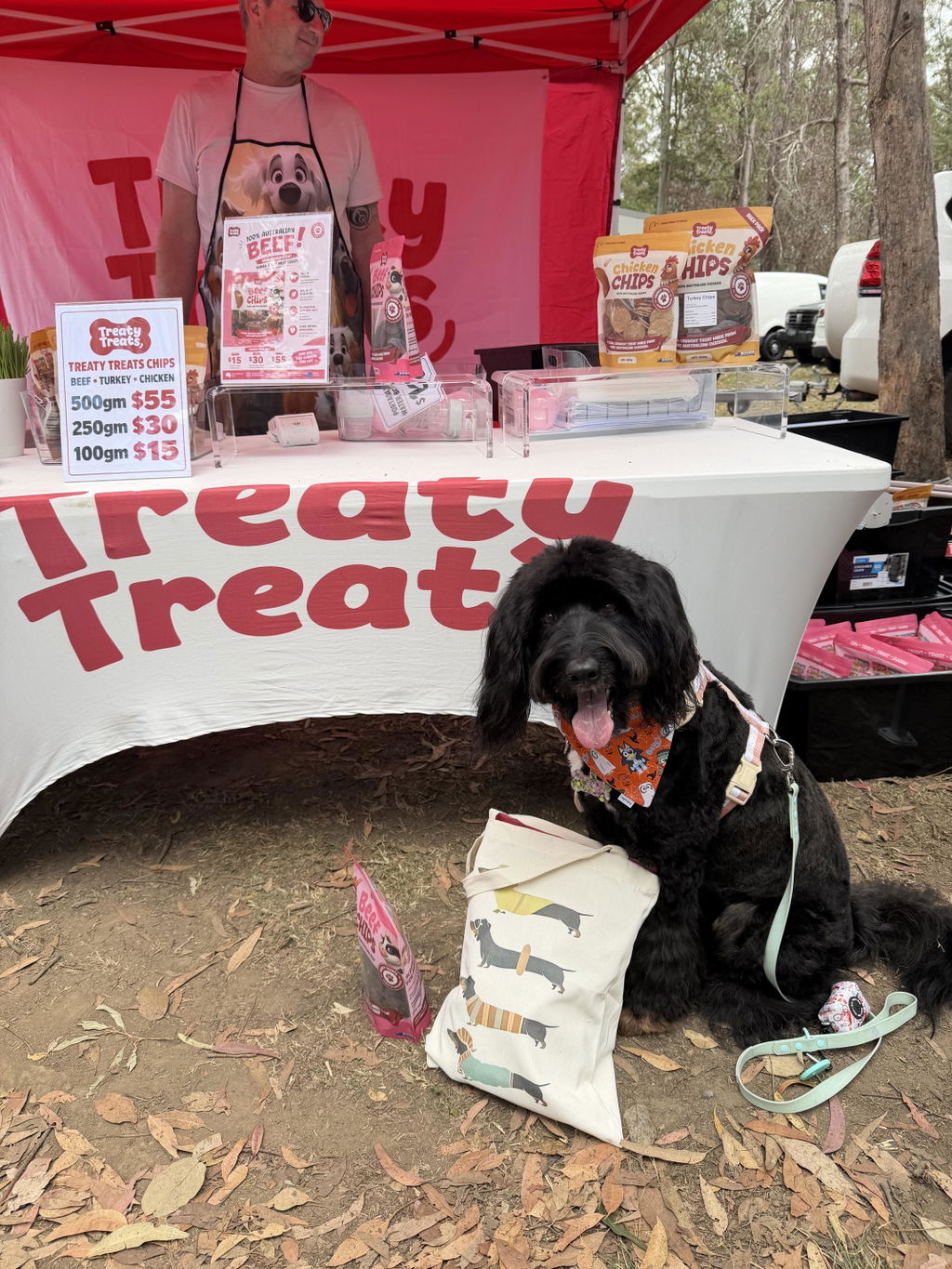
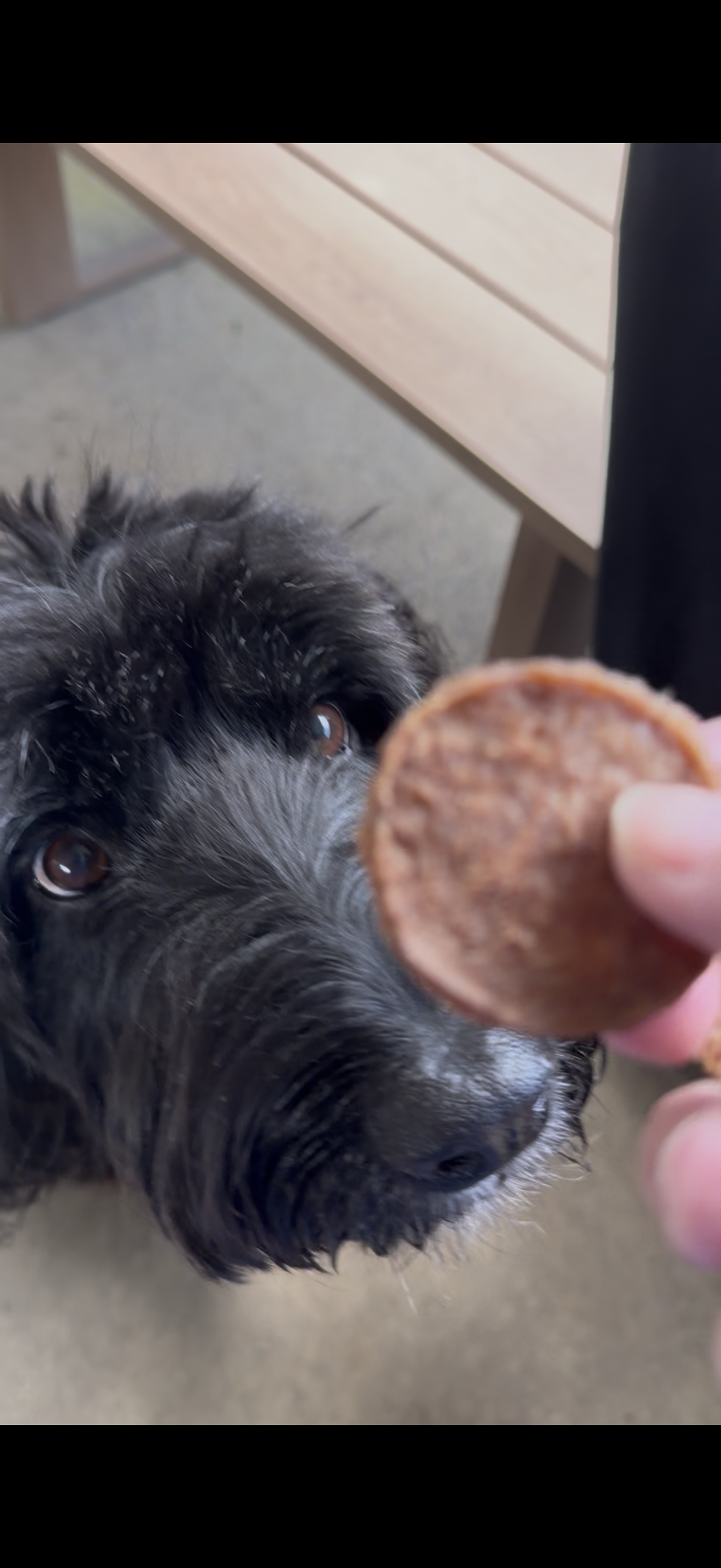
Picture this. You've just opened a bag of treats, your pup is sitting with that hopeful look, and you're wondering whether the bright colour and long shelf life come with a cost. You're not alone in asking. Many dog owners want to know what artificial additives in dog treats actually do once they're swallowed. The honest answer is that your dog's body has to work through every ingredient, including the ones added mainly to make a product look good or last longer on a shelf. Let's walk through what happens from the first chew to the liver, and how you can read labels with confidence.
Table of Contents
- Quick Takeaways
- What Artificial Additives Actually Are
- Why Preservatives Are Added to Treats
- The Journey Through Your Dog's Digestive System
- How the Liver Handles Synthetic Compounds
- Sensitive Stomachs and Reactions
- What About Cats?
- Reading Labels Without Panic
- Comparing Three Ways Treats Stay Fresh
- How to Switch to Cleaner Treats
- Frequently Asked Questions
- References
Quick Takeaways
| Key Insight | Explanation |
|---|---|
| Many additives serve the product, not your dog | Colours, preservatives, and flavour enhancers mostly protect appearance, texture, and shelf life. Ask yourself whether your dog gets any real benefit from them. |
| Digestion is where the process starts | Compounds are broken down in the stomach and small intestine. Some can irritate the gut lining, especially in dogs with sensitive stomachs. |
| The liver does most of the sorting | Synthetic compounds must be converted and cleared, which adds work for an organ that already handles many jobs. |
| Look for patterns, not one-off accidents | If loose stools, itchy skin, or gas show up each time a new treat appears, pause that treat for about two weeks and see what changes. |
| Cats need a stricter standard | Cats clear some compounds through fewer routes than dogs, so cat owners should be more cautious about additives. |
| Short ingredient lists make problems easier to trace | A treat with one ingredient lets you connect any reaction to one food, rather than guessing among a long list of additives. |
What Artificial Additives Actually Are
An additive is any substance included in food for a specific purpose, such as keeping fat from going off, holding moisture in a soft chew, or giving a treat an appealing colour. Research on pet food notes that additives are included to provide nutritional benefits, ensure food safety, and maintain desirable features such as colour. That purpose is useful to the manufacturer, but it isn't always useful to the dog eating it.
The additives you're most likely to see on treat labels fall into a few groups. Synthetic antioxidants such as BHA, BHT, and ethoxyquin slow down fat oxidation. Artificial colours make a treat look more vibrant. Humectants like propylene glycol help soft treats stay pliable. Flavour enhancers make a product more tempting. Each has a job to do in the factory, and each is one more compound your dog's body has to recognise, process, and eventually clear.
In practice, most owners don't realise how many of these show up in everyday rewards. A treat can look like plain meat, yet still contain several additives in small amounts. That's why we suggest reading the full ingredient list, not just the front of the packet, before you decide what goes into your dog's training pouch.
Why Preservatives Are Added to Treats
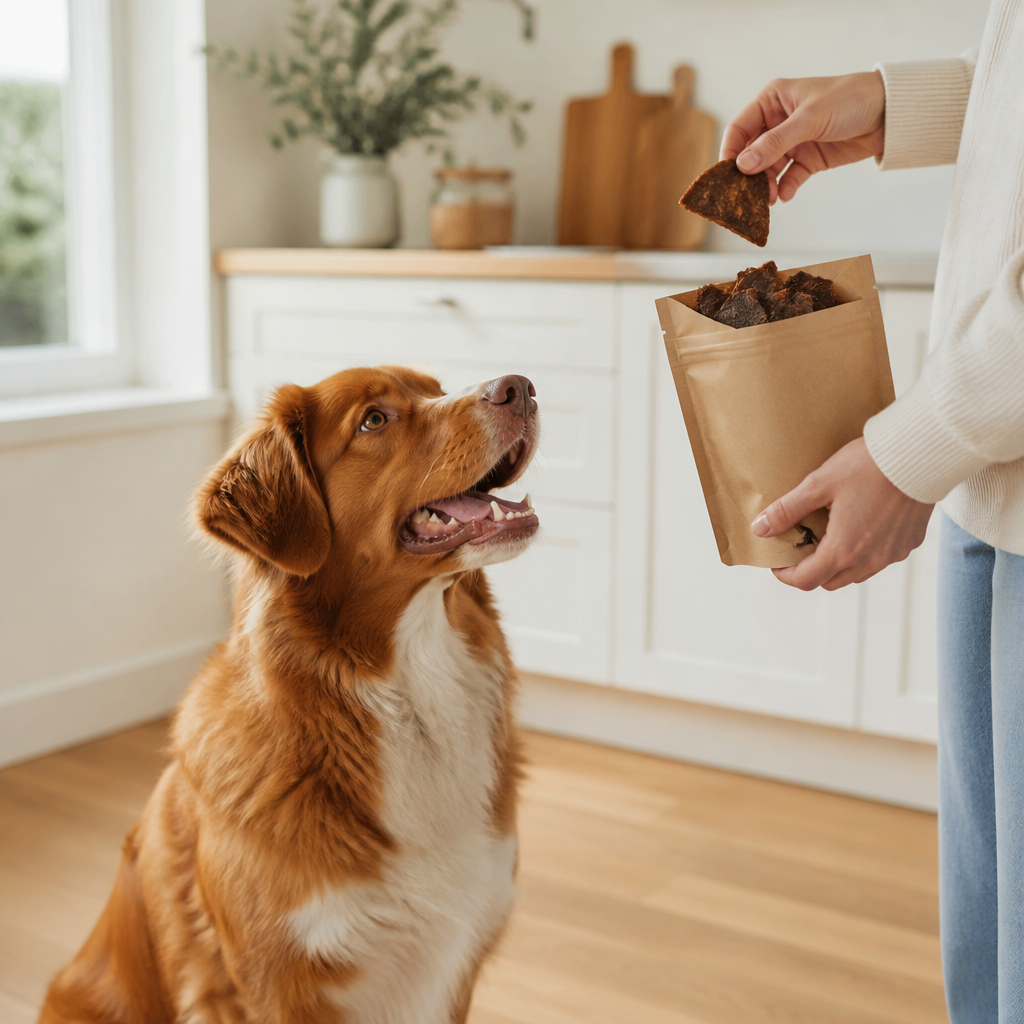
Preservatives exist for a practical reason. Meat and fat are vulnerable, and once they start to break down they can taste off, smell stale, and lose nutritional quality. Manufacturers have long used preservatives to slow that process so a bag can sit on a shop shelf or in a pantry for months. The problem is real, and it's worth understanding before you decide how to handle it at home.
Why Fat Turns Rancid
Fat reacts with oxygen over time, a process called oxidation. Heat, light, and air speed it up. When fat oxidises, it develops that sharp, stale smell that makes a treat unappealing and can reduce the quality of the fats themselves. Synthetic antioxidants were developed to interrupt this chain reaction cheaply and reliably, which is why they became so common in dry and semi-moist products.
The trouble is that an additive built to work well in a warehouse isn't automatically built to work well in a dog's gut. That gap is at the heart of the debate, and it's why more owners are asking questions about what their dog is actually eating.
Natural Versus Synthetic Options
Not every preservative is synthetic. Mixed tocopherols, which are forms of vitamin E, and plant extracts such as rosemary can also slow oxidation. They usually don't last quite as long on the shelf as synthetic options, so the trade-off is shorter storage life in exchange for a simpler ingredient list. Consumer-facing reviews of artificial preservatives report that some of these ingredients have been linked to concerns including digestive issues such as IBS-like symptoms, although the evidence in dogs is still developing. A cautious approach is a sensible one here.
The Journey Through Your Dog's Digestive System
So what happens after the treat leaves your hand? The process starts the moment your dog starts chewing. Saliva begins to moisten the treat, and then the stomach takes over with acid and enzymes that break down protein and fat. Most of what your dog eats is handled the same way, but additives are a different story because they aren't nutrients. Their path through the body depends on how they dissolve, how they're absorbed, and how the gut responds.
Stomach and Small Intestine
Once a treat reaches the small intestine, the digestive system absorbs nutrients and passes along compounds it can't use. Some additives dissolve in fat and are taken up readily, while others pass through with little change. The body can't simply ignore them, though. Each compound needs to be handled, and the process can irritate the lining of the gut in some dogs, particularly those already prone to upset tummies.
In practice, the most common sign owners notice is a change in stool. Soft stools, extra gas, or a rumbling tummy after a new treat are all worth noting. These symptoms don't prove a single additive is the cause, but they're a clear signal to pause and observe.
The Gut Lining and Good Bacteria
The gut lining acts as a barrier. It lets nutrients through while keeping unwanted material out, and it works closely with the community of bacteria living in the intestines. Researchers are still working out how additives affect that community in dogs, and we don't want to overstate what's known. What we can say is that a gut that's already stressed by a poor diet or frequent treats has less room to handle extra load, which is one more reason to keep the treat list short.
How the Liver Handles Synthetic Compounds
Once a compound is absorbed, it travels to the liver. Think of the liver as your dog's main filter. It runs chemical reactions that convert substances into forms that can be safely excreted through bile or urine. For natural compounds the body has well-practised routes, but synthetic compounds may take longer to process, and the liver has to juggle them alongside everything else it does.
For a healthy dog, this is typically about extra workload rather than damage. The liver is remarkably capable, and most dogs handle occasional treats without any trouble. The concern is cumulative. If your dog eats several treats a day, each with its own mix of additives, the total processing load adds up. That's why we focus on the pattern across the whole day, not on one treat in isolation.
A treat should earn its place in your dog's bowl by doing one job well, which is rewarding them. Anything else on the label is worth a second look.
A practical way to think about it is to count how many treats your dog gets in a typical day, then count how many additives appear across those products. You may be surprised by the total. Reducing the number of additive-containing treats is often the simplest change that makes a difference, and it doesn't require throwing out every treat in the cupboard.
Sensitive Stomachs and Reactions
If your dog has a sensitive stomach, you probably already know how frustrating it is to work out what's causing trouble. You change one thing, wait, and then wonder whether it helped. Good news: a clear, step-by-step approach makes this much easier, and you don't need any special equipment to start.
Signs to Watch For
Digestive changes are the most common signal. Look for loose stools, gas, vomiting, or a dog who seems unsettled after meals or treats. Skin and ear signs can also appear, especially itching around the paws, face, or ears, or repeated ear irritation. These symptoms have many possible causes, so they're best treated as clues rather than conclusions.
Timing matters too. A reaction that starts within a day or two of introducing a new treat is more useful to track than one that shows up after weeks of ordinary feeding. Writing down the date, the treat, and what you noticed is a simple habit that pays off.
Why Sensitive Dogs React First
Dogs with sensitive stomachs often have a gut lining that's more easily irritated, or digestion that's less forgiving of rapid changes. Puppies, older dogs, and dogs recovering from a stomach bug can also be more reactive. For these dogs, a shorter ingredient list and gradual introductions tend to work better than a long list of additives and a sudden switch.
Pro tip: Keep a simple treat diary for two weeks. Note the brand, the number of treats, and any changes in stools, skin, or energy. Patterns become obvious much faster on paper than in memory.
What About Cats?
Many of our customers share treats with both dogs and cats, and cats deserve their own careful look. Cats are obligate carnivores, which means their bodies are built around meat. That's good news for the protein in a treat, but it also means their metabolism works differently in some ways that matter when it comes to additives.
Smaller Bodies, Smaller Margins
Cats are smaller than most dogs, so the same amount of an additive represents a larger dose for their body weight. Cats also clear some compounds through fewer metabolic routes than dogs, which is one reason many owners choose a stricter standard for their cat's treats. You don't need to panic over a single treat, but it's worth being thoughtful about what you offer.
Treats Are a Bigger Share of Their Diet
Cats often receive a relatively large share of their daily calories from snacks, especially during training or when they're learning to come when called. The more treats a cat gets, the more important the ingredients become. A cat who gets a few small treats a day can benefit from a short, plain list of ingredients that you can recognise at a glance.
Reading Labels Without Panic
Label reading can feel like a chore, but it gets easier once you know what to look for. The good news is that most of the information you need is already printed on the pack. You just need to know where to find it and what the words mean.
Start with the ingredient list, which is usually ordered by weight. The first few items make up most of the product, so a treat that begins with a named meat and has only a handful of additional items is generally easier to understand. Then scan the rest of the list for colours, preservatives, and flavour enhancers, which are often placed near the end.
How Ingredient Order Works
Ingredients are generally listed from highest to lowest proportion, so the top of the list tells you what the treat is mostly made from. Be cautious when you see several forms of the same ingredient spread across the list. Some labels split an ingredient into multiple names, which can make the total look smaller than it is. Counting each variant helps you see the full picture.
Words That Hide Additives
Some terms are broader than they sound. "Natural flavour" is a general category and doesn't tell you the specific compound used. Additive codes or chemical names can be hard to decode without a reference. Organic labels can also be confusing. Retail education on organic dog products notes that some standards require at least 70 percent of ingredients to be organic, so it's worth checking exactly what a claim covers. A clear, specific label is usually a better sign than a vague one.
Comparing Three Ways Treats Stay Fresh
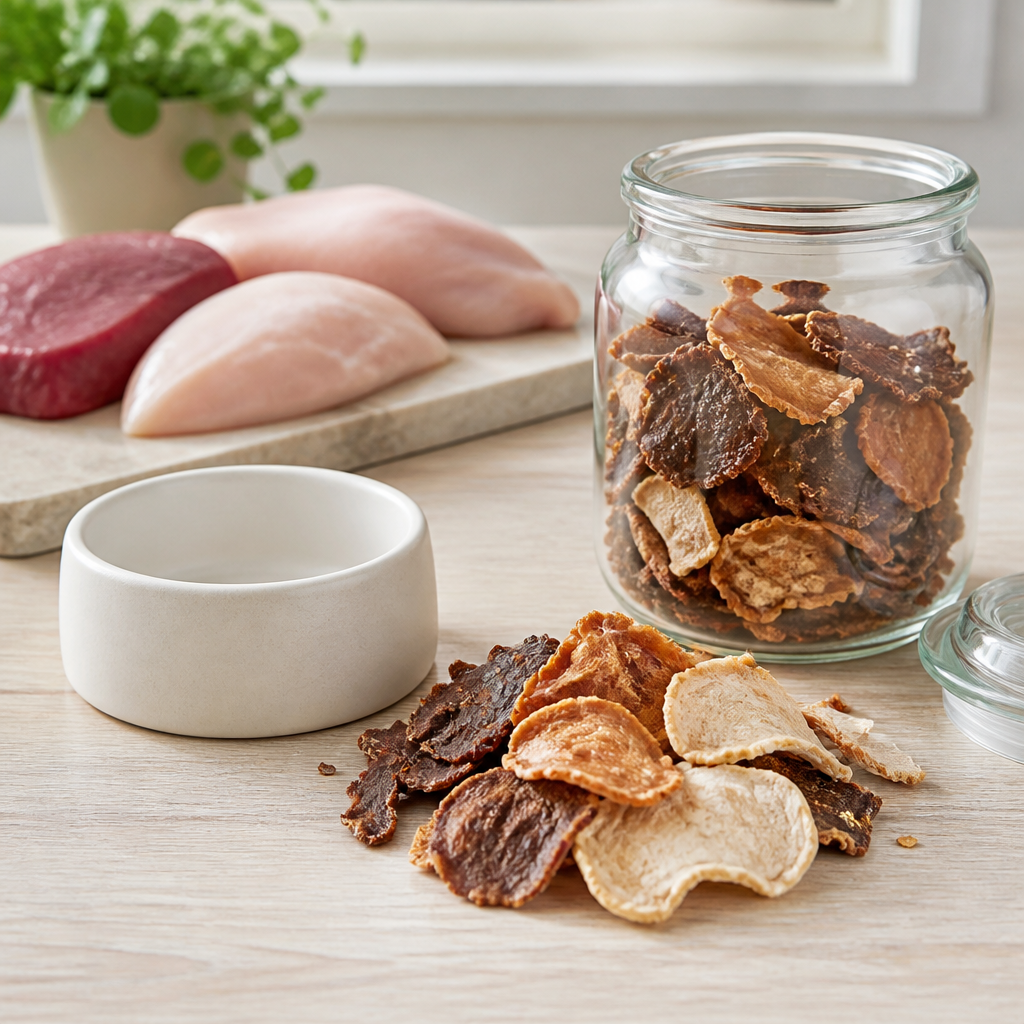
Once you know why preservatives are used, the next question is what the alternatives look like in practice. Each approach keeps a treat fresh in a different way, and each comes with its own trade-offs. The table below compares three common approaches so you can see where each one fits.
| Approach | How It Works | What to Expect |
|---|---|---|
| Synthetic antioxidants (such as BHA or BHT) | Interrupt fat oxidation at low cost, so treats keep their smell and appearance for a long time. | Long shelf life and consistent quality, but these are the additives most owners want to limit for sensitive dogs. |
| Natural antioxidants (such as mixed tocopherols or rosemary extract) | Slow oxidation using compounds found in plants and vitamin E. | A simpler label and a shelf life that's usually shorter, so storage matters more. |
| Air-drying with no added preservatives | Removes most of the water so bacteria and oxidation have less to work with, while the ingredient list stays short. | A single ingredient on the label, but the treat needs sealed, cool, and dry storage to stay at its best. |
In our experience, the air-drying approach is the simplest for owners who want to know exactly what they're giving. It doesn't remove the need for good storage, but it removes the guesswork about additives. For many households, that trade-off feels like a fair one.
How to Switch to Cleaner Treats
If you're now thinking about making a change, you're in good company. The goal isn't perfection. It's a steady shift toward treats you can understand and trust. A gentle approach is easier on your dog and on your routine, and it gives you a clear way to see what's working.
Start Small With Training Treats
Training treats are the easiest place to begin, because they're used in small amounts throughout the day. Swap the treats you use most often first, and leave the occasional bone or chew for later. This gives you a meaningful change without overhauling everything at once.
Single-ingredient, air-dried chips made from real meat are one option many owners try first. Our own range is made in small batches with no fillers, preservatives, or artificial ingredients, so the label is short enough to read in a few seconds. You may find another brand that suits your dog better, and that's completely fine.
Give Each Change Two Weeks
Introduce one new treat at a time and give it about two weeks before judging how your dog is doing. Mix a small amount in with their usual food or swap a few training rewards, and keep your portions steady. If stools stay firm, energy looks good, and your dog seems happy, you're on the right track.
Pro tip: Break treats into smaller pieces for training. This keeps the reward value high while lowering the total amount your dog takes in, which is especially helpful for cats and small dogs.
Frequently Asked Questions
Are artificial additives in dog treats always harmful?
Not necessarily, and no single treat is likely to cause lasting harm to a healthy dog. The concern is about patterns over time, especially for dogs with sensitive stomachs. If you're unsure, reducing the number of additive-containing treats is a calm, practical step.
What are the most common additives to look for on a treat label?
Watch for synthetic antioxidants such as BHA, BHT, and ethoxyquin, artificial colours, humectants like propylene glycol, and flavour enhancers. These are the groups that most often appear on processed treats. If you see several of them in one product, consider looking for something simpler.
How long should I wait before deciding a treat is causing problems?
Give a new treat about two weeks, while keeping your dog's other food and portions steady. If loose stools, itching, or gas appear and return each time the treat is offered, pause it and talk with your vet. Keeping a simple diary makes this much easier to judge.
Do natural preservatives work as well as synthetic ones?
Natural options such as mixed tocopherols and rosemary extract can slow oxidation, but they usually give a shorter shelf life. The trade-off is a simpler label and fewer compounds for your dog to process. Good storage, like a sealed, cool, and dry container, helps any treat last longer.
Are cats more sensitive to additives than dogs?
Cats clear some compounds through fewer metabolic routes than dogs, so many owners choose a stricter standard for cat treats. Smaller body size also means the same amount of an additive represents a larger dose. A short, plain ingredient list is a sensible starting point for cats.
Can I still give treats to a dog with a sensitive stomach?
Yes, with a bit of care. Choose treats with short ingredient lists, introduce one new product at a time, and keep portions small. If symptoms continue, speak with your vet, who can help you narrow down the cause.
Have you noticed a change in your dog or cat after switching treats, or do you have a favourite label-reading tip that's worked for you? We'd love to hear about your experience in the comments.
References
Follow Us
Subscription Subscribe to our newsletter and receive a selection of cool articles every weeks

Real Talk & Tail Wags

dog socialisation treats
Learn how to use treats to help your dog socialise with other pets and strangers, with calm, step-by-step tips from...

cost of pet treats Australia
Wondering if premium pet treats are worth the cost in Australia? Learn how to compare price per kilo, budget smarter...

cat picky eater
Cats are notoriously fussy eaters, but there are real reasons behind it. Learn what actually wins over a picky cat,...