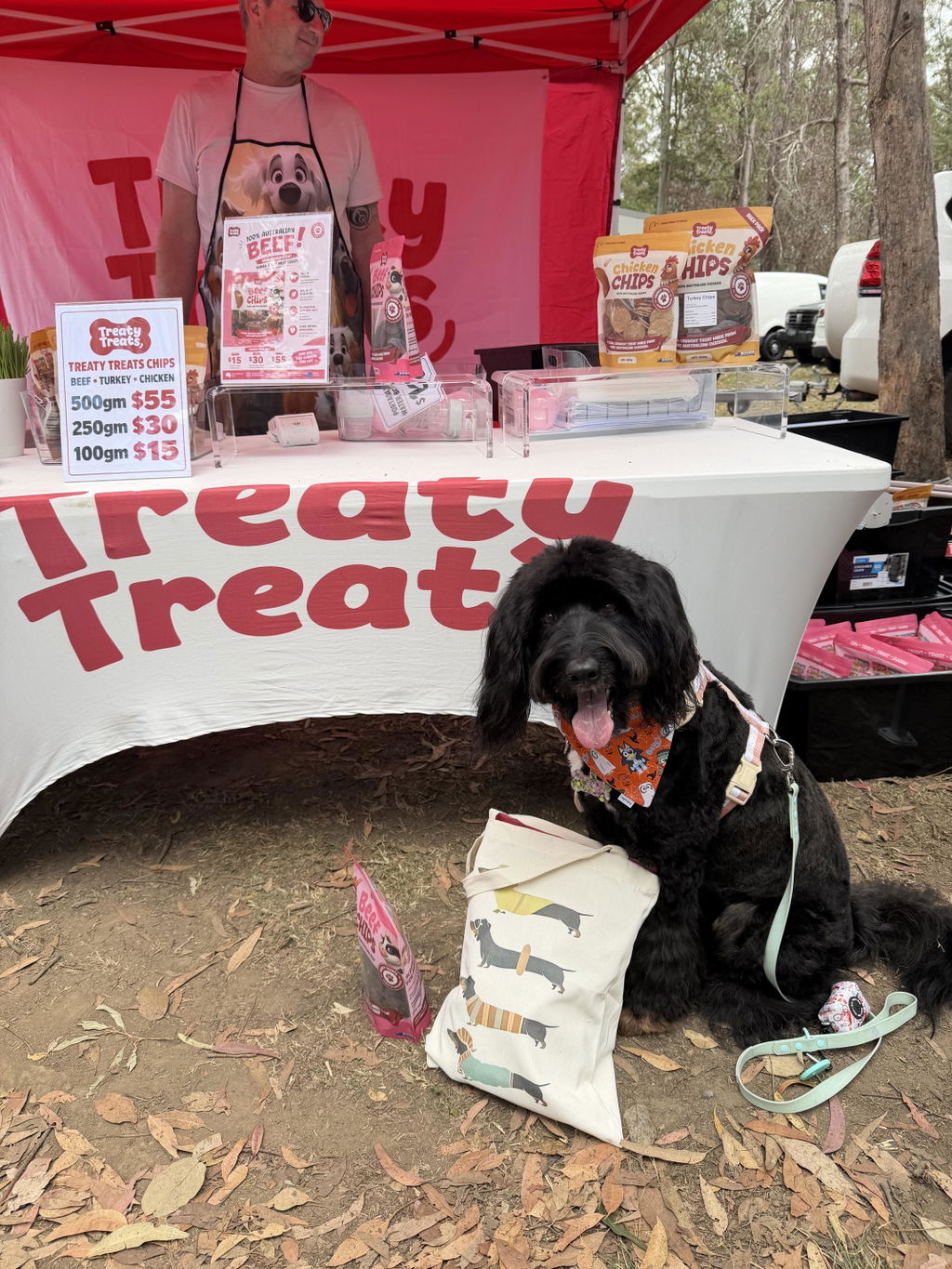
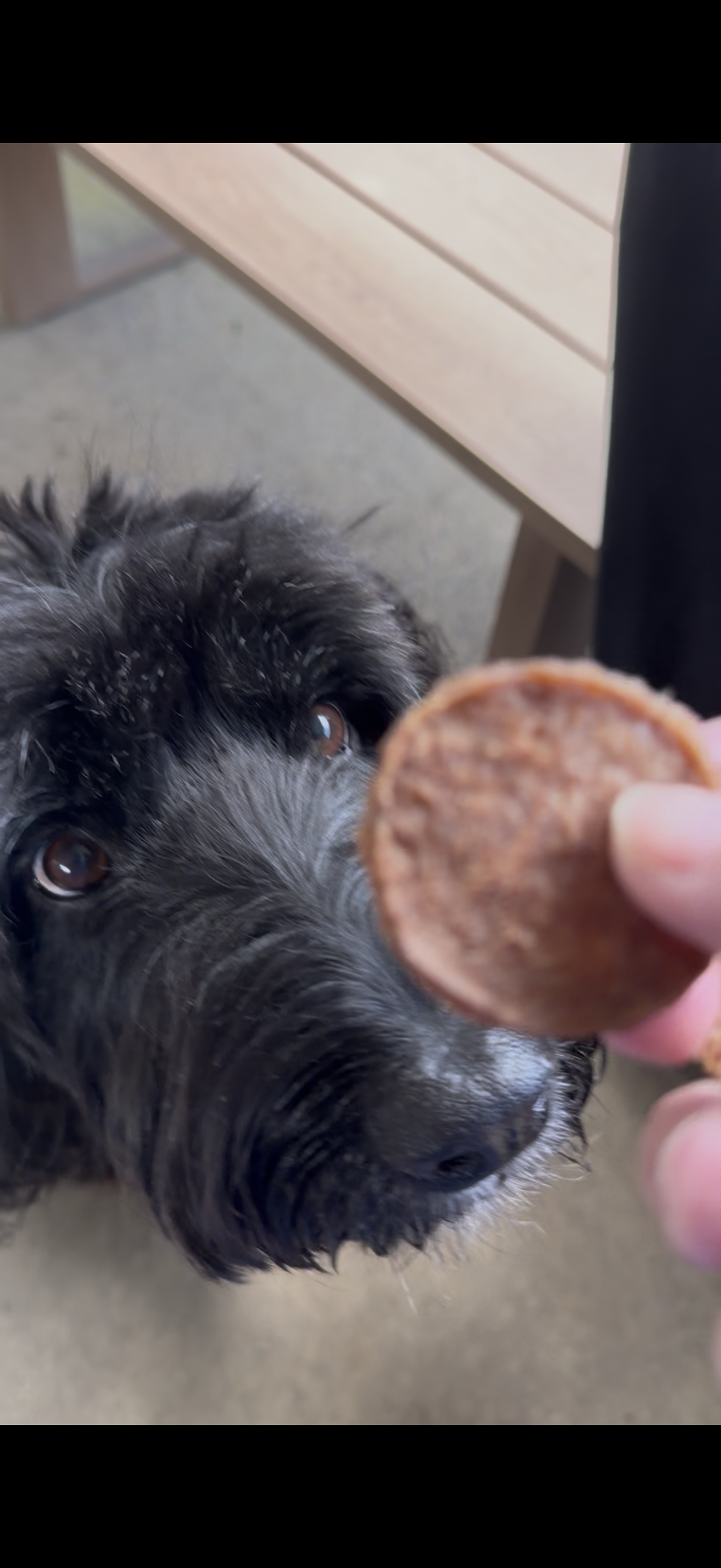
Picture this: you're out on a morning walk, your dog spots another pup across the grass, and suddenly every muscle in their body goes tight. You want them to feel relaxed, but you're not sure what to do next. Good news, treats can be one of your most useful tools for dog socialisation. Used well, a few small, tasty rewards help your dog link other dogs, cats, and people with something good happening.
Used carelessly, though, treats can turn into a bribe that makes your dog ignore you until you wave food in front of them. In this guide, we'll walk through how to use treats in a way that builds confidence, step by step. No rush, and no perfect timing required.
Table of Contents
- Quick Takeaways
- Why Treats Help With Socialisation
- Choosing Treats for Each Social Moment
- Introducing Your Dog to Other Pets
- Meeting Strangers on Walks
- Comparing Treat Approaches
- Common Mistakes to Avoid
- Reading Your Dog's Body Language
- Frequently Asked Questions
- References
Quick Takeaways
| Key Insight | Explanation |
|---|---|
| Start where your dog can eat | If your dog won't take a treat, they're over their threshold. Move further away until they can chew calmly, then work closer in small steps. |
| Save the best treats for tough moments | Keep high-value rewards for new dogs, strangers, or busy places. Everyday kibble can handle practice at home. |
| Keep every piece pea-sized | Tiny rewards let you reward often during short sessions without adding extra calories to a busy day. |
| Reward the behaviour, not the lure | Give the treat after your dog looks at the other dog or stays loose, rather than luring them into position with food. |
| Stop before your dog gets overwhelmed | Watch for stiff bodies, a hard stare, or refusing food. End the session while things are still calm. |
| Introduce other pets in stages | Use a secure lead, a neutral space, and short sessions. Reward calm sniffing and looking away, then separate before tension builds. |
Why Treats Help With Socialisation
Dogs love food, and that's a big reason treats work so well for socialisation. When something a bit scary shows up, like a new dog or a stranger in a hat, a tasty piece of chicken or beef gives your dog something pleasant to focus on. It shifts their attention from the worry to you.
Over time, your dog starts to connect the sight of other animals and people with good things. That's the heart of the approach. You're not forcing your dog to tolerate something, you're helping them feel better about it, one calm moment at a time.
How Treats Create a Positive Link
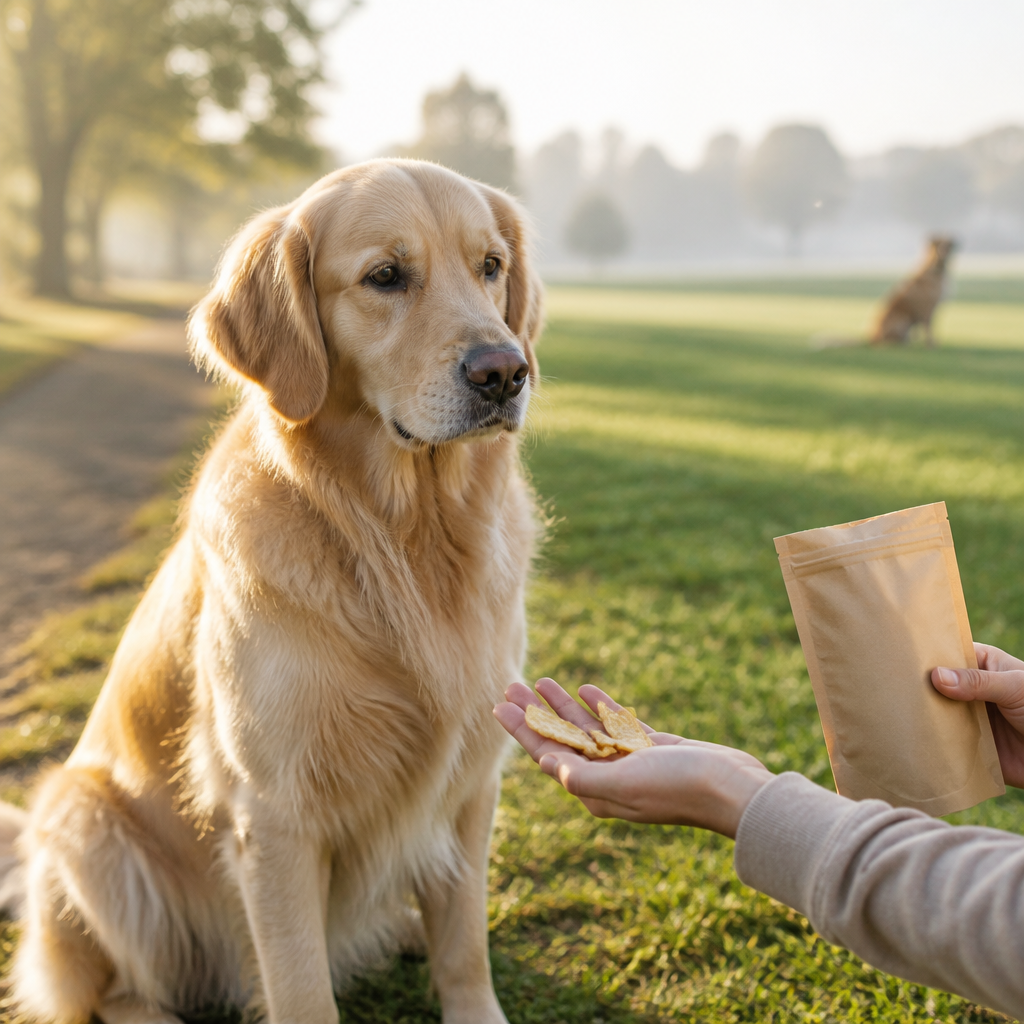
Treats do three helpful things in a social setting. They help reduce resistance, they increase focus, and they create a positive association with what's happening around your dog. Those three effects are why trainers often reach for food during the early stages of learning.
The positive link builds through repetition. A dog who gets a treat every time a neighbour's cat walks past a window starts to expect good things from cats, and that expectation is what you're after. In practice, it can take many short, calm sessions before you notice the change.
A treat is not just a reward for good behaviour. It is a message that says this moment is safe.
The Trade-Offs to Keep in Mind
Treats come with real downsides, and it's worth knowing them up front. Some dogs become dependent on food and stop responding when no treat is visible. Others get so excited by food that they become over-stimulated and struggle to settle.
Food also doesn't build respect on its own. A dog who gets paid for every request can learn to ask, "What's in it for me?" The goal is to use treats as one tool among several, including calm voice cues, a loose lead, and time to settle, so your dog learns to look to you even when food isn't in your hand.
Pro tip: Practise your cues without treats once your dog is confident. Ask for a sit or a look at you on a quiet walk, then reward with a treat, a quick praise, or a short game. This keeps the relationship strong when you're out and about.
Choosing Treats for Each Social Moment
Not all treats are equal, and matching the treat to the situation makes a big difference. A plain biscuit might be fine for a sleepy afternoon at home, but it probably won't hold your dog's attention at the dog park. Think of treat value as a sliding scale that you adjust based on how hard the moment is.
A simple rule works well for most owners. The more exciting the other animal or person, the more valuable the reward needs to be. Save your strongest rewards for the hardest moments, so they keep their meaning.
Matching Treat Value to Difficulty
For easy practice, such as your dog noticing a parked bike at the end of the driveway, everyday treats are plenty. For a new puppy meeting a calm adult dog, you'll want something more interesting. For a nervous rescue dog meeting a stranger who is loud or bending over them, the most valuable treat in your pocket is the right choice.
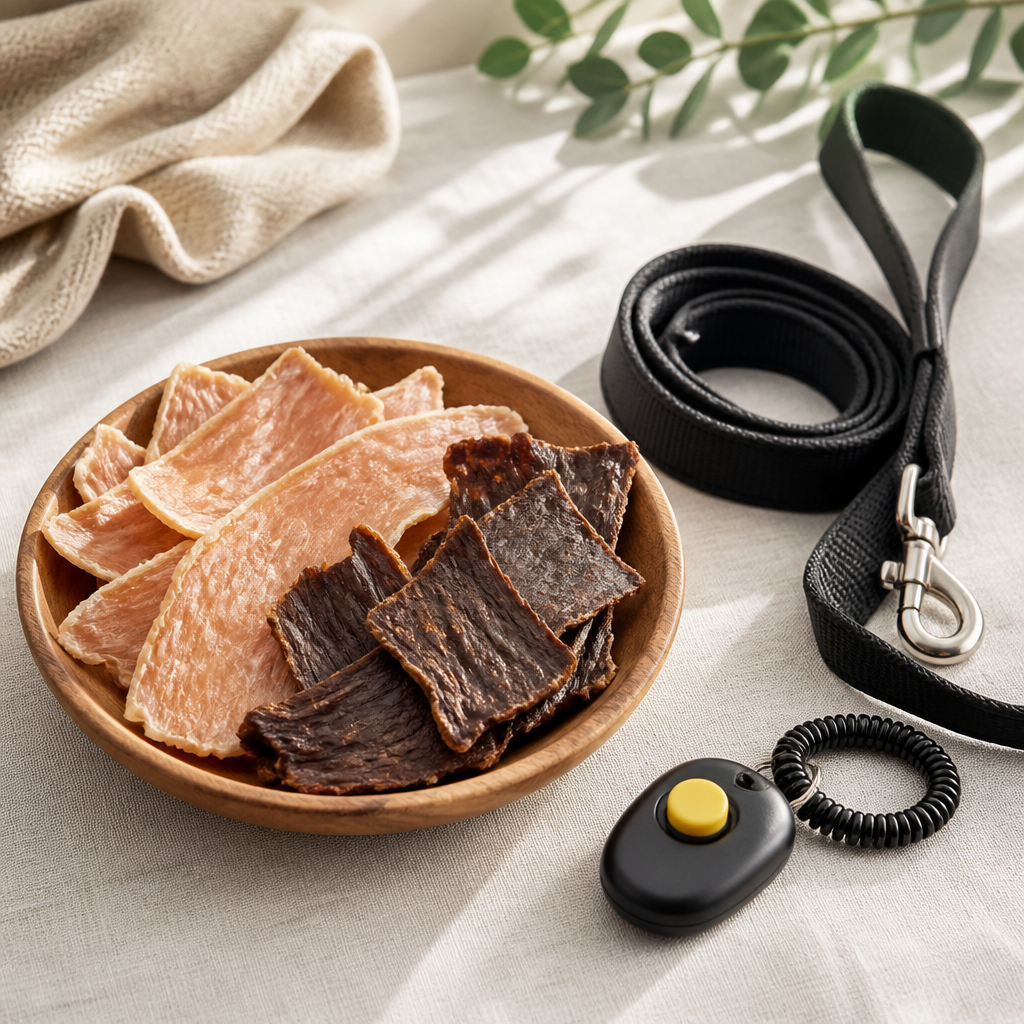
Many owners find that single-ingredient, air-dried meat treats are a good middle ground. They're strongly aromatic, naturally crunchy, and easy to break into small pieces. That's one reason we make our air-dried beef, chicken, and turkey chips at Treaty Treats, so you can offer something real and meaty without adding fillers or artificial extras to the mix.
Keeping Portions Small and Frequent
Socialisation sessions can involve dozens of rewards in just a few minutes, so portion size matters. Aim for pea-sized pieces, or break a chip into several small bits. Your dog gets the reward and the message, without a full meal's worth of extra food.
Keep an eye on your daily total, too. If training treats are a big part of your dog's day, reduce their regular meal a little to balance things out. A quick check with your vet is always a good idea if your dog has health concerns or a special diet.
Pro tip: Carry treats in a pouch on your hip, not in a pocket you have to dig through. You'll reward faster, and your dog will learn that good things happen right when they look your way.
Introducing Your Dog to Other Pets
Introducing a new dog, cat, or small pet into your home, or meeting a neighbour's animal on the street, can feel stressful for everyone. Take a breath. A calm, planned introduction gives your dog the best chance to feel okay about the other animal, and treats can help that feeling grow.
The key is to keep the first meetings short, controlled, and low-pressure. Let your dog set the pace as much as the situation allows, and reward the moments when they stay relaxed.
Setting Up the First Meeting
Pick a neutral space where neither animal feels like it owns the territory. Keep your dog on a loose, secure lead and have a helper hold the other pet if possible. Start with enough distance that both animals can notice each other without reacting strongly.
Reward calm looks, sniffs, and body softening. If your dog gets distracted by the other animal and turns back to you, that's a win too. Keep sessions to a few minutes and end on a good note, even if it feels too short.
Rewarding Calm Sniffing and Looking Away
Many owners only reward the big moments, like a full greeting. In practice, the small moments do more of the work. A glance toward the other pet followed by a quick look back to you is exactly the kind of behaviour worth rewarding.
Give the treat while your dog is still calm, rather than waiting until they're pulling toward the other animal. Early rewards teach them that staying relaxed earns good things, and that's a much easier habit to build than trying to fix a tense meeting after it starts.
Handling Cats and Smaller Pets
Cats and smaller animals often need more space and a different pace. A dog that is too excited can scare a cat, which can make the cat more defensive and the dog more interested. Give your cat an escape route, such as a higher perch or a room with a door they can use.
Reward your dog for disengaging from the cat, not for chasing. If your dog fixates on a smaller pet, step back and try again later with more distance. Progress might be slower than you'd like, but it's real progress.
Meeting Strangers on Walks
Strangers can be tricky for dogs. A tall person in a hat, a child running past, or someone reaching out a hand can all feel big and unpredictable. You don't need to make every stranger a new best friend. Your goal is for your dog to stay comfortable and relaxed while people pass by.
Treats are particularly useful here because they give your dog something to do with their nervous energy. Instead of lunging or barking, they can take a treat, look at you, and wait.
Teaching Your Dog to Look at People Happily
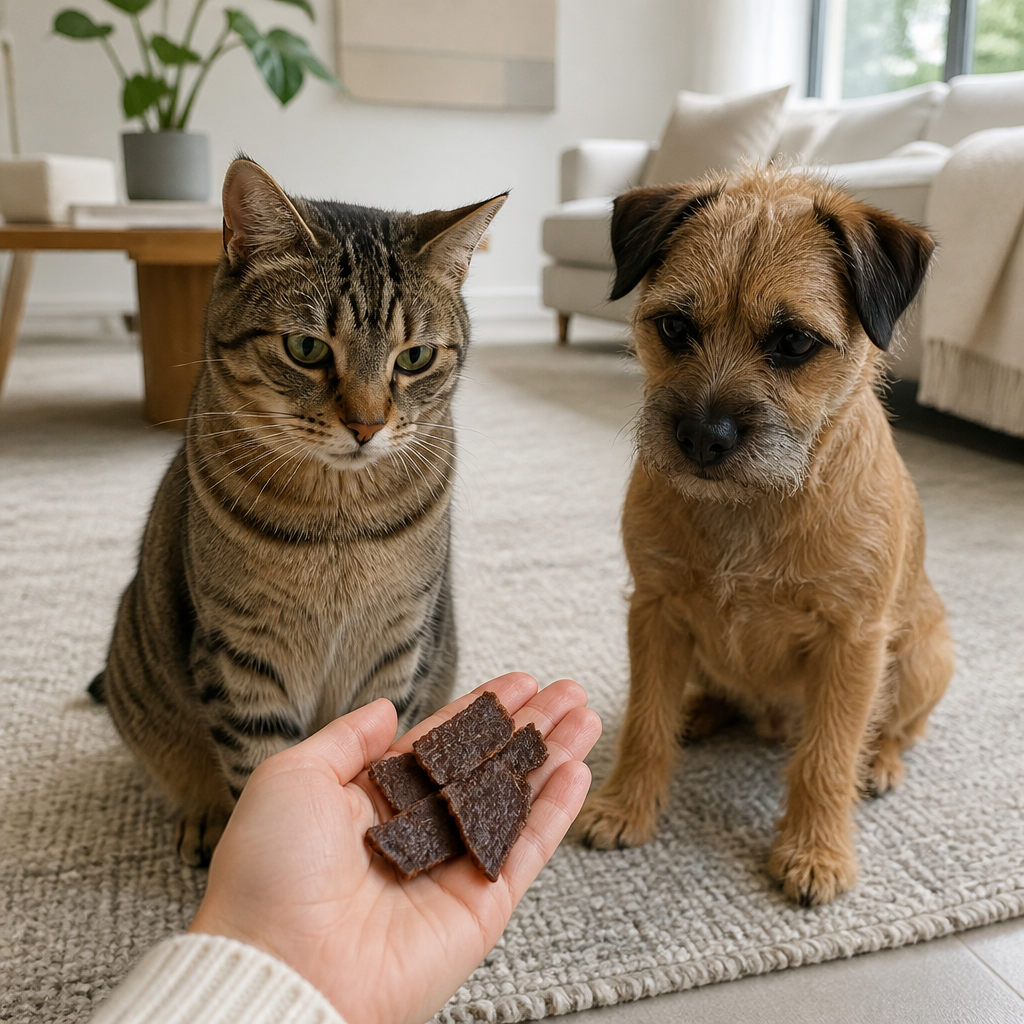
Start with people at a distance, such as someone sitting on a bench across a park. When your dog notices them and looks back at you, reward immediately. If your dog stays loose while the person walks away, add another reward as a bonus.
Slowly reduce the distance over several walks. If your dog gets stiff or starts to stare, you've moved too close, so step back and try again next time. Small, steady steps usually beat one big push.
Asking Strangers for a Little Help
Most people are happy to help when they understand what you're doing. Ask them to toss a treat on the ground, not into your dog's mouth, or to ignore your dog until they're calm. Tossing treats on the ground can also help a nervous dog approach at their own pace.
It's fine to say no to a greeting. A simple, friendly "Thanks, we're working on calm greetings today" keeps the moment kind for everyone. Your dog doesn't have to meet every person who wants to say hello.
Preparing Your Dog for Visitors at Home
Visitors at home are often the hardest strangers for a dog because the space is supposed to be safe. Set up a quiet spot with a bed or crate, and give your dog a long-lasting chew or a stuffed food toy there. Reward them for going to that spot when the doorbell rings.
Ask guests to ignore your dog at first, and to offer treats only if your dog approaches calmly. This keeps the social pressure low while your dog learns that visitors are a normal part of life.
Comparing Treat Approaches
There isn't just one right way to use treats for socialisation. Each approach has strengths and limits, and the best choice depends on your dog's temperament and how much training you're doing. Here's how three common methods compare.
| Approach | Best For | Watch Out For |
|---|---|---|
| Luring with food in hand | Teaching a brand-new position or behaviour in a quiet space | Dogs can start to depend on the visible treat, so fade the lure quickly once they understand the cue |
| Rewarding after the behaviour | Everyday socialisation, such as calm looks and relaxed greetings | Timing matters, so deliver the treat within a second or two of the calm moment |
| Marker word plus treat at a distance | Building confidence around strangers and other dogs at a comfortable distance | Consistency is key, so use the same marker word every time and always follow it with a reward |
In most cases, the third option gives you the best balance. It keeps your dog in the learning zone, gives you clear communication, and avoids the trap of treats becoming a bribe. Start with it, then add the others when they fit.
If you're unsure which approach to try, pick one, practise for a week, and notice how your dog responds. Small changes in timing or distance often make a bigger difference than switching methods completely.
Common Mistakes to Avoid
Most socialisation setbacks come from a handful of predictable mistakes. The good news is they're easy to fix once you know what to look for. Be kind to yourself here, because almost every owner makes at least one of these along the way.
Think of this section as a quick check-in. If any of these sound familiar, you're not alone, and a small change can get things back on track.
Waiting Until Your Dog Is Already Reactive
Many owners wait until their dog barks or lunges before reaching for a treat. At that point, your dog is often past the point where they can take food or think clearly. Start rewarding earlier, when the other animal or person first appears and your dog is still calm.
If your dog is already in full reaction, create distance first. Then start again from a point where food gets accepted.
Treating Every Step as a Bribe
Holding a treat in front of your dog's nose to get them to move is a lure. That's useful for teaching something new, but it shouldn't be the main way you handle every social moment. When lures stick around too long, dogs start expecting food before they'll do anything.
Shift to rewarding after the behaviour as soon as your dog understands the cue. The treat then becomes a thank you, not a payment.
Pro tip: If your dog only responds when food is visible, practise the cue with an empty hand for a few seconds, then reward. Gradually lengthen the time before you reward, so the behaviour stays strong even when treats are out of sight.
Using Treats to Force Contact
Some owners try to push a nervous dog closer to a stranger or another pet by waving treats at them. This can backfire quickly. A dog who feels trapped may freeze, growl, or snap, and the treat won't change that feeling.
Let your dog choose to approach. Toss the treat near them, or place it on the ground between you and the other person. Your dog keeps control of the moment, and that control is what builds trust.
Pro tip: Keep a short "session plan" on your phone, such as three greetings at a distance, two short walks past a neighbour, and then home. Ending each session on a success helps your dog feel confident about the next one.
Reading Your Dog's Body Language
Your dog can't tell you how they feel, but their body often says it clearly. Learning these signals is one of the most useful socialisation skills you can build. It tells you when to reward, when to wait, and when it's time to create distance.
Watch the whole dog, not just the face. Tail position, ear set, weight shift, and mouth tension all give you clues about how they're coping.
Signs Your Dog Is Ready for Treats
A dog who is ready for treats often has a loose body, soft eyes, and a mouth that's relaxed. They may sniff the air, look toward the other animal, and then glance back at you. Their tail might move in a relaxed way, and they take the treat gently rather than snatching it.
These are your cues to reward. Keep the treat coming while your dog stays in this comfortable zone, and watch for any shift.
Signs It's Time to Create Distance
Stiff legs, a hard stare, a raised hackle, a lifted lip, or a mouth that suddenly closes are signs your dog is getting overwhelmed. Some dogs also stop eating treats altogether. That's your clearest message that they need more space.
Calmly move away, give your dog a sniff break, and try again later with more distance. Ending the session early is not a failure. It's a smart choice that protects the progress you've made.
Frequently Asked Questions
Will using treats make my dog depend on food forever?
Not if you fade them carefully. Start with frequent treats during learning, then gradually reward less often while adding praise, play, and calm cues. Your dog learns that good things still happen even when food isn't visible.
What is the best treat for socialising a nervous dog?
Choose something your dog finds very tasty but can eat quickly, such as small pieces of air-dried meat. Save this high-value reward for harder moments, and keep everyday treats for easier practice.
How many treats should I use in one session?
There's no single number, but short sessions with pea-sized pieces work well. Keep an eye on your dog's daily intake and adjust their regular meals if training treats add up over the day.
Can I use treats if my dog is reactive to other dogs?
Yes, but start at a distance where your dog can still take food. If they stop eating or stiffen, you're too close. A qualified trainer can help you build a plan that suits your dog's specific triggers.
How long does it take to see progress with other pets?
It depends on your dog's past experiences and how consistent you are. Many owners notice small changes within a few weeks of short, regular sessions. Celebrate those early wins, because they add up over time.
We'd love to hear from you. Have treats helped your dog feel calmer around other pets or strangers, or is there a moment that still feels tricky? Share your experience in the comments, and tell us what's working for your pup.
References
Follow Us
Subscription Subscribe to our newsletter and receive a selection of cool articles every weeks

Real Talk & Tail Wags

artificial additives dog treats
Find out what artificial additives in dog treats do inside your dog's body, from digestion to the liver, and how...

cost of pet treats Australia
Wondering if premium pet treats are worth the cost in Australia? Learn how to compare price per kilo, budget smarter...

cat picky eater
Cats are notoriously fussy eaters, but there are real reasons behind it. Learn what actually wins over a picky cat,...