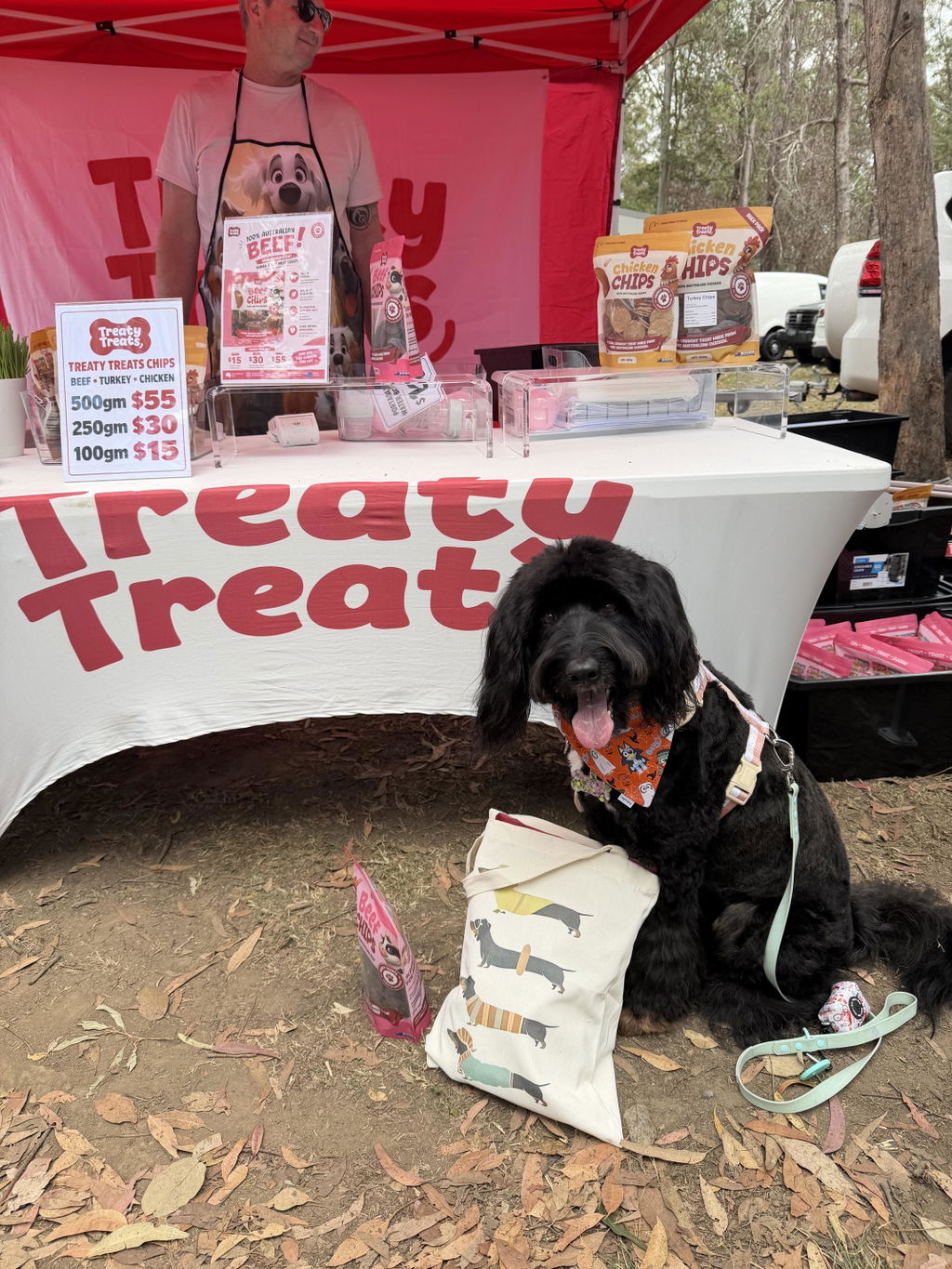
If you've ever stared at a natural pet food label in Australia and wondered what it actually promises, you're in good company. Two words in particular, “natural” and “human-grade”, show up on dog and cat treats everywhere, and they sound reassuring. The trouble is that neither one works like a tidy checklist. In this guide, we'll walk through what each term tends to mean, what the rules do and don't cover, and how to read a pack with a bit more confidence. No rush, we'll take it one label at a time.
Table of Contents
- Quick Takeaways
- What “Natural” Really Means on a Label
- What “Human-Grade” Really Means and Where It Comes From
- Australian Pet Food Labelling Rules
- How to Read a Treat Label Step by Step
- Comparing Common Label Claims
- Label Traps for Dog and Cat Owners
- How We Approach Labelling at Treaty Treats
- Frequently Asked Questions
- References
Quick Takeaways
| Key Insight | Explanation |
|---|---|
| “Natural” has no firm definition you can check | Treat the word as a starting point for your questions. Then read the ingredient list and the back of the pack before deciding. |
| “Human-grade” describes intent more than proof | Look for specifics like named meat, clear origin, and a maker who can explain how the claim applies to their product. |
| Short ingredient lists are easier to verify | When a pack names one meat and little else, you can see exactly what your dog or cat is eating without guessing. |
| Air-drying describes a process, not a guarantee | Drying removes moisture to help preserve the treat. It doesn't tell you about sourcing, so keep checking the other details. |
| A named maker beats a leafy green logo | A business that can tell you how and where its treats are made is giving you more useful information than a decorative badge. |
| Misleading claims can be questioned | General consumer law still applies to pet products, so a vague promise isn't the same as a checked guarantee, and you can ask the brand what a claim means. |
| Treats count toward your pet's daily intake | Even the cleanest label adds calories. Keep an eye on how many rewards you give during training and play. |
What “Natural” Really Means on a Label
Let's start with the word that does most of the heavy lifting. “Natural” feels wholesome, and most of us read it as “made from things that come from nature without much fuss.” That's a fair reading, and it's probably what the brand hopes you'll take away. The catch is that on a pet treat, “natural” doesn't come with a single, detailed definition you can check against a rulebook.

That's why one pack can say “natural” while another says the same thing, even though the ingredients, processing, and sourcing look quite different. Some brands use the word for a short ingredient list. Others use it for a product that is still heavily processed but has no synthetic colours. Both can be honest in their own minds, and both can make the word look identical on the shelf.
What the word can tell you
Used carefully, “natural” points you toward a product that avoids some of the additives many owners prefer to skip. If the pack says natural and the ingredient list is short, you have a starting point that's easy to verify. It's a useful signal to pick up the pack and read the back, not a reason to stop reading.
What it can't tell you
The word can't tell you how the animal was raised, how the treat was dried, how long it sat in a warehouse, or whether the maker tests each batch. A common mistake is treating “natural” as the finish line. A better habit is to treat it as the first question in your check, not the answer.
What “Human-Grade” Really Means and Where It Comes From
“Human-grade” sounds like an even higher bar, and it's easy to assume it means the food would pass as something you'd eat for dinner. In general terms, it's a claim about the standard of ingredients and intent rather than a badge you can verify just by looking. The Pet Food Industry Association of Australia (PFIAA) has published a page answering the question of what “human grade” means when a pet food makes that claim, and it's worth reading if you want the industry's own framing.
The term in plain language
In general, “human-grade” is used to suggest the ingredients are of a quality suitable for people to eat, and that the product is made to a matching standard. The problem is that the phrase appears across pet products with very different levels of backing behind it. A brand can use it sincerely, and another can use it as decoration on the front of the pack.
Why the front of the pack isn't enough
A consumer resource that compares human-grade and pet-grade pet food ingredients makes a point worth remembering. Packaging for a product made from diseased or dying animals can look exactly like packaging for one made with human-grade meat. That's a harsh example, and we don't share it to scare you. We share it because it shows that the words on the front rarely tell the whole story. What helps is looking for specifics: named meat, a clear country of origin, and a maker who can explain their sourcing without getting vague.
A label that sounds premium is a starting point for your questions, not the answer to them.
Australian Pet Food Labelling Rules
If you're hoping a government standard will settle the “natural” versus “human-grade” question for you, we'd like to set expectations gently. Food standards in Australia are set by Food Standards Australia New Zealand (FSANZ) through the Food Standards Code, and they are enforced by the states and territories. Those rules are written with food for people in mind, so pet food sits in a different corner of the system than most shoppers expect.
What the food labelling framework covers
FSANZ's labelling guidance sets out the information that businesses need to show on a label and explains how enforcement is shared across jurisdictions. For you as a buyer, the practical takeaway is that the framework gives you a floor, not a detailed menu of what “natural” or “human-grade” must contain. If you want the official wording and scope, the FSANZ labelling page is the place to start.
Where misleading claims fit in
Even when a term has no tight definition, the general rules against misleading or deceptive conduct under the Australian Consumer Law still apply to what a business says about its products. In practice, a claim that is vague but not clearly false is hard to challenge, while a claim that plainly misleads you can be raised with the regulator. Don't assume every word on the pack has been independently checked. Ask the brand.
Pro tip: If a claim matters to your decision, write it down and ask the maker what it means for their specific product. A clear, specific answer is a good sign, and a vague answer tells you something too.
How to Read a Treat Label Step by Step
Feeling a bit overwhelmed by the back of the pack? Totally understandable. The good news is you don't need to decode everything on it. A few quick checks will get you most of the way, and you can do them in the time it takes to read a shopping list.
Start with the ingredient list, because it's the most direct part of the label. It tells you what the product is made from, and a short list is much easier to check than a long one. If you see one named meat and a few simple items, you're looking at something you can understand at a glance.

Start with the ingredient list
Look for named sources, such as “beef” or “chicken” rather than general terms like “meat meal” or “animal derivatives.” Next, scan for fillers, preservatives, and additives, and notice whether the list changes from one flavour to another. A treat that's supposed to be single-ingredient should read like one. If the list suddenly includes grains, gums, or colourings, the front of the pack is telling only part of the story.
Check the processing and the maker
Next, look for words that describe how the product is made, such as air-dried, freeze-dried, or cooked. These describe a process, and they tell you something about moisture, handling, and how much the ingredients have been altered. Then look for a named maker or a contact you can reach. A business that makes its treats in batches and can explain each step is easier to trust than one whose process stays vague.
Comparing Common Label Claims
Sometimes the easiest way to make sense of a label is to put the terms side by side. The table below compares three approaches you'll commonly see on dog and cat treats. It doesn't rank them as good or bad, because the right choice depends on your pet, your budget, and what you're trying to avoid.
| Label approach | What it usually signals | What to check on the pack |
|---|---|---|
| “Natural” claim | Fewer synthetic additives than some alternatives, but no firm national definition | Length of the ingredient list, named meat, and any preservatives or flavourings listed |
| “Human-grade” claim | An intention to use ingredients of a quality suitable for people, with no single certificate you can check | Named cuts, country of origin, and how the maker explains their sourcing |
| Single-ingredient, air-dried | One named protein, dried to help preserve it without a long list of additives | The processing description, storage advice, and whether batches are made in-house |
Three terms side by side
Notice that the first two rows describe what a brand wants you to believe, while the third describes what the product actually is. That's the shift that helps most in practice. When you read a label, ask whether the words describe the ingredients and the process, or only the feeling you're meant to have about them.
Choosing based on your pet
If your dog has a sensitive stomach, a short, named ingredient list is often the most useful thing you can give yourself. If you're training a young puppy or a food-motivated cat, you'll care more about how crunchy the treat is and how small it can be broken. Start with your pet's needs, then use the label terms to narrow the choice.
Label Traps for Dog and Cat Owners
Here's where many well-meaning owners get caught. The label looks reassuring, the photos are lovely, and the price feels fair, but a few details work against what you're hoping for. Knowing the common traps makes them much easier to spot.

Natural on the front, fillers on the back
Some packs lead with a green leaf, a farm scene, or the word natural, then list fillers, sugars, or additives further down the panel. It's not always deliberate, but it's a reason to read every line. The front of the pack is designed to sell, and the ingredient panel is designed to inform. Give the second one more of your attention.
Treats are part of the diet, not a bonus
Even a clean, single-ingredient treat adds calories. Training sessions can add up quickly, especially when you're rewarding every sit, stay, and recall. A practical habit is to think of treats as a small share of your pet's day and to adjust regular meals if you're giving more rewards than usual. Your vet can help you work out what's right for your pet's size and activity.
Pro tip: Break a few treats into smaller pieces before a training session. You'll keep the reward feeling generous for your pet while using far fewer calories across the week.
How We Approach Labelling at Treaty Treats
We'll be honest with you: we make treats, so we have a point of view. That's exactly why we think you should check us against the same questions we've outlined here, rather than taking our word for it. Our goal is to make the label easy to understand, with fewer surprises once the pack is open.
Single ingredient, named meat
Our air-dried beef, chicken, and turkey chips are made from one named meat, with no fillers, preservatives, additives, or artificial ingredients. That means the ingredient list is short enough to read at a glance. If you're comparing us with another product, the question to ask is simple: can you see every ingredient, and does the list match the claims on the front?
Batch making and air-drying in practice
We batch-make our treats in-house, which means we can speak to each step rather than relying on a distant supplier's description. Air-drying is the process we use to preserve the meat without adding extra ingredients to do the job. It describes how the treat is made, not a promise that every pet will tolerate it, so if your pet has health concerns, check with your vet before adding any new treat.
Pro tip: When you open a new bag, check the ingredient list against the one you bought last time. If anything has changed, contact the maker and ask why before you start feeding it.
Frequently Asked Questions
Does “natural” on a pet food label mean it's healthier?
Not automatically. “Natural” usually points to fewer synthetic additives, but it doesn't guarantee the product suits your pet. Use it as a prompt to read the ingredient list, check the processing, and decide whether the treat fits your pet's needs.
Is “human-grade” pet food regulated in Australia?
There isn't a single, detailed national standard you can check for the term on every pack. The broader food labelling framework and the general consumer law rules on misleading claims still apply, so you can ask the brand what the claim means for their product.
Can my cat eat human-grade treats?
Cats have specific nutritional needs, so look for treats that are labelled for cats and that suit your cat's health. If your cat has a medical condition or a history of sensitivities, talk to your vet before adding any new treat, regardless of how the label reads.
How can I tell if a dog treat is truly single ingredient?
Read the full ingredient list rather than the front of the pack. A single-ingredient treat should list one named protein and nothing else of significance. If you see extra items such as grains, gums, colourings, or preservatives, the product isn't single ingredient, even if the front says it is.
What should I do if a label claim sounds too good to be true?
Take a breath and start with questions. Ask the maker what the claim means, where the ingredients come from, and how the product is made. If the answers stay vague or you think a claim is misleading, you can raise your concern with the Australian Competition and Consumer Commission (ACCC).
Should I switch treats if my dog has a sensitive stomach?
Change treats slowly and one at a time, so you can notice how your dog responds. Keep the ingredient list short and familiar, and check with your vet if you notice digestive upset. No rush, and there's no need to overhaul everything in one go.
What's the one label term that has confused you most, and what did you find when you checked it?
References
Follow Us
Subscription Subscribe to our newsletter and receive a selection of cool articles every weeks

Real Talk & Tail Wags

artificial additives dog treats
Find out what artificial additives in dog treats do inside your dog's body, from digestion to the liver, and how...

dog socialisation treats
Learn how to use treats to help your dog socialise with other pets and strangers, with calm, step-by-step tips from...

cost of pet treats Australia
Wondering if premium pet treats are worth the cost in Australia? Learn how to compare price per kilo, budget smarter...