Picture this: you call your cat in for dinner, and they look right through you before strolling off to sit on the fence. Or maybe the couch arm has become a scratching post, and the curtains are taking a beating at 3 a.m. If that sounds familiar, you're not alone, and you're not out of options. Cats can learn, and well-chosen cat training treats are one of the simplest ways to help them do it.
Reward-based training works because cats repeat what pays off. When a behaviour is followed by something tasty, your cat is more likely to offer it again. In this guide, we'll walk through how to pick the right treats, time your rewards so your cat connects the dots, and redirect unwanted habits without frustration. No rush, and no need to be perfect from day one.
Table of Contents
- Quick Takeaways
- Why Treat Rewards Work So Well for Cats
- Choosing the Right Cat Training Treats
- Timing Your Rewards Correctly
- Building a Reward-Based Training Routine
- Comparing Reward Approaches
- Redirecting Unwanted Behaviour With Treats
- Frequently Asked Questions
- References
Quick Takeaways
| Key Insight | Explanation |
|---|---|
| Reward the behaviour you want, right away | Your cat needs to link the treat to the action. Aim for a reward within a few seconds of the behaviour, while the moment is still fresh. |
| Use tiny, high-value pieces | Pea-sized bits of air-dried chicken, beef, or turkey are enough to motivate without filling your cat up. |
| Train one behaviour at a time | Teaching sit, come, and stop-scratching all at once confuses most cats. Pick one goal and stick with it for a week or two. |
| Keep sessions to a few minutes | Two to five minute sessions, a few times a day, work better than one long session that leaves your cat bored or annoyed. |
| Redirect, don't just stop | When your cat starts an unwanted habit, offer a better option such as a scratching post, then reward the switch. |
| Count the treats in your cat's daily food | Training treats add up quickly. Trim your cat's regular meal portions so the total stays in a healthy range for their size. |
Why Treat Rewards Work So Well for Cats
Cats are often described as independent, and that's partly true. But independence doesn't mean they ignore what benefits them. A cat who discovers that sitting quietly on the mat brings a crunchy, protein-rich reward will start sitting on the mat more often. That simple cause-and-effect is the engine behind reward-based training.
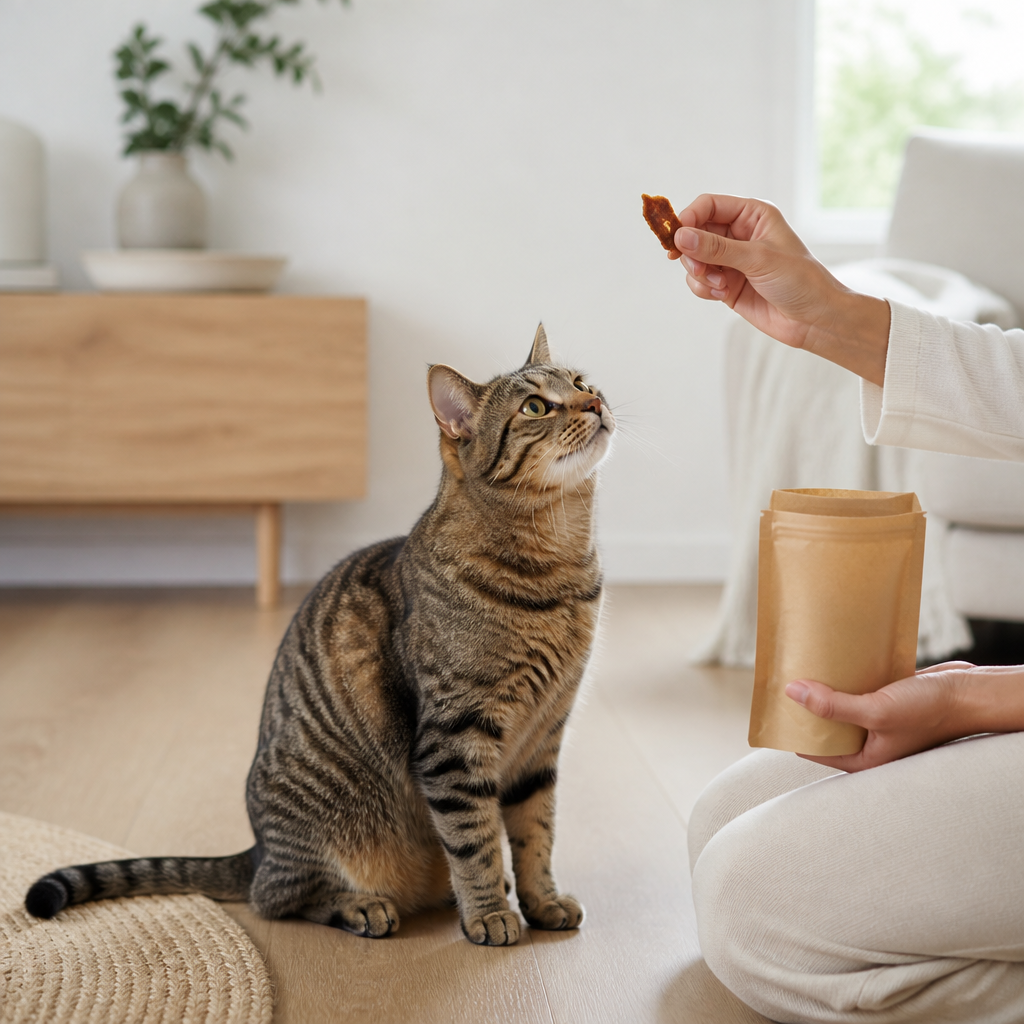
Positive reinforcement means adding something your cat values right after a behaviour you want, so that behaviour becomes more likely. The British Psychological Society's guidance on training cats describes it as giving the cat a nice reward for a behaviour so that they are more likely to do it. The word that matters most there is nice. A reward has to be something your cat genuinely wants in that moment, not just something you think is acceptable.
A useful summary from the Association of Shelter Veterinarians' materials on training describes reward-based methods as positive reinforcement and negative punishment, set apart from aversive methods. In plain language, reward-based training adds good things and removes access to things your cat wants, rather than relying on fear or discomfort. That's a far gentler path, and it tends to build trust rather than wariness.
A cat who is rewarded for a behaviour has a reason to repeat it. A cat who is scolded for the same behaviour mostly learns to keep an eye on the person doing the scolding.
In practice, this means your cat will look forward to training rather than dreading it. Many owners notice that their cat starts approaching them for sessions once the treats become a predictable, happy part of the day. That willingness is the foundation everything else is built on, so protect it by keeping the experience pleasant.
Choosing the Right Cat Training Treats
Not every treat is built for training. The best cat training treats are small enough to eat in a second or two, strong-smelling enough to get attention, and simple enough that you know exactly what your cat is eating. A treat that takes thirty seconds to chew breaks the rhythm of the session, and a treat your cat only half likes won't motivate much at all.
Size and texture for training sessions
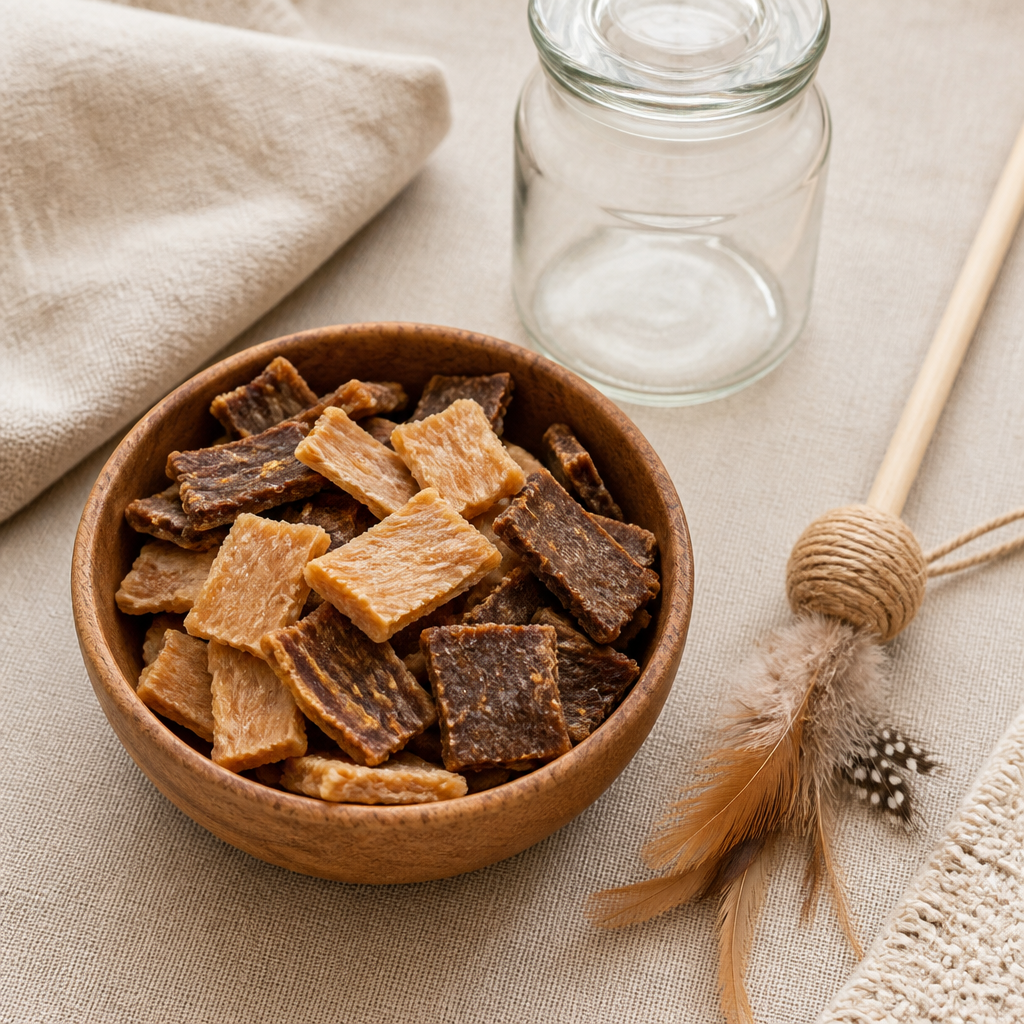
Think pea-sized or smaller. Air-dried chicken, beef, and turkey chips can be broken into tiny pieces with your fingers, which keeps each reward quick and light. Crunchy textures are handy for travel and quick sessions because they don't crumble into a mess the way some soft treats do. If your cat is older, has sensitive teeth, or has any dental concerns, ask your vet which texture suits them best.
Single-ingredient treats and sensitive stomachs
When you're rewarding dozens of times a week, every ingredient counts. Single-ingredient treats make it easier to notice if something doesn't agree with your cat, because there's only one thing to rule out. This matters a lot for cats with sensitive stomachs, who often do better with simple, predictable food. If your cat has a medical condition or a prescribed diet, check with your vet before adding any new treat.
Pro tip: Keep your training treats in a separate, sealed pouch or container from everyday snacks. That way they feel special, and you can always grab a handful without thinking about it.
Timing Your Rewards Correctly
If there's one thing that makes or breaks reward-based training, it's timing. A treat handed over five seconds after the behaviour can end up rewarding whatever your cat was doing in those five seconds, which might be walking away. Good news: once you get the timing right, progress often speeds up noticeably.
Government guidance on positive reinforcement for cats makes this point clearly. Correct timing is essential, and the reward should happen immediately, within seconds, or your cat may not associate it with the behaviour. That means having your treats ready before you start, so you're not fumbling in a pocket while the moment slips past.
The two-second window
Aim to deliver the treat while your cat is still doing the right thing, or within a second or two of it finishing. If your cat sits, reward the sit. If your cat stops scratching the sofa and turns toward the post, reward the turn. The closer the reward sits to the action, the clearer the lesson.
Marking the moment with a word
Many owners find it helpful to say a short, consistent word, such as "yes", at the exact moment the behaviour happens, then follow it with a treat. The word bridges the gap when you need a second or two to reach for the pouch. Use the same word every time, say it in a bright, friendly voice, and keep it for the moment your cat has done what you asked.
A common mistake is rewarding a cat who has already moved on. If your cat jumps down from the counter and then you call them over for a treat, they may simply think they're being rewarded for coming over. Keep the reward tied to the behaviour you care about, not to whatever happens afterward.
Building a Reward-Based Training Routine
Once the basics feel comfortable, the next question is how to turn them into a routine that fits your household. The good news is that cats do best with short, regular practice, which is far easier to fit around a busy Australian week than a long weekend lesson.
Start with one behaviour
Choose one behaviour to teach first, such as coming when called, sitting for a treat, or stepping onto a mat. Give it a week or two before adding another. Cats who are trained on several things at once often get confused about which action earns the reward, and progress slows down for everyone.
Keep sessions short and sweet
Two to five minutes is plenty for most cats. Finish while your cat is still interested, even if they've only done two or three repetitions. Ending on a success leaves your cat keen for next time, while a long session often ends with a cat wandering off or getting grumpy.
Fade the treats gradually
Once your cat reliably performs the behaviour, you can start rewarding less often. Move from a treat every time to a treat every few times, then mix in praise or a gentle scratch. This keeps the behaviour strong without relying on food forever. In practice, this step is often where people rush, so give it time.
Keep an eye on the total amount of food your cat eats each day. If you're using a fair number of treats, reduce the regular meal portion slightly so the overall intake stays steady. Your vet can help you work out what suits your cat's size and activity level.
Comparing Reward Approaches
There isn't one perfect method for every cat. Different approaches suit different goals, and many owners end up mixing a couple of them. The table below compares three common ways of using treat rewards so you can see which one fits what you're trying to achieve.
| Approach | Best For | Watch Out For |
|---|---|---|
| Marker word followed by a treat | Teaching new skills such as sit, come, or stepping onto a mat | Using the word inconsistently, or saying it before your cat has finished the action |
| Luring with a treat, then rewarding | Getting a shy or cautious cat to move into a new spot, such as a carrier or a bed | Relying on the lure forever, which can make your cat wait for food before they will move |
| Rewarding an alternative behaviour | Redirecting unwanted habits such as scratching furniture or jumping onto counters | Offering the alternative without also making the unwanted spot less appealing, which leads to slow progress |
For most households, the marker word and the redirect approach cover the bulk of daily needs. Luring is a useful extra for shy cats or for helping your cat get comfortable with carriers, vet visits, or new furniture. Whichever you choose, the rule stays the same: reward the behaviour you want, and make it worth the effort.
Redirecting Unwanted Behaviour With Treats
Scratching, counter surfing, and late-night zoomies are normal cat behaviours, so the aim isn't to stop them completely. It's to guide your cat toward better outlets and reward them for using those outlets. That's kinder to your cat, and it usually works far better than simply telling them off.
Veterinary guidance on preventing unwanted behaviour with positive reinforcement describes a practical method: watch for the times a cat is most likely to do something, then reward the good choice when it happens. For example, a cat is often most likely to stretch and scratch before or after a nap, so that's a good moment to reward them for using a scratching post. The reward strengthens the habit you want.
Scratching the sofa
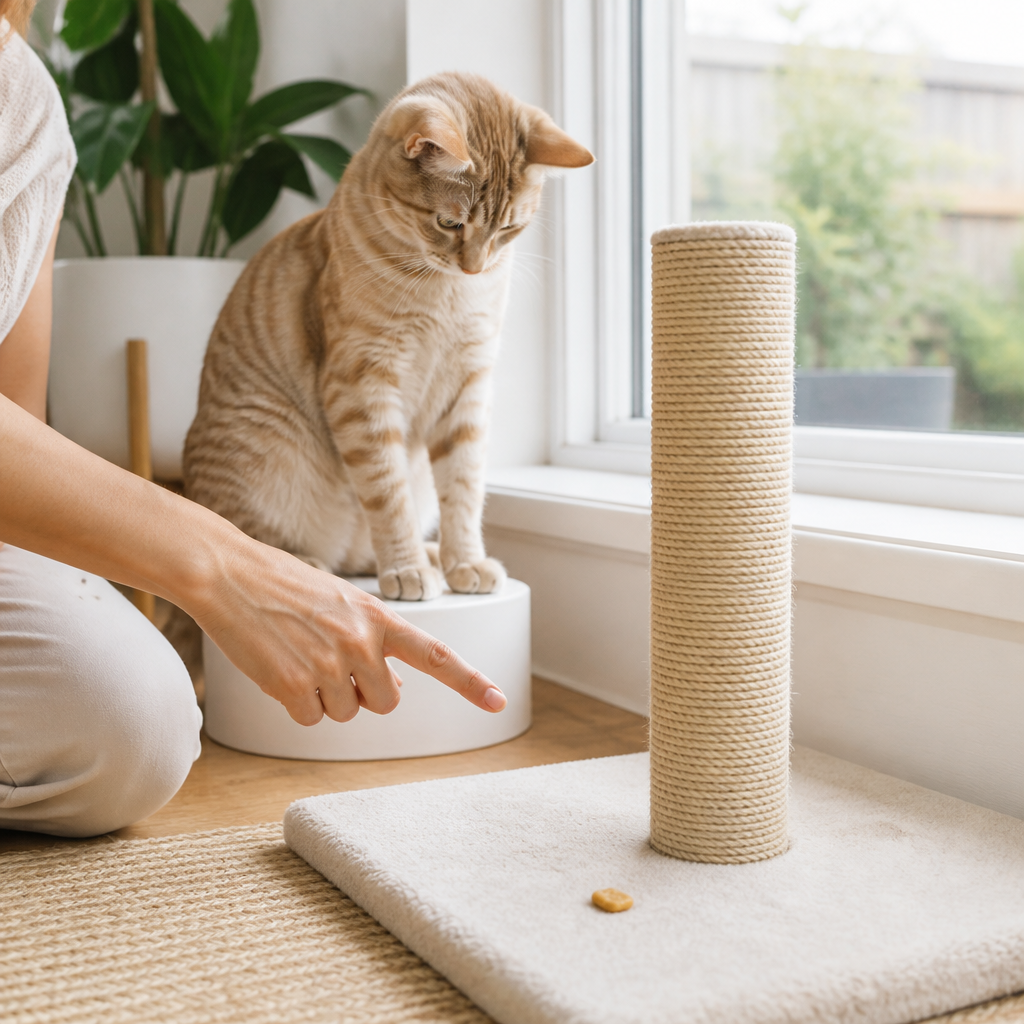
Place a sturdy scratching post near the sofa, and rub a little catnip or leave a few treats on it. When your cat scratches the post, reward them immediately. If they start on the sofa, calmly move them to the post and reward them when they use it. Patience is key here, and it's normal for it to take a few weeks.
Counter surfing and night-time activity
Some cats love the kitchen bench, and some get very active at night. Set up a perch or cat tree near a window, and schedule short play sessions before bedtime. Reward your cat for settling on the perch or coming to you after play. This gives their energy a better outlet and makes the counter less interesting over time.
Pro tip: Never reward unwanted behaviour by accident. If your cat meows for food at the counter and you hand over a treat to stop the noise, the meowing gets rewarded. Wait for a quiet moment, then reward that instead.
Frequently Asked Questions
How many cat training treats should I give in one session?
Most cats do well with somewhere around ten to twenty tiny pieces in a short session. The exact number depends on your cat's size and appetite, so keep the pieces small and watch your cat's energy. If they start losing interest, the session is probably long enough.
What is the best reward if my cat isn't interested in food?
Some cats are more motivated by play, a favourite toy, or gentle petting. Test a few options during a calm moment and see what your cat chases after most. Many owners find that a mix of treat and praise works best, especially as training progresses.
How quickly should I see results with reward-based training?
Results vary, but many cats show a clear change within a week or two of consistent practice on one behaviour. Redirecting a longstanding habit, such as scratching the sofa, can take several weeks. Keep your timing tight and your sessions short, and celebrate small wins along the way.
Can I use treats if my cat is overweight?
Yes, but count them carefully. Choose the smallest possible pieces, reduce the regular meal portion to make up for the treats, and talk to your vet about a healthy weight plan. Many vets are happy to help you build a training routine that supports your cat's weight goals.
Why does my cat ignore the treat during training?
This often happens when the session is too long, the environment is too busy, or the treat isn't motivating enough. Try a quieter room, a shorter session, or a more appealing treat. If your cat seems unwell or suddenly stops eating, speak to your vet, since a change in appetite can have a medical cause.
Can older cats learn new behaviours with treat rewards?
Yes, older cats can absolutely learn new things, although they may take a little longer to pick up new habits. Keep sessions gentle and short, choose a soft or easy-to-chew texture if their teeth are sensitive, and celebrate each step. Patience goes a long way.
We'd love to hear how training has gone for you, so share which treats, rewards, or tricks worked best for your cat in the comments below.
We would love your feedback and any insights you would share with others. What perspective would you add?
References
Follow Us
Subscription Subscribe to our newsletter and receive a selection of cool articles every weeks

Real Talk & Tail Wags

artificial additives dog treats
Find out what artificial additives in dog treats do inside your dog's body, from digestion to the liver, and how...

dog socialisation treats
Learn how to use treats to help your dog socialise with other pets and strangers, with calm, step-by-step tips from...

cost of pet treats Australia
Wondering if premium pet treats are worth the cost in Australia? Learn how to compare price per kilo, budget smarter...