
You've caught your cat sneaking into the dog's treat bag again, and honestly, it's hard not to laugh. But if it keeps happening, you might be quietly wondering whether it's really a big deal. After all, it's just a treat, right? Here's the thing: the difference between cat treats and dog treats is more significant than most pet owners realise, and if you're searching for the best cat treats Australia has to offer, it pays to understand exactly why your feline keeps reaching for the wrong bowl, and what a genuinely nourishing snack looks like for them instead.
Table of Contents
- Quick Takeaways
- Why Your Cat Wants Dog Treats
- What Makes Cat and Dog Nutrition Different
- The Real Risks of Regular Dog Treat Sharing
- What to Look for in a Genuine Cat Treat
- Comparing Your Cat Treat Options
- Frequently Asked Questions
- References
Quick Takeaways
| Key Insight | Explanation |
|---|---|
| Cats are drawn to dog treats for the meat smell | Most dog treats contain real meat or meat meal, which cats find irresistible due to their protein-focused instincts. |
| Dog treats are not formulated with taurine | Taurine is an essential amino acid cats cannot produce themselves. Dog food and treats don't need to include it, so regular sharing creates a genuine gap. |
| One stolen treat won't cause harm | An occasional nibble from the dog's stash is unlikely to hurt your cat. The concern is regular or habitual sharing over time. |
| Single-ingredient meat treats are ideal for cats | Treats made from 100% real meat, with no fillers or additives, deliver the high-protein nutrition cats are built for. |
| Real meat treats work brilliantly for training | High-protein, strongly scented treats get a cat's attention fast, making them effective and healthy rewards during training sessions. |
| Sensitive-stomach cats benefit from simple ingredients | The fewer the ingredients, the easier it is to identify and eliminate anything that causes digestive upset or allergic reactions. |
| Not all "natural" labels mean the same thing | Check the ingredient list rather than the front-of-pack claim. A treat with a single named meat protein and nothing else is the clearest sign of quality. |
Why Your Cat Wants Dog Treats
It starts with the smell. Cats have an incredibly sensitive sense of smell, and many dog treats are packed with real meat, meat broth, or animal fat. To a cat's nose, that's almost impossible to ignore. Your cat isn't being cheeky or trying to cause trouble. They're simply following one of their deepest instincts: follow the protein.
Cats are what nutritionists call obligate carnivores. Unlike dogs, who can draw energy from a broader range of food sources, cats are biologically wired to seek out animal-based protein at every opportunity. When a dog treat smells intensely meaty, a cat's brain registers it as a potential food source worth investigating. It's instinct, plain and simple.
There's also the element of novelty. Cats are curious, and something new in the environment, especially something with a strong scent, will almost always earn a thorough investigation. If the dog gets a treat and your cat is nearby, expect them to want in on it.
The "forbidden food" effect
There's also something to be said for the appeal of what belongs to someone else. Many cat owners notice their pets show more interest in the dog's bowl than their own. Part of this may come down to the fact that dog food and dog treats are often higher in fat than standard cat food, and that fat content translates to a rich, compelling aroma.
The good news is that this tells you something useful: your cat is craving something intensely meaty, genuinely high in protein, and free from starchy fillers. That's actually a very healthy instinct. The trick is just making sure you satisfy it with something formulated for them.
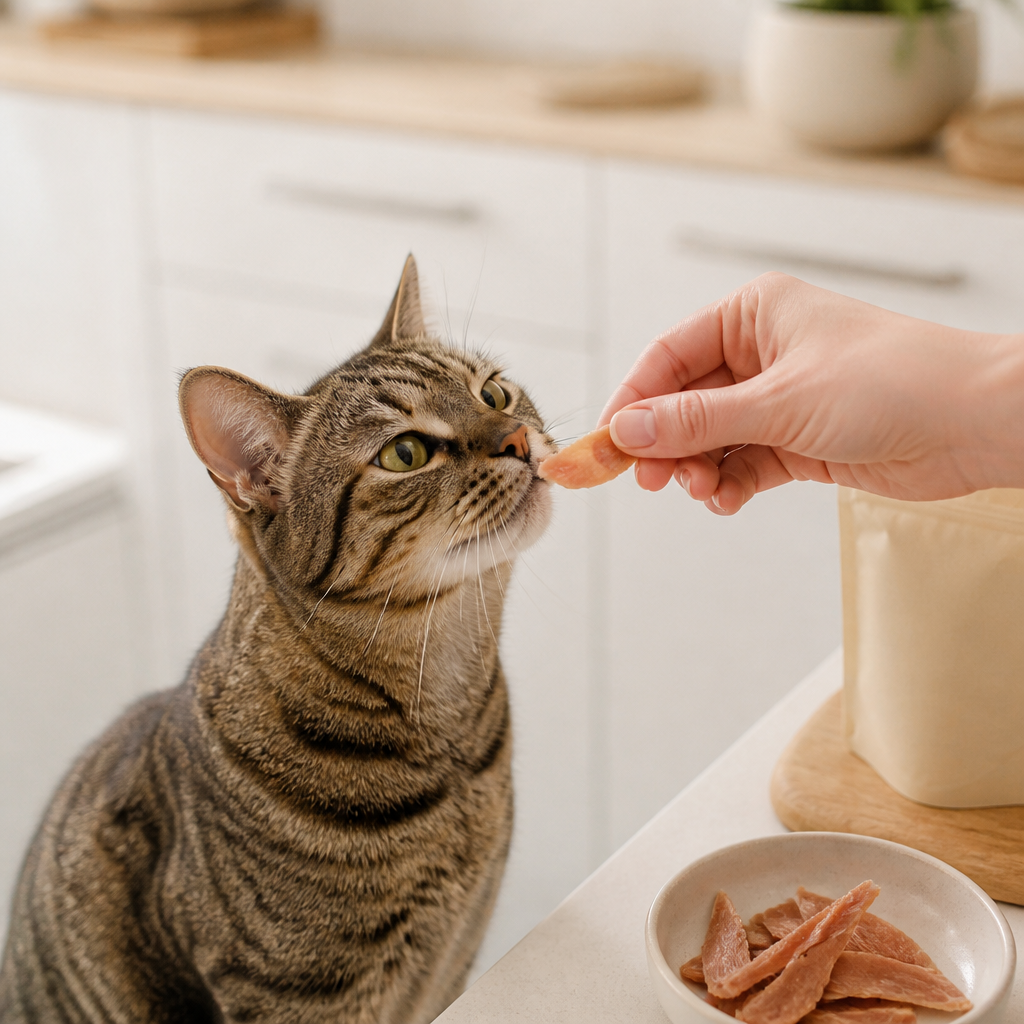
Pro tip: If your cat constantly circles the dog's treat bag, it may be a sign they need a more protein-forward treat of their own. Try offering a small piece of an air-dried single-ingredient meat treat designed for cats and watch how quickly the dog bag loses its appeal.
What Makes Cat and Dog Nutrition Different
Dogs are omnivores. They can digest and thrive on a wide variety of foods, including grains, vegetables, and animal proteins. Cats, by contrast, have evolved as strict carnivores. Their bodies are built to extract everything they need from animal tissue, and they've largely lost the metabolic pathways that allow other animals to make use of plant-based nutrients.
This distinction matters enormously when it comes to treats. Dog treats are designed to appeal to an omnivore. They may contain grains, vegetables, plant-based fillers, or binding agents that a dog handles fine but that offer a cat very little nutritional value.
The taurine problem
Taurine is an essential amino acid that cats cannot synthesise in adequate amounts on their own. They must get it from their food. It plays a critical role in heart function, vision, and reproductive health. The important detail here is that dogs can produce taurine themselves, so dog food and dog treats are not required to contain it in meaningful amounts. If a cat regularly eats dog treats as part of their daily snack intake, they risk not getting enough taurine over time.
Cats cannot produce taurine and arginine on their own. These essential amino acids need to come from their diet, and they're simply not something dog food formulations are required to provide.
Cats also need higher levels of protein and certain fats than dogs do. A treat formulated for a dog simply won't match those requirements, even if it tastes appealing to a feline. Over time, treating a cat primarily with dog snacks creates a nutritional mismatch that quietly chips away at their wellbeing.
Vitamins and fat differences
Cats also need pre-formed Vitamin A from animal sources, because unlike dogs and humans, they cannot convert beta-carotene from plants into the vitamin form they need. Dog treats designed around plant-based ingredients won't deliver this either. The gap between what a cat needs and what a dog treat provides is bigger than it looks from the outside of the packet.
Pro tip: When reading any treat label for your cat, look for a named animal protein as the very first and ideally only ingredient. If you see starch, sugar, vegetable by-products, or a long list of additives before you see meat, put it back.
The Real Risks of Regular Dog Treat Sharing
To be clear: one stolen dog biscuit isn't a crisis. If your cat grabbed something from the dog's bowl this morning, there's no need to panic. The concern is regular, habitual sharing where dog treats become a meaningful part of a cat's daily caloric or treat intake.
The most documented risk is taurine deficiency. Cats fed diets consistently low in taurine can develop dilated cardiomyopathy, a form of heart disease where the heart muscle weakens and enlarges. They can also experience vision problems, including a condition called feline central retinal degeneration, and reproductive difficulties in breeding cats. These are serious outcomes that develop gradually and can be easily missed until they're well advanced.
Ingredient concerns in dog treats
Some dog treats also contain ingredients that are fine for dogs but less suitable for cats. Semi-moist dog treats, for example, can contain propylene glycol as a humectant to retain moisture. While this ingredient is approved for use in dog food, it is not recommended for cats. Xylitol, found in some chew treats, is toxic to dogs and potentially harmful to cats as well. Garlic and onion, sometimes found as flavourings, are toxic to both species but appear more commonly in dog-focused products.
The safest position is simply to keep dog treats for the dog and cat treats for the cat. It removes any guesswork about whether a particular ingredient is safe for your feline.
Caloric imbalance
Dog treats are sized and calorically balanced for dogs, who are generally much larger animals. Even a small dog treat may represent a disproportionately large caloric hit for a cat, particularly a smaller or less active indoor cat. Over time, regularly giving a cat dog-sized treats can contribute to weight gain, which brings its own set of health complications.
What to Look for in a Genuine Cat Treat
If your cat's excitement about the dog's treats has made you realise their own snack situation needs an upgrade, you're in a good position. The qualities that make a treat genuinely good for a cat are actually quite simple once you know what to look for.
The most important quality is a single, named animal protein as the sole or primary ingredient. Beef, chicken, turkey: these are the kinds of proteins cats are built to thrive on. When a treat is made from one ingredient and nothing else, you know exactly what your cat is getting, and there's nowhere for fillers, preservatives, or mystery additives to hide.
Air-dried vs. heavily processed treats
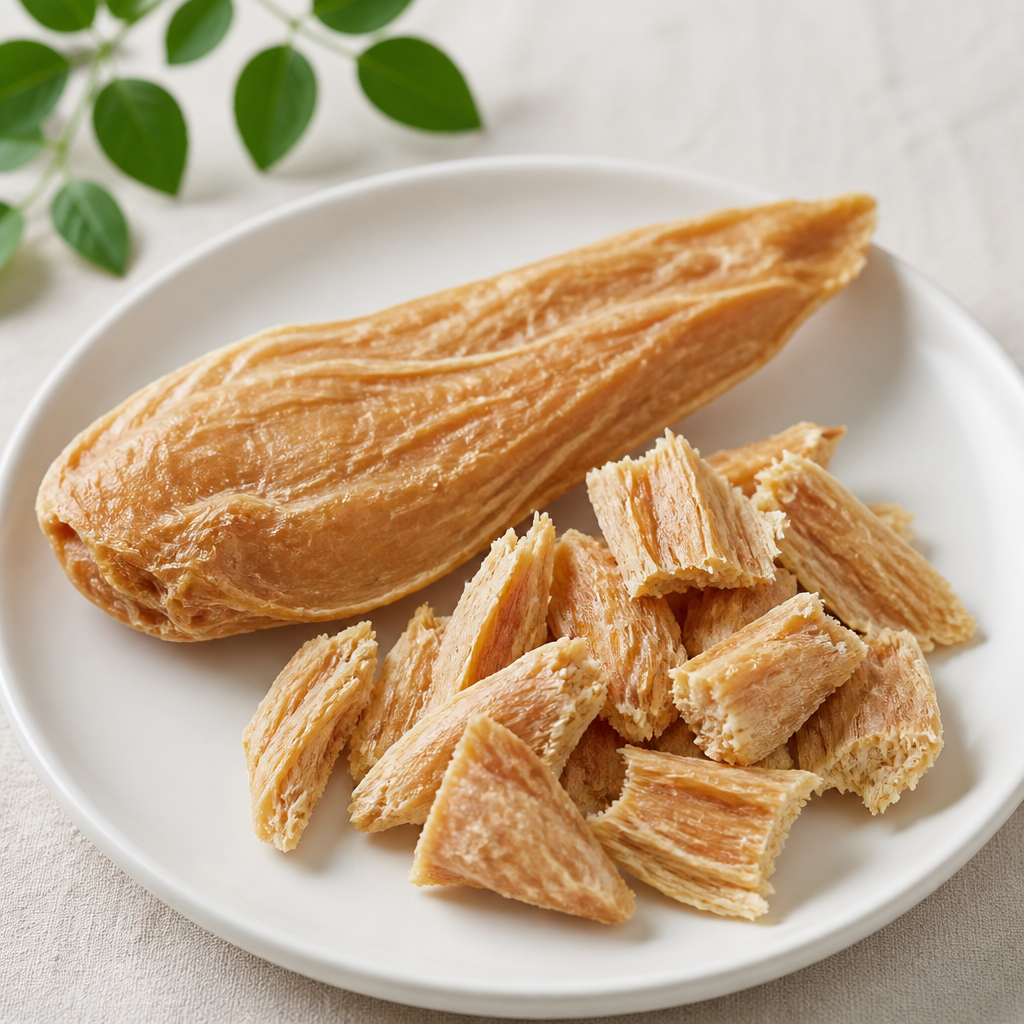
Air-drying is a gentle preservation method that removes moisture from the meat without exposing it to the high temperatures that destroy nutrients. The result is a treat that retains much of the protein density, natural flavour, and nutritional integrity of the original ingredient. Cats tend to find air-dried treats highly palatable, partly because the concentrated flavour closely mirrors what they'd encounter eating whole prey.
Heavily processed treats, by contrast, go through extrusion or baking at high temperatures and often need artificial flavour enhancers to compensate for the flavour lost in processing. They're also more likely to contain binding agents, starches, and other ingredients that cats don't need and can't use well.
What "human-grade" actually means
A treat made from human-grade meat starts with ingredients that meet the same quality standards as food produced for human consumption. That means fresher raw material, stricter handling requirements, and a cleaner starting point. For a pet treat with no other ingredients, the quality of the meat itself is everything. It's worth asking whether a treat comes from human-grade meat, particularly if your cat has a sensitive stomach or a history of digestive reactions.
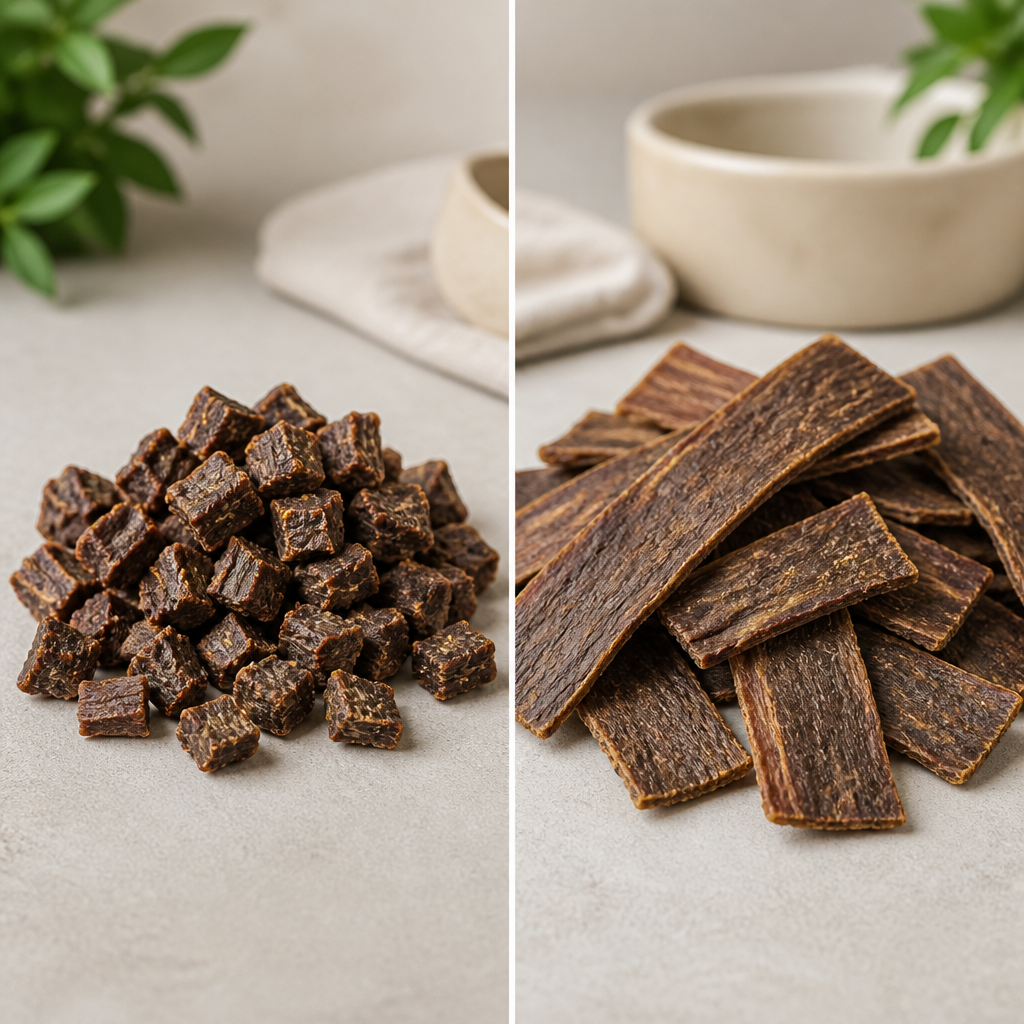
At Treaty Treats, every single-ingredient treat is made from 100% real, human-grade meat. The range includes air-dried beef, chicken, and turkey chips, batch-made in-house with no fillers, preservatives, or artificial ingredients. They're designed for both dogs and cats, meaning your cat finally has something in the treat rotation that's genuinely made for them.
Pro tip: For cats with sensitive stomachs, starting with a single-protein treat makes it much easier to identify any sensitivities. Introduce one protein at a time and observe how your cat responds before adding variety.
Comparing Your Cat Treat Options
Not all cat treats are created equal, and the Australian market includes a wide range of options at different ends of the quality spectrum. Here's a straightforward comparison of the main types available, so you can make a confident choice for your cat.
| Treat Type | Key Characteristics | Best Suited For |
|---|---|---|
| Single-ingredient air-dried meat treats | One named protein (beef, chicken, turkey), no fillers, no additives, naturally preserved by removing moisture. High protein, strong flavour. | Everyday rewards, training, cats with sensitive stomachs, cats needing high-protein nutrition. |
| Commercial multi-ingredient soft treats | Multiple ingredients including starches, flavour enhancers, and preservatives. Softer texture, longer shelf life through chemical means. | Cats who prefer soft textures; check labels carefully as quality varies widely across this category. |
| Freeze-dried raw treats | Raw ingredients frozen then moisture-removed via vacuum. Retains enzymes and nutrients. Typically single or limited ingredient. | Cats whose owners prefer a raw-adjacent approach; good nutrient retention but often at a higher price point. |
Single-ingredient air-dried treats sit in a particularly strong position for most Australian cat owners. They're shelf-stable without the need for artificial preservatives, they deliver a genuine protein hit, and their simple formulation makes them suitable for cats across a wide range of ages and health profiles. They also tend to get a very enthusiastic response from cats who've previously been stealing the dog's treats, because the flavour intensity is genuinely comparable.
Frequently Asked Questions
Is it okay if my cat occasionally eats a dog treat?
An occasional stolen dog treat is unlikely to cause immediate harm. The concern arises when dog treats become a regular part of your cat's diet, because they lack the essential nutrients cats need, particularly taurine. If your cat snuck one this morning, there's no need to worry. Just make sure they have their own proper cat-specific treats available so the dog's stash becomes less tempting.
Why is taurine so important for cats?
Taurine is an amino acid that cats cannot produce in sufficient quantities on their own. They rely on dietary sources to meet their needs. Taurine supports heart muscle function, vision health, and reproductive health in cats. A prolonged taurine deficiency can lead to dilated cardiomyopathy, a serious heart condition, as well as vision deterioration. Because dog treats are formulated for animals that don't require dietary taurine, they won't provide what a cat needs.
What makes air-dried meat treats better than regular commercial cat treats?
Air-drying removes moisture from meat at low temperatures, preserving the protein, natural flavour, and nutritional content without the need for artificial additives or preservatives. Many commercial treats go through high-heat processing that reduces nutritional quality and often requires artificial flavour enhancers to compensate. A single-ingredient air-dried treat gives your cat exactly what the label says, nothing added, nothing hidden.
Can I use cat treats for training?
Yes, and high-protein, single-ingredient meat treats are particularly effective for training cats. Cats are motivated by strong scent and flavour, and real meat treats deliver both. Small, appropriately sized pieces work best so you can reward frequently without overloading your cat's calorie intake for the day. Air-dried meat chips can be broken into small training-sized pieces easily.
Are Treaty Treats products suitable for both cats and dogs?
Yes. Treaty Treats' single-ingredient air-dried beef, chicken, and turkey chips are made from 100% real, human-grade meat with no fillers, additives, or preservatives. Because they contain only meat, they're appropriate for both cats and dogs, which is handy in multi-pet households where cross-treat-stealing is a regular event. You can offer the same treat to both pets without any concern about species-specific formulation issues.
My cat has a sensitive stomach. Which treat is safest?
For cats with sensitive stomachs, single-ingredient treats are the safest and most useful starting point. When a treat contains only one ingredient, any digestive reaction can be traced directly back to that protein. Start with one protein type, observe your cat over a few days, and only introduce a new protein once you're confident the first is well tolerated. Treats free from preservatives, artificial colours, and fillers remove a lot of the common irritants that trigger digestive upset in sensitive cats.
We'd love to hear from you. Have you caught your cat raiding the dog's treat bag, and what did you end up switching them to? Share your experience in the comments below.
References
- Vet-reviewed guide to whether cats can safely eat dog treats and what risks apply
- Nutritional breakdown of why dog treats are not suitable as regular cat snacks
- How to prevent and treat taurine deficiency in cats
- Veterinary advice on what cats should eat and why dog food falls short
- Vet-approved guide to the best cat treats available in Australia
Follow Us
Subscription Subscribe to our newsletter and receive a selection of cool articles every weeks

Real Talk & Tail Wags

dog treat enrichment ideas
Discover 5 practical dog treat enrichment ideas, from puzzle feeders to snuffle mats, that make treat time fun, rewarding and...

best dog treats Australia
Cheap dog treats can cause tummy upset, weight gain, and hidden costs. Learn what bargain snacks contain and how to...

dog treat transition guide
Switching dog treats naturally? Follow this gentle dog treat transition guide to avoid tummy trouble and keep your dog happy....


