
If you've stood in front of your treat jar wondering whether to reach for the chicken, beef, or turkey bag, you're definitely not alone. Choosing the right protein for your dog can feel more complicated than it should. The good news is that once you understand what each protein actually brings to the bowl (or the treat pouch), the decision gets a lot easier. Whether you're managing a sensitive tummy, looking for the best training reward, or just want to know your dog is getting real nutrition in every bite, this guide breaks it all down for you, starting with those all-important chicken dog treats your pup probably already adores.
Table of Contents
- Quick Takeaways
- Why Protein Source Matters in Dog Treats
- Chicken Dog Treats: Lean, Gentle, and Versatile
- Beef Dog Treats: Rich, Nutrient-Dense, and Satisfying
- Turkey Dog Treats: The Underrated Option Worth Knowing
- Protein Comparison at a Glance
- How to Choose the Right Protein for Your Dog
- Frequently Asked Questions
- References
Quick Takeaways
| Key Insight | Explanation |
|---|---|
| Chicken is the go-to for sensitive stomachs | Chicken is a lean, highly digestible protein that sits gently on most dogs' digestive systems, making it a reliable first choice for dogs with delicate tummies. |
| Beef delivers the richest nutrient profile | Beef provides complete protein with all essential amino acids, plus heme iron, zinc, selenium, phosphorus, and vitamin B12, supporting muscles, energy, and coat condition. |
| Turkey is a smart pick for less active or weight-conscious dogs | Turkey offers high protein with low fat and low calories, making it ideal for dogs who need to manage their weight without sacrificing nutrition. |
| Turkey and chicken are both allergy-friendly alternatives to beef | Both poultry proteins are well-tolerated by many dogs with food sensitivities, though chicken is itself one of the more common allergens, so turkey can serve as a safer novel protein. |
| Single-ingredient treats make reactions easier to trace | When a treat contains just one protein, you know exactly what your dog is eating. If a reaction occurs, you can identify and eliminate the culprit without guesswork. |
| Rotating proteins can reduce allergy risk over time | Introducing your dog to a range of protein sources, rather than staying locked on one, helps reduce the chance of developing an intolerance through overexposure. |
| Chicken naturally contains glucosamine | Chicken meat naturally contains glucosamine, which supports hip and joint health, making chicken treats a particularly good choice for older or more active dogs. |
Why Protein Source Matters in Dog Treats
Not all protein is created equal, and that's as true for treats as it is for meals. When a treat is made from a single, real protein source with no fillers or additives, the nutritional value your dog receives reflects the actual quality of that protein. This is very different from multi-ingredient treats where you can't always tell how much real meat is actually in there.
At Treaty Treats, every product is built around this idea: one ingredient, one protein, nothing else. That means your dog is getting the full benefit of whichever protein you choose, whether that's beef dog treats, turkey dog treats, or chicken chips. Understanding what each protein offers helps you match the treat to your dog's needs, rather than just picking whichever bag is nearest.
Protein in treats also contributes to your dog's overall daily intake, so the quality and type genuinely matters, even if a treat feels like "just a snack." For training in particular, you might be giving your dog dozens of small rewards in a single session. Choosing a protein that agrees with their body makes the whole experience more comfortable for them and more effective for you.
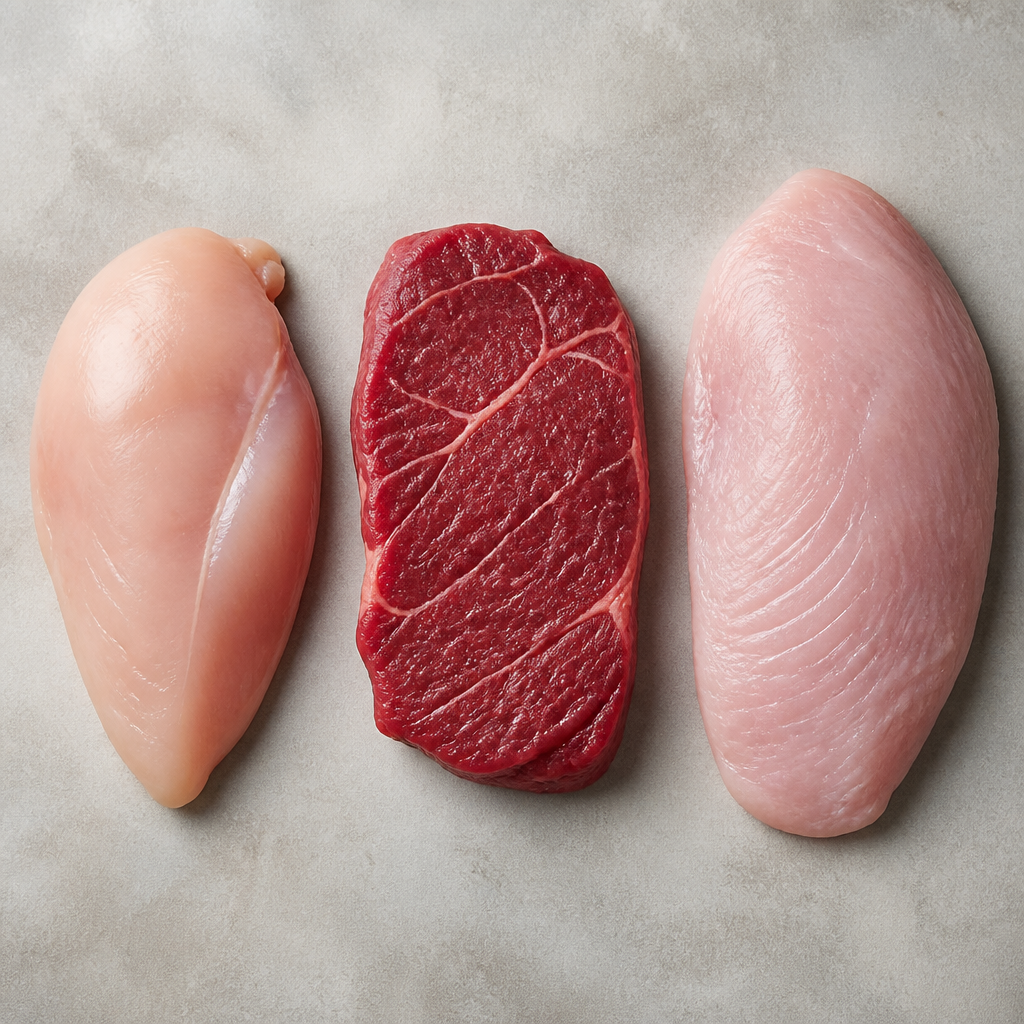
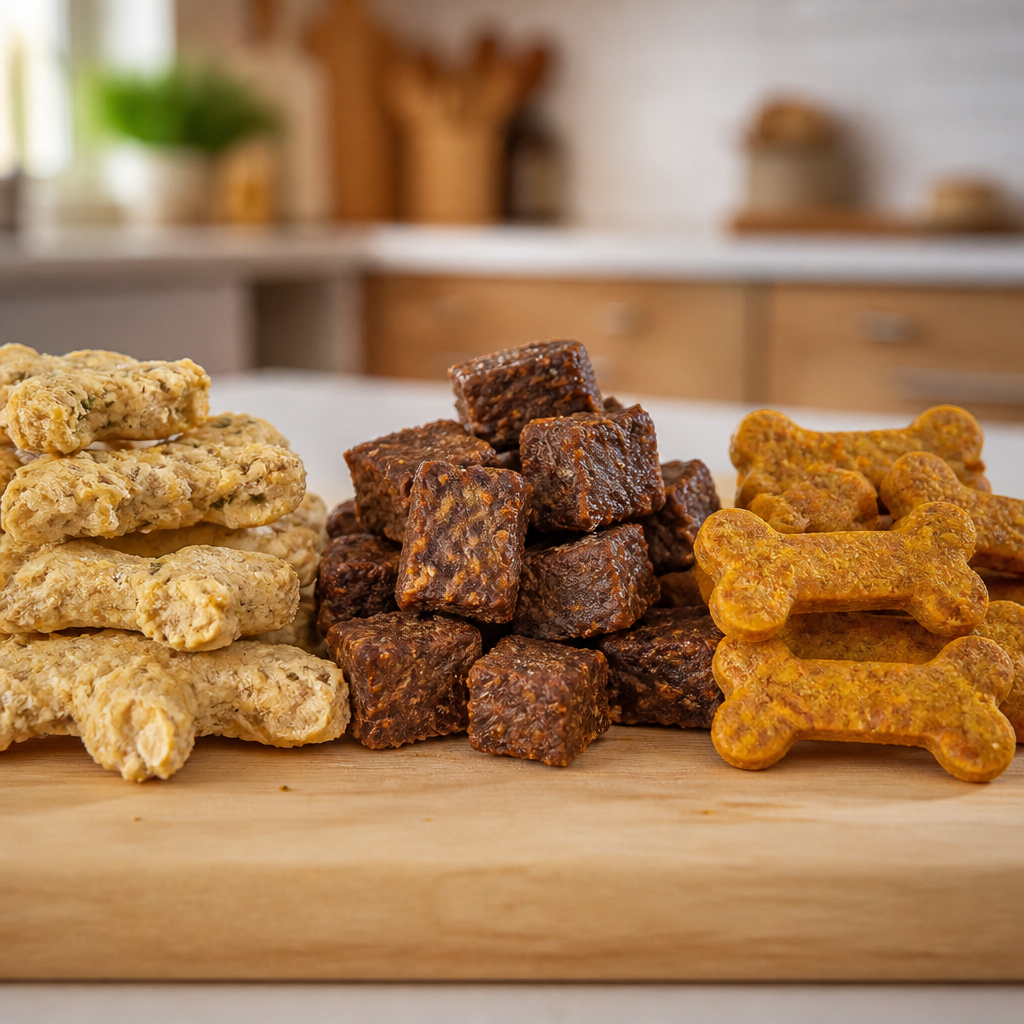
Chicken Dog Treats: Lean, Gentle, and Versatile
Chicken is one of the most popular proteins in dog treats for a very simple reason: most dogs love it, and most bodies handle it well. It's a lean protein source that is easily digestible, which means it sits gently on the digestive system and is a reliable choice for dogs who don't have a known chicken sensitivity.
Nutritional Highlights of Chicken
Chicken is rich in high-quality protein, which supports muscle growth, tissue repair, and a healthy immune system. It's also a natural source of omega-6 fatty acids, which contribute to a shiny, healthy coat. One often-overlooked benefit is that chicken naturally contains glucosamine, an important compound for hip and joint support, which is particularly valuable for older dogs or breeds prone to joint issues.
Chicken is lower in fat compared to beef, which makes it a smart daily treat option for dogs who need to maintain a healthy weight. Because it's so digestible, it's frequently recommended as a starting point for puppies, senior dogs, and dogs coming off an upset stomach.
When Chicken Might Not Be the Right Fit
Here's something worth knowing: chicken is one of the more commonly reported allergens in dogs. It's not that chicken is inherently problematic, but because it's used so widely across so many dog foods and treats, some dogs develop a sensitivity over time through repeated exposure. If your dog has been eating chicken-based products for years and you've noticed itching, loose stools, or digestive discomfort, it's worth trialling a different protein for a while.
Pro tip: If your dog is new to single-ingredient treats, chicken is often the easiest starting point. Introduce it gradually alongside their usual food, and watch for any signs of sensitivity in the first week or two.
Beef Dog Treats: Rich, Nutrient-Dense, and Satisfying
If chicken is the everyday workhorse of dog proteins, beef is the nutritional powerhouse. It packs a more complex nutrient profile than poultry and tends to be richer in flavour, which makes it a high-value reward for training sessions where you really need your dog's attention.
Nutritional Highlights of Beef
Beef contains all the essential amino acids dogs need to maintain muscle, support growth, and aid tissue repair, making it a complete protein source. Beyond protein, beef delivers meaningful amounts of heme iron, zinc, selenium, phosphorus, and vitamin B12. These nutrients collectively support red blood cell production, healthy metabolism, immune function, and skin and coat condition.
The zinc and selenium in beef are particularly worth noting. Both play an important role in keeping your dog's skin healthy and their coat in good condition, something you'll often notice improving when a dog switches to a high-quality beef-based treat. Beef is also higher in fat than poultry, which means it provides more sustained energy and a richer taste that most dogs find deeply satisfying.
Who Does Best with Beef Treats
Dogs who are active, working hard in training, or who simply need a higher-calorie reward tend to do very well with beef treats. Beef is also a strong choice for dogs with a known sensitivity to chicken, as it offers an entirely different protein profile. That said, beef is itself one of the more common allergens in dogs, so if your dog is navigating multiple sensitivities, it's worth proceeding thoughtfully.
A dog who is comfortable, well-nourished, and free from digestive stress will always learn faster, focus better, and respond more readily during training. The protein in the treat is part of that equation.
Pro tip: Use beef treats as your high-value training reward for demanding tasks like recall, off-leash work, or introducing your dog to a new and distracting environment. The richer flavour holds attention in a way lighter proteins sometimes don't.
Turkey Dog Treats: The Underrated Option Worth Knowing
Turkey doesn't always get the spotlight it deserves. It sits somewhere between chicken and beef on the richness scale, but it brings a genuinely distinct set of benefits that make it the best choice in a number of situations.
Nutritional Highlights of Turkey
Turkey is a lean animal protein that is highly digestible and gentle on the system. It offers high protein with low fat and low calories, a combination that makes it particularly valuable for dogs who are less active, prone to weight gain, or recovering from illness. Despite being lean, turkey is rich in nutrients and supports muscle mass, making it a meaningful protein even in small amounts.
Turkey also has a rich amino acid profile. Amino acids are the building blocks of protein and support vital functions including digestion, immune response, and energy production. This makes turkey a genuinely good option for dogs with digestive sensitivities, not just a "safe" fallback.
Turkey as a Novel Protein for Allergy-Prone Dogs
One of turkey's most valuable roles is as an alternative protein for dogs who don't tolerate chicken or beef. Because turkey is used far less commonly in commercial pet food than chicken or beef, many dogs have had little or no prior exposure to it. This makes it what's known as a "novel protein," a protein the immune system is unlikely to have developed a sensitivity to yet.
If your dog has been through a food sensitivity trial and needs a protein that's unlikely to trigger a reaction, turkey is frequently one of the first alternatives recommended. It's also considered generally allergy-friendly and well-tolerated by most dogs, even those with sensitive digestion.
Protein Comparison at a Glance
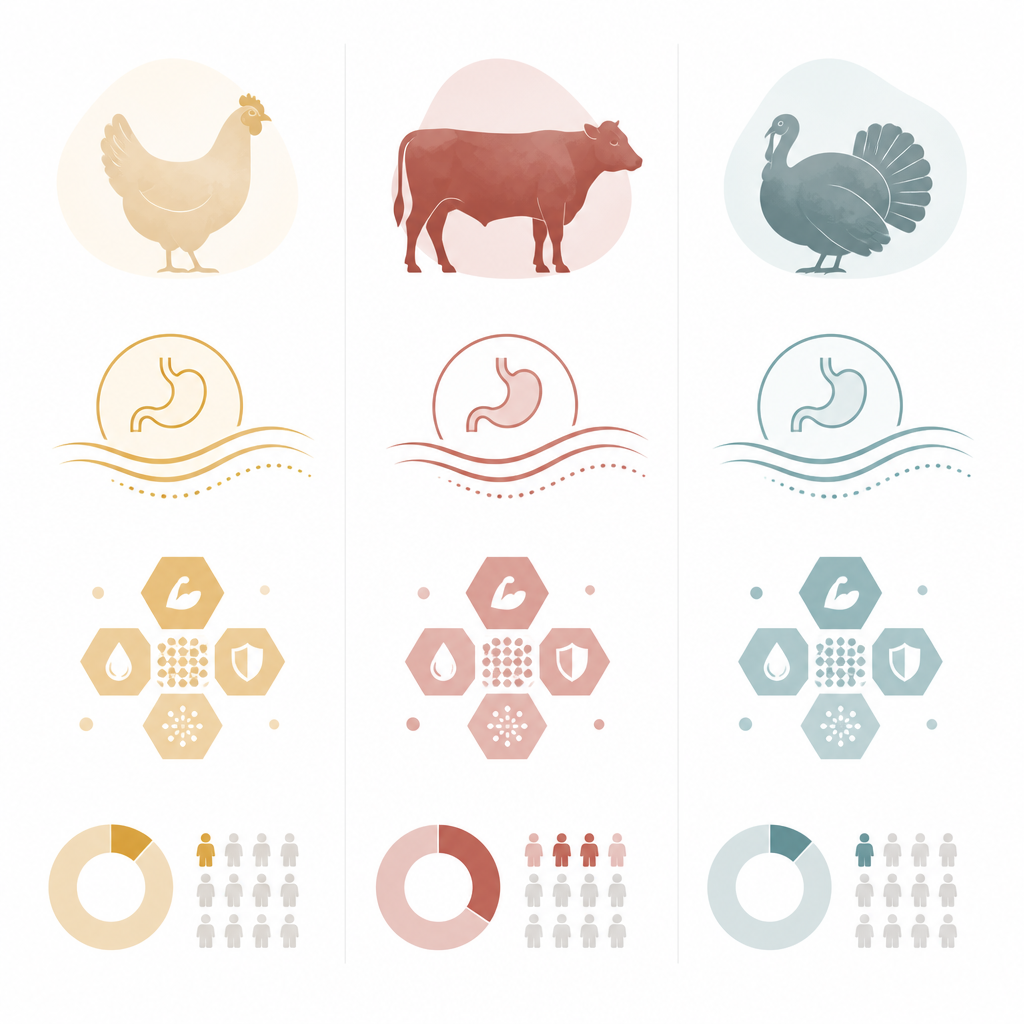
Sometimes a side-by-side view makes things clearer. Here's how chicken, beef, and turkey treats compare across the factors that matter most when you're choosing a treat for your specific dog.
| Feature | Chicken Dog Treats | Beef Dog Treats | Turkey Dog Treats |
|---|---|---|---|
| Fat Content | Low | Higher | Low |
| Calorie Density | Moderate | Higher | Lower |
| Digestibility | Very high | High | Very high |
| Key Nutrients | Protein, omega-6, glucosamine | Iron, zinc, B12, selenium, phosphorus | Lean protein, amino acids, low-calorie |
| Best for Sensitive Stomachs | Yes (unless chicken-sensitive) | Sometimes | Yes |
| Allergy Considerations | Common allergen with overexposure | Common allergen | Less commonly reactive, novel protein |
| Best Use | Everyday treat, training, puppies | High-value training, active dogs | Weight management, allergy-prone dogs |
| Flavour Appeal | Widely loved | Rich, very high motivation | Mild-to-savoury, appealing to most dogs |
How to Choose the Right Protein for Your Dog
The right answer really does depend on your dog, but "it depends" isn't helpful on its own. Here are clear, practical scenarios to guide you toward the best starting point.
Start with Chicken If Your Dog Has No Known Sensitivities
If you're introducing single-ingredient treats for the first time and your dog has no history of food reactions, chicken treats are a safe, reliable, and nutritionally solid starting point. They're gentle enough for daily use, appropriate for training, and loved by the vast majority of dogs. Chicken chips from Treaty Treats are air-dried from 100% real, human-grade chicken with nothing added, so what you see is exactly what your dog gets.
Reach for Beef When You Need Maximum Motivation
For training situations where you really need your dog to pay attention, beef treats are the stronger choice. The richer flavour and higher fat content make them more aromatic and more motivating. They're also a sensible switch if your dog has been on chicken-based products for a long time and you want to introduce some variety. A rotational approach, using two or three different proteins across the week, also helps lower the risk of developing a sensitivity from overexposure.
Choose Turkey When Weight or Allergies Are a Factor
If your dog is carrying a little extra weight, is less active, or has shown reactions to both chicken and beef, turkey treats deserve a serious look. The high-protein, low-fat, low-calorie combination means you can reward generously without overloading their daily calorie count. And because turkey is less commonly used across the broader pet food market, it's a genuinely lower-risk protein for dogs with a sensitive immune response.
When in Doubt, Rotate
You don't have to commit to one protein forever. Many dog owners use all three, rotating by week or occasion. The variety keeps things interesting for your dog and reduces the chance of developing any single-protein sensitivity. At Treaty Treats, all three proteins, chicken, beef, and turkey, are made the same way: single ingredient, air-dried, human-grade, and batch-made with no fillers or preservatives. That consistency across the range makes rotating simple and safe.
Pro tip: Keep a small amount of a different protein on hand as a "surprise" high-value treat. When your dog never quite knows which protein they might get, the novelty itself adds to the motivation during training sessions.
Frequently Asked Questions
Are chicken dog treats good for dogs with sensitive stomachs?
Yes, in most cases. Chicken is a lean, easily digestible protein that sits gently on the digestive system, making it a popular recommendation for dogs with sensitive tummies. The key exception is if your dog has already developed a sensitivity to chicken specifically, which can happen after prolonged exposure. If that's the case, turkey is usually the next best option for sensitive stomachs.
What makes beef dog treats different from chicken or turkey treats?
Beef provides a richer, more complex nutritional profile. It contains higher levels of heme iron, zinc, selenium, and vitamin B12 compared to poultry proteins, and it's also higher in fat, which makes it more calorie-dense and more motivating as a training reward. Chicken and turkey are leaner and lower in calories, better suited for everyday treats or dogs managing their weight.
Can I give my dog turkey treats if they're allergic to chicken?
Turkey is a great option for dogs who don't tolerate chicken well. Because turkey is used much less frequently in commercial pet food than chicken, many dogs haven't developed any sensitivity to it, which means it functions as a novel protein. It's also highly digestible and gentle on the gut. Just make sure the turkey treat is a true single-ingredient product with no added chicken or chicken-derived ingredients.
How do I know which protein is causing my dog's food reaction?
The clearest way to work this out is to feed your dog a single-ingredient treat for a period of weeks and observe their response. If there's no reaction, you know that protein is likely safe. Single-ingredient treats, like those from Treaty Treats, make this process much simpler because there's no guessing about what's in the bag. If you suspect a food allergy, it's always a good idea to work with your vet to identify the culprit properly.
Is it okay to give my dog treats from different proteins on the same day?
Generally yes, especially if your dog has no known sensitivities and you're introducing variety thoughtfully. Rotating proteins over the course of a week or even within a single day in small amounts is something many experienced pet owners do to reduce overexposure to any one protein. Just keep overall treat quantity sensible relative to your dog's daily calorie needs, and make any changes gradually.
What is the best protein for training treats?
For training, the best protein is usually the one your dog finds most motivating in the moment. As a general guide, beef tends to win on motivation thanks to its richer flavour and aroma. Chicken is a close second and works well for everyday training. Turkey is a great choice for dogs who are food-motivated but also need lower-calorie rewards during longer sessions. Air-dried single-ingredient treats, like Treaty Treats chips, are particularly good for training because they're naturally crunchy, easy to break into smaller pieces, and free from fillers that might cause mid-session digestive discomfort.
How often should I give my dog protein-based treats?
The standard guidance for treats in general is that they should make up no more than 10% of your dog's daily calorie intake. For high-protein, single-ingredient air-dried treats, a small amount goes a long way both nutritionally and in terms of your dog's enjoyment. The exact quantity depends on your dog's size, age, activity level, and whether they're receiving the treat as a training reward or just a daily snack.
We'd love to hear from you: which protein has worked best for your dog, and did switching proteins ever make a noticeable difference to their energy, coat, or digestion?
References
- Nutritional comparison of chicken and beef as protein sources for dogs
- Guide to selecting the right protein type for your dog's diet
- Health benefits and digestibility of turkey as a dog protein source
- Why turkey is a valuable protein choice for dogs with digestive sensitivities
- Nutritional benefits of beef for dogs including essential vitamins and minerals
Follow Us
Subscription Subscribe to our newsletter and receive a selection of cool articles every weeks

Real Talk & Tail Wags

dog treat enrichment ideas
Discover 5 practical dog treat enrichment ideas, from puzzle feeders to snuffle mats, that make treat time fun, rewarding and...

best dog treats Australia
Cheap dog treats can cause tummy upset, weight gain, and hidden costs. Learn what bargain snacks contain and how to...

dog treat transition guide
Switching dog treats naturally? Follow this gentle dog treat transition guide to avoid tummy trouble and keep your dog happy....


