
If you've ever tried to get your dog to sit, stay, or come when called, you already know the truth: the right treat makes all the difference. A stale biscuit just won't cut it when there's a squirrel nearby. Choosing the best dog training treats in Australia is one of the most practical decisions you'll make as a pet owner, and it directly shapes how quickly your dog learns and how much they enjoy the process. This guide walks you through everything, from what makes a treat genuinely high value to how often to reward, so you and your dog can build real skills together.
Table of Contents
- Why Treats Matter So Much in Training
- What Makes a High Value Dog Treat
- Types of Treats and When to Use Them
- Treat Size and Timing: The Two Rules That Change Everything
- Training Treats for Sensitive Stomachs
- How to Manage Treat Calories Without Overfeeding
- Treat Types Compared
- Frequently Asked Questions
- References
Why Treats Matter So Much in Training
Dogs repeat behaviors that feel rewarding to them. It's that simple, and it's the foundation of every effective training method. When your dog sits and immediately receives something they love, their brain records that sitting is a great idea worth repeating. That's positive reinforcement at work, and food treats are one of the most powerful tools in that process because most dogs are deeply motivated by food.
The key word there is "immediately." The reward needs to arrive within a second or two of the desired behavior, or the connection blurs. Reward your dog after they've already stood back up from a sit, and they'll believe they're being praised for standing, not sitting. Getting the timing right is genuinely more important than the treat itself.
For Australian pet owners, the good news is that access to quality, natural treats has never been better. Whether you're teaching a puppy basic manners or working on more advanced recall training with an adult dog, having the right treat in your pocket sets you up for success before the session even begins.
What Makes a High Value Dog Treat
Not all treats earn the label "high value." A high value treat is one that your specific dog finds absolutely irresistible, and that motivation is what gives you influence over their behavior, especially in distracting environments. A treat your dog is lukewarm about might work at home on a quiet afternoon. It won't work at the park with other dogs around.
The five qualities every good training treat shares
Small size. A treat your dog can swallow in one second keeps the session moving. If they're still chewing when you ask for the next behavior, you've already lost the moment. Think pea-sized or smaller, especially for little dogs.
Strong aroma. Dogs use their nose before they use their mouth. A treat with a rich, meaty smell cuts through distractions far better than a bland biscuit. Single-ingredient meat treats carry a concentrated, natural scent that dogs respond to immediately.
Real protein. Meat-based treats deliver not just motivation but genuine nutrition. High-protein treats support muscle health and keep your dog energized through a training session without the sugar crash that can come from starchy, filler-heavy options.
Clean ingredients. If you're rewarding your dog twenty or thirty times in one session, everything in that treat is going into their body repeatedly. Short ingredient lists with recognizable whole foods are the ones you can feel comfortable giving that often.
Appropriate texture. For most training scenarios, soft or easily breakable treats work best. They're eaten quickly, they're gentle on puppies and senior dogs, and they don't end up in bits on the floor.
The wrong choice of reward can hurt your training. If your dog finds a treat boring, you won't be reinforcing anything by using it. Choose something truly rewarding from your dog's point of view, and the results will follow.
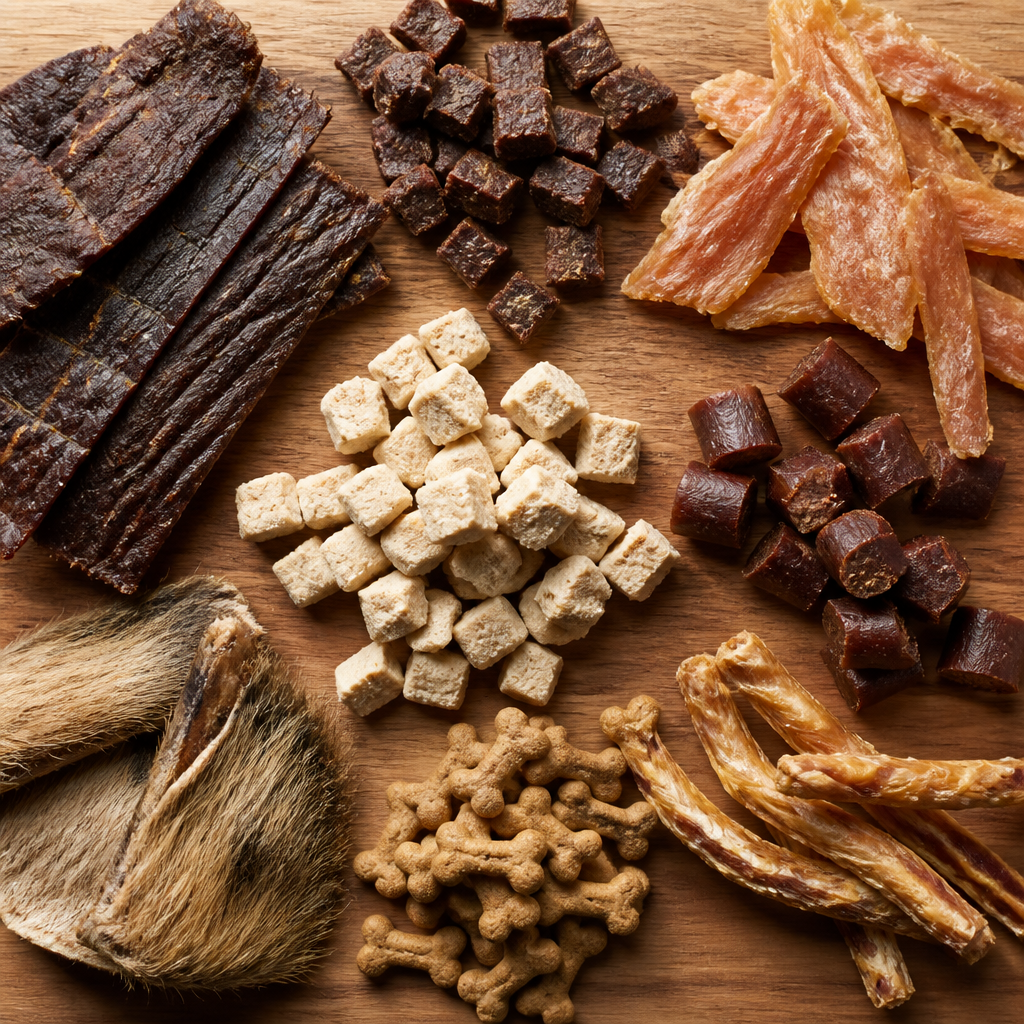
Treaty Treats' air-dried beef, chicken, and turkey chips are made from 100% real, human-grade meat with no fillers or additives. Because moisture is removed slowly during air-drying, the natural flavors concentrate into every small piece, giving you a treat that smells and tastes genuinely exciting to your dog. You can break them into smaller pieces for training, making a single treat go further without sacrificing reward intensity.
Types of Treats and When to Use Them
One of the most practical skills you can build as a dog trainer, even an informal one at home, is learning to match your treat to the situation. Not every reward needs to be your dog's absolute favorite. Calibrating treat value to task difficulty keeps your dog motivated without burning through your highest-value options on simple, familiar behaviors.
Everyday rewards for known behaviors
Once your dog reliably knows a command, you don't always need to reach for the most exciting treat in your kit. A smaller piece of a good quality meat treat works well here. The goal is to maintain the behavior, not re-teach it. Keep these rewards consistent so your dog knows the behavior always pays off, even if the payoff varies a little.
High value treats for new or difficult skills
When you're introducing a new command, working at distance, or asking for a behavior in a distracting place like a park or a busy street, this is when your best treat earns its place. A piece of air-dried beef or chicken with a strong scent gives your dog a clear message: this behavior is worth a lot. Reserve your highest value treats for these moments so they stay special.
Jackpot rewards for breakthrough moments
Every now and then, your dog does something that genuinely surprises you with how well they got it. A strong recall when you expected hesitation, or a perfect "leave it" in front of something tempting. These moments deserve a jackpot: several small treats delivered in quick succession, or an extra-generous portion. Jackpots communicate that this was exceptional, and dogs notice.
Pro tip: Keep a small zip-lock bag of broken-up Treaty Treats chips in your pocket on walks. Having high-value rewards immediately available means you can capture great behaviors the moment they happen, not five seconds later when the moment has passed.
Treat Size and Timing: The Two Rules That Change Everything
If there are two things most dog owners underestimate when they start training, it's treat size and delivery timing. Getting both right speeds up learning dramatically and also keeps your dog from getting too full to care about the next reward.
Keep treats genuinely small
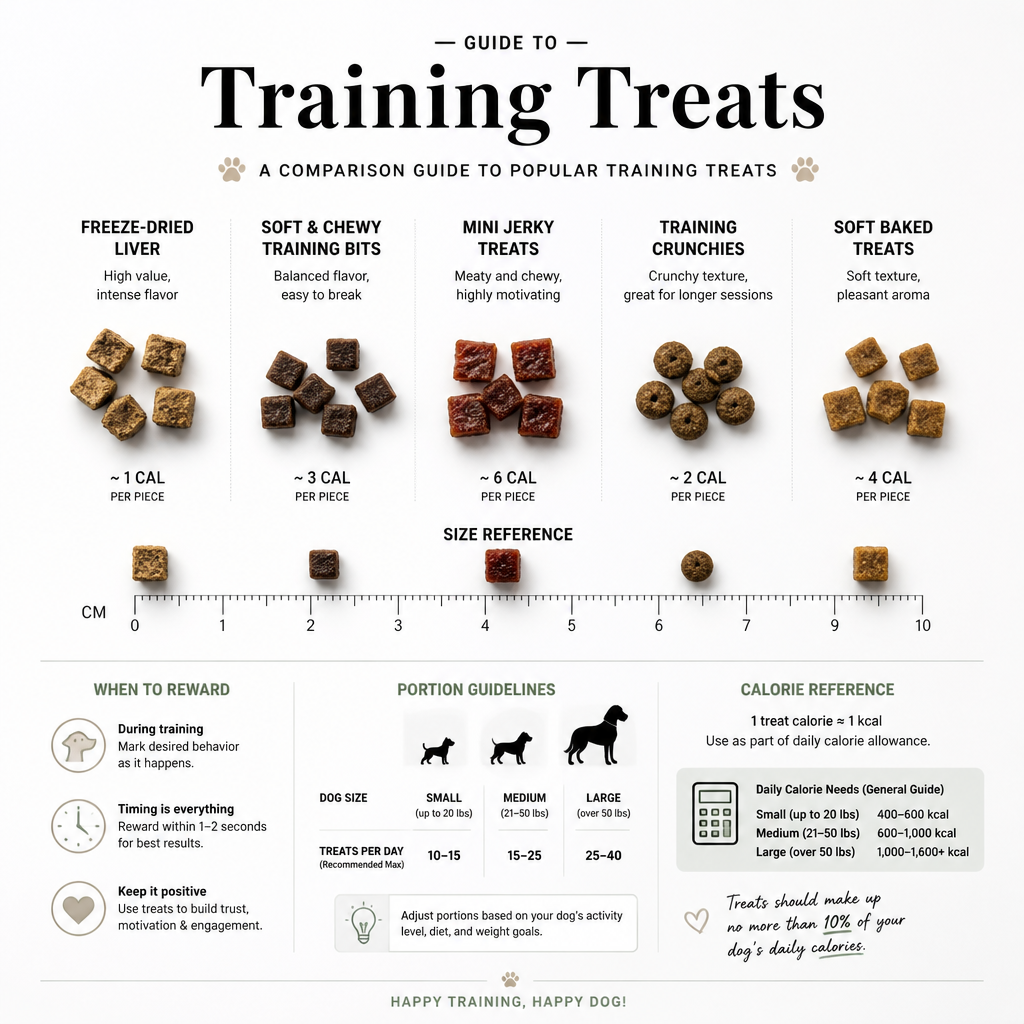
A pea-sized piece is a sensible starting point for a medium-sized dog. For small breeds, go even smaller. Many training guides recommend pieces no bigger than your pinky fingernail, small enough that the dog gulps it down immediately and looks back at you, ready for the next cue. Air-dried meat chips are easy to break by hand into these small portions, and because the flavor is concentrated, a tiny piece delivers real reward value.
Deliver rewards within two seconds
Timing is everything. Your dog's brain is making connections in the moment, not a few seconds later. The reward needs to arrive while the correct behavior is still fresh. If you're finding that hard to manage physically, a simple marker word like "yes" said at the exact moment of the right behavior can bridge the gap while you reach for the treat. With practice, your timing becomes second nature.
A common mistake is rewarding the dog on their way to sitting rather than the moment their bottom touches the floor. Slow down, watch carefully, and mark the precise behavior you want. Your dog will learn faster than you expect when the feedback is that clear.
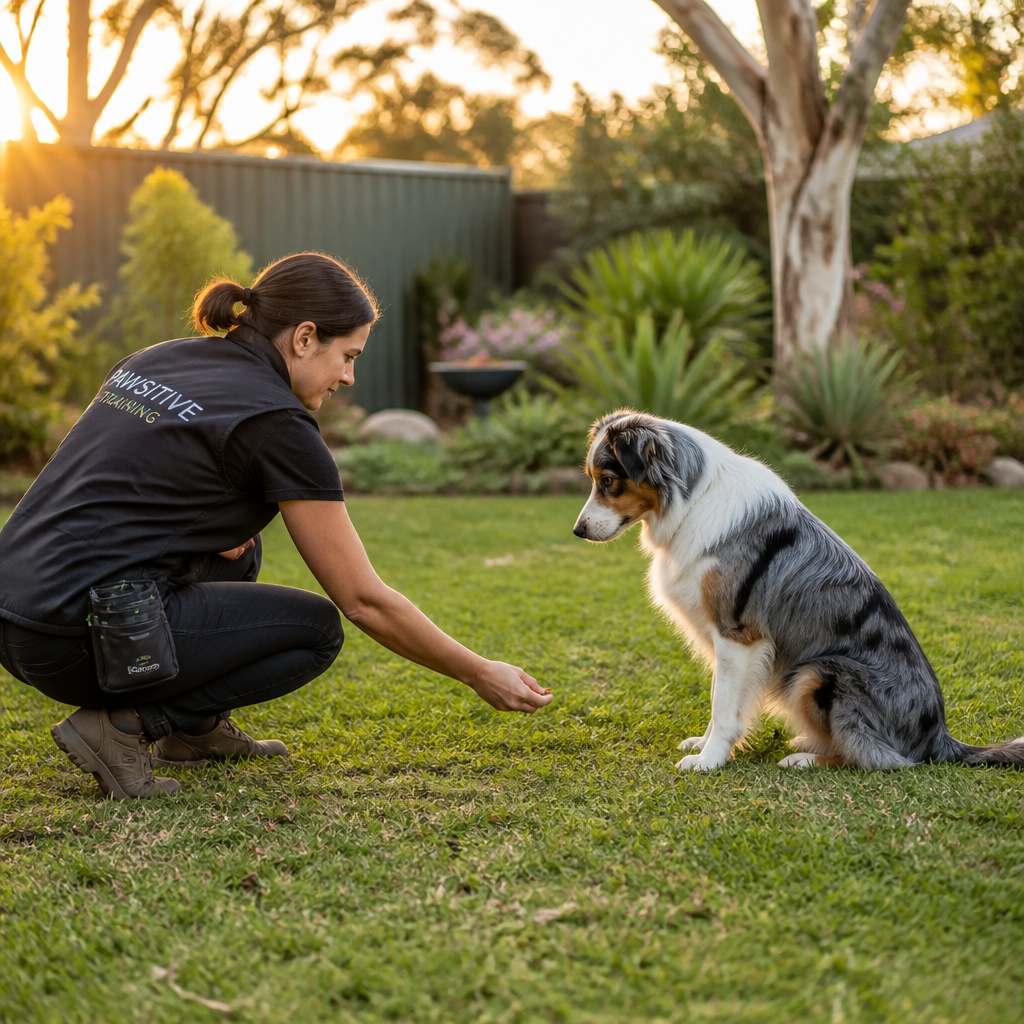
Pro tip: Use a small treat pouch on your hip during training sessions so you can deliver rewards within a second every single time. Fumbling in pockets costs you precious timing precision, and every second matters in the first stages of teaching a new behavior.
Training Treats for Sensitive Stomachs
If your dog has a sensitive stomach, the volume of treats used in training sessions can become a real concern. When you're rewarding twenty to forty times in a session, anything in those treats that doesn't agree with your dog will show up fast. This is one area where ingredient simplicity stops being a preference and becomes a necessity.
Why single-ingredient treats are the safest choice
Single-ingredient treats contain exactly what they say and nothing else. There are no hidden fillers, no artificial preservatives, and no ambiguous "meat meal" or "animal fat" descriptions that could hide a problematic protein source. For dogs with food sensitivities, this transparency matters enormously. When something goes wrong with a complex treat, you often can't pinpoint the cause. With a single-ingredient treat, you can.
High-quality, easily digestible proteins like beef and chicken are generally well-tolerated and provide the nutrients dogs need without taxing their digestive systems. Treaty Treats' single-ingredient chips contain no fillers, no additives, and no artificial ingredients, making them a genuinely reliable option for dogs who need simple, clean rewards during training.
Introducing new treats gradually
Even with the cleanest ingredients, introducing any new treat too quickly can cause a digestive reaction in sensitive dogs. Start with just a few pieces across a short session and give your dog a day or two to adjust before using them heavily in training. This is especially important for puppies, whose digestive systems are still developing, and for senior dogs, who may have accumulated sensitivities over time.
For dogs who are sensitive to common proteins like chicken, switching to a different protein source, such as turkey, often resolves the issue without needing to abandon treats altogether. Having two or three single-ingredient protein options on rotation also keeps things interesting for your dog and reduces the risk of developing a new sensitivity over time.
How to Manage Treat Calories Without Overfeeding
Training treats are genuinely useful, but they do add up. A single session teaching a new command might involve thirty or more repetitions. Spread that across two or three sessions a day and you have a meaningful calorie contribution that needs to be accounted for.
A practical guideline used by many dog nutrition professionals is that treats should make up no more than 10% of your dog's total daily calorie intake. For a medium-sized dog eating around 400 to 500 calories a day, that's roughly 40 to 50 calories in treats. With concentrated, protein-rich air-dried treats, small pieces deliver real reward impact without quickly blowing through that budget.
The trick that makes your treats go further
Rather than using a whole chip from the bag, break it into five or six small pieces. You now have five or six separate rewards for the same calorie cost. Each piece is still flavorful and motivating because the taste is concentrated. This approach is especially useful for longer sessions or when you're doing multiple training rounds throughout the day.
If you're training heavily, adjust your dog's main meal slightly to account for the extra treats. This keeps their total daily intake balanced without making you feel like you have to choose between training progress and their health. The goal is treats that reward without guilt, and clean, single-ingredient options make that much easier to manage.
Treat Types Compared
It helps to see the practical differences between treat types side by side. Here's how three common approaches stack up for training purposes specifically.
| Treat Type | Best For | Watch Out For |
|---|---|---|
| Single-ingredient air-dried meat chips (such as Treaty Treats beef, chicken, or turkey) | High-value rewards, sensitive stomachs, breakable into small pieces, clean ingredient lists for daily use | Can be firmer in texture, so snap into small pieces before sessions for quick delivery |
| Commercial soft training treats (multi-ingredient, manufactured) | Quick delivery due to soft texture, convenient pre-sized portions | Often contain fillers, preservatives, or artificial flavors that accumulate with repeated daily use |
| Biscuit-style treats (hard, dry, shelf-stable) | Low-distraction environments, maintenance rewards for well-known behaviors | Too large and slow to eat for fast training repetitions, often low in motivational value for high-distraction settings |
The standout difference with air-dried, single-ingredient treats is that you're not trading reward quality for ingredient quality. You get both. The concentrated meat flavor provides the high-value motivation that drives learning, and the clean ingredients mean you can use them repeatedly without worry. Explore the full range of Treaty Treats single-ingredient chips and find the protein your dog responds to best.
Frequently Asked Questions
What are the best treats for dog training in Australia?
The best treats for dog training are small, high-protein, and made from clean, recognizable ingredients. Single-ingredient air-dried meat treats, such as beef, chicken, or turkey chips, consistently perform well because they have a strong natural aroma, break easily into small pieces, and are safe to use repeatedly throughout a session. For Australian pet owners, choosing locally batch-made treats also ensures freshness and traceability.
How small should training treats be?
Pea-sized or smaller is the right target for most dogs. The treat should be small enough that your dog can swallow it in one second and immediately look back at you, ready for the next cue. For very small breeds, go even smaller, around the size of your pinky fingernail. If you're using larger treats like a chip or slice, simply break them into smaller pieces by hand before your session starts.
How often should I give treats during a training session?
During early learning stages, reward every single correct response. Consistent reinforcement helps your dog understand exactly which behavior earns the reward. Once a behavior is reliably understood, you can gradually move to a variable schedule, rewarding most of the time but not every time. This variable pattern actually strengthens the behavior over time, similar to how a vending machine that occasionally surprises you keeps you coming back.
Can I use treats for training if my dog has a sensitive stomach?
Yes, and you don't have to compromise on quality. Single-ingredient treats made from one identifiable protein source are the safest choice for sensitive dogs because there are no hidden additives or mystery ingredients to trigger a reaction. Start with a small amount in your first session and build up gradually. If your dog is sensitive to one protein, try a different one such as turkey instead of chicken, or beef instead of poultry.
How do I stop my dog from only behaving when I have treats?
This is one of the most common worries, and it has a simple fix. Once your dog knows a behavior well, start using lower-value rewards for that command and keep your best treats for new or harder skills. You can also occasionally reward with praise, a short play session, or access to something they enjoy, so treats become one part of a broader reward system. The key is that the dog always gets some form of acknowledgment, just not always the same one.
Are air-dried treats better than freeze-dried treats for training?
Both are excellent choices compared to heavily processed alternatives, and both preserve natural nutrients without artificial preservatives. Air-dried treats tend to have a slightly firmer texture that dogs find satisfying and a rich concentrated flavor from the slow drying process. They break easily into training-sized pieces, making them practical for session use. The most important factors remain ingredient quality and your dog's individual response to the protein.
How do I know if my dog finds a treat high value?
Watch their body language when you produce the treat. A genuinely high-value treat will make your dog lock their attention on you, stand eagerly, and respond faster. If they sniff it and look away, or take it slowly without much enthusiasm, it's not high value for them. Every dog has different preferences. Some are all about beef, others go wild for chicken or turkey. A bit of experimentation early on tells you exactly where your dog's motivation sits.
We'd love to hear how treat training is going with your dog. Drop a comment and let us know which protein your pup goes absolutely wild for, and whether they prefer their treats whole or broken into pieces.
References
- American Kennel Club guide to using rewards effectively in dog training
- Napa Humane Society resource on positive reinforcement training with food treats
- Humane Society guidance on timing and consistency in reward-based training
- Practical breakdown of what makes a treat effective for training sessions
- Benefits of single-ingredient treats for dogs with sensitive stomachs
Follow Us
Subscription Subscribe to our newsletter and receive a selection of cool articles every weeks

Real Talk & Tail Wags

dog treat enrichment ideas
Discover 5 practical dog treat enrichment ideas, from puzzle feeders to snuffle mats, that make treat time fun, rewarding and...

best dog treats Australia
Cheap dog treats can cause tummy upset, weight gain, and hidden costs. Learn what bargain snacks contain and how to...

dog treat transition guide
Switching dog treats naturally? Follow this gentle dog treat transition guide to avoid tummy trouble and keep your dog happy....


