
You love your dog. You pick up a bag of treats, glance at the front label, and see words like "natural," "wholesome," or "farm-fresh." So you toss it in the trolley without a second thought. It feels like the right call. But turn that bag over and read the ingredients list, and you might be surprised by what you actually find. Dog treat fillers are hiding in a huge number of popular pet snacks sold in Australia, often dressed up with clever wording and eye-catching packaging. The good news is that once you know what to look for, spotting them becomes second nature.
Table of Contents
- What Are Dog Treat Fillers, Really?
- Quick Takeaways
- The Most Common Fillers to Watch For
- How Manufacturers Hide Fillers on Labels
- Dog Treat Ingredients to Avoid: Your Full Checklist
- Comparing Label-Reading Approaches
- No Filler Dog Treats in Australia: What to Look For
- Frequently Asked Questions
- References
What Are Dog Treat Fillers, Really?
A filler is any ingredient added to a treat that bulks up the product without meaningfully contributing to your dog's nutrition. Fillers keep production costs low and treat prices competitive, but they come at a cost to your pet. They push down the proportion of quality protein, they can trigger sensitivities and digestive upset, and they often introduce additives your dog simply does not need.
The tricky part is that fillers are rarely labelled as such. They appear under perfectly ordinary-sounding names, buried in long ingredient lists designed to be skimmed rather than read. Understanding what they are, and how they get in there, is the first step toward making genuinely better choices for your dog.
Quick Takeaways
| Key Insight | Explanation |
|---|---|
| Ingredients are listed heaviest first | By law in Australia, ingredients are ordered by pre-processing weight. If meat isn't the first ingredient, the treat is mostly filler. |
| Corn, wheat, and soy are the most common fillers | These cheap grains are frequent allergens for dogs and offer little meaningful nutritional value in treat quantities. |
| Ingredient splitting hides the true amount of sugar and starch | A manufacturer can list corn syrup, dextrose, fructose, and corn starch separately so none appear prominently, even if combined they outweigh the named protein. |
| BHA, BHT, and ethoxyquin are synthetic preservatives to avoid | These chemical preservatives extend shelf life but have raised concerns among pet health professionals and are completely unnecessary in air-dried treats. |
| Vague protein terms signal lower quality | "Meat meal," "animal derivatives," and "meat by-products" offer no transparency about the actual protein source your dog is eating. |
| Single-ingredient treats are the simplest way to avoid fillers | When a treat contains only one named ingredient, there is nowhere for fillers to hide. |
| "Natural flavouring" is not the same as real food | This term is vague and often used to mask the absence of genuine meat flavour, which shouldn't be needed if the treat is actually made from quality ingredients. |
It can feel a bit overwhelming the first time you flip a treat bag over and see fifteen ingredients you can barely pronounce. Take a breath. You don't need a chemistry degree to make smart choices for your dog. A few simple rules will cover you most of the time, and we'll walk through each one below.
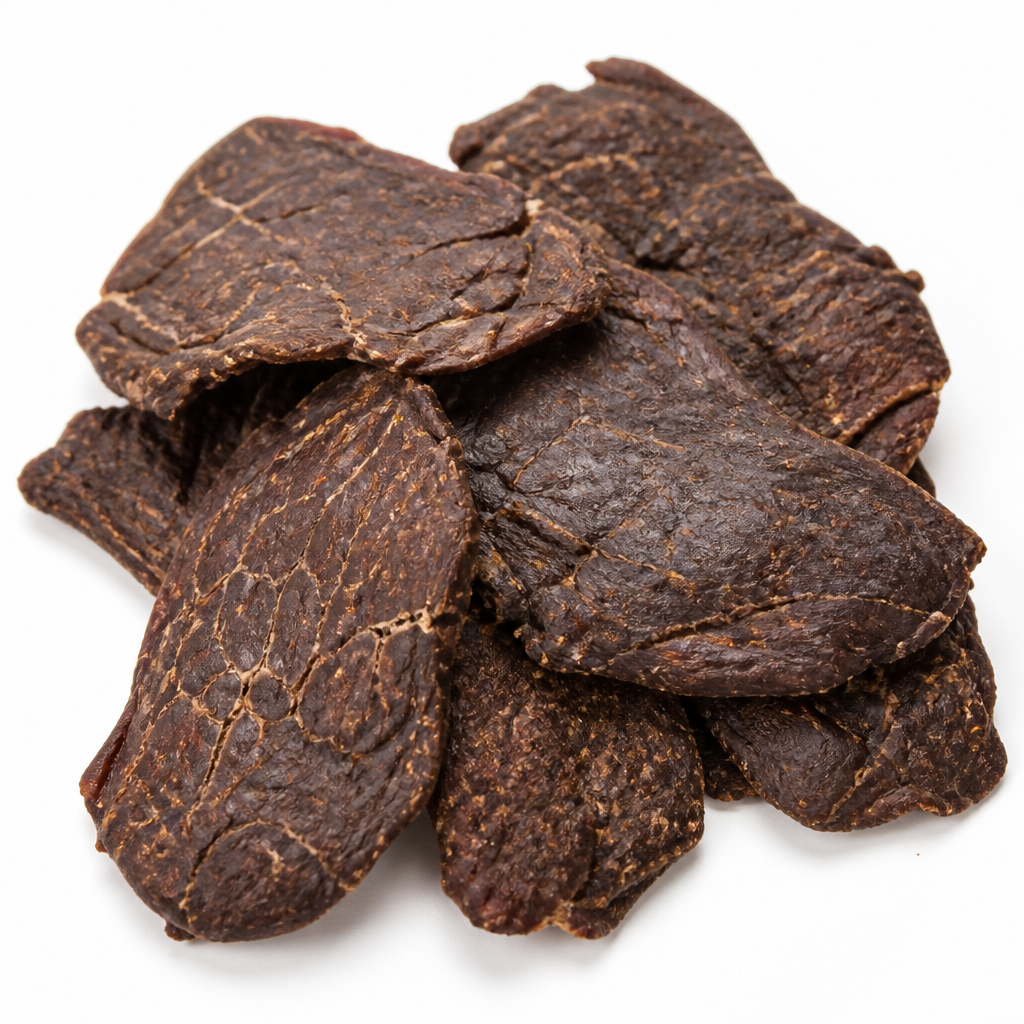
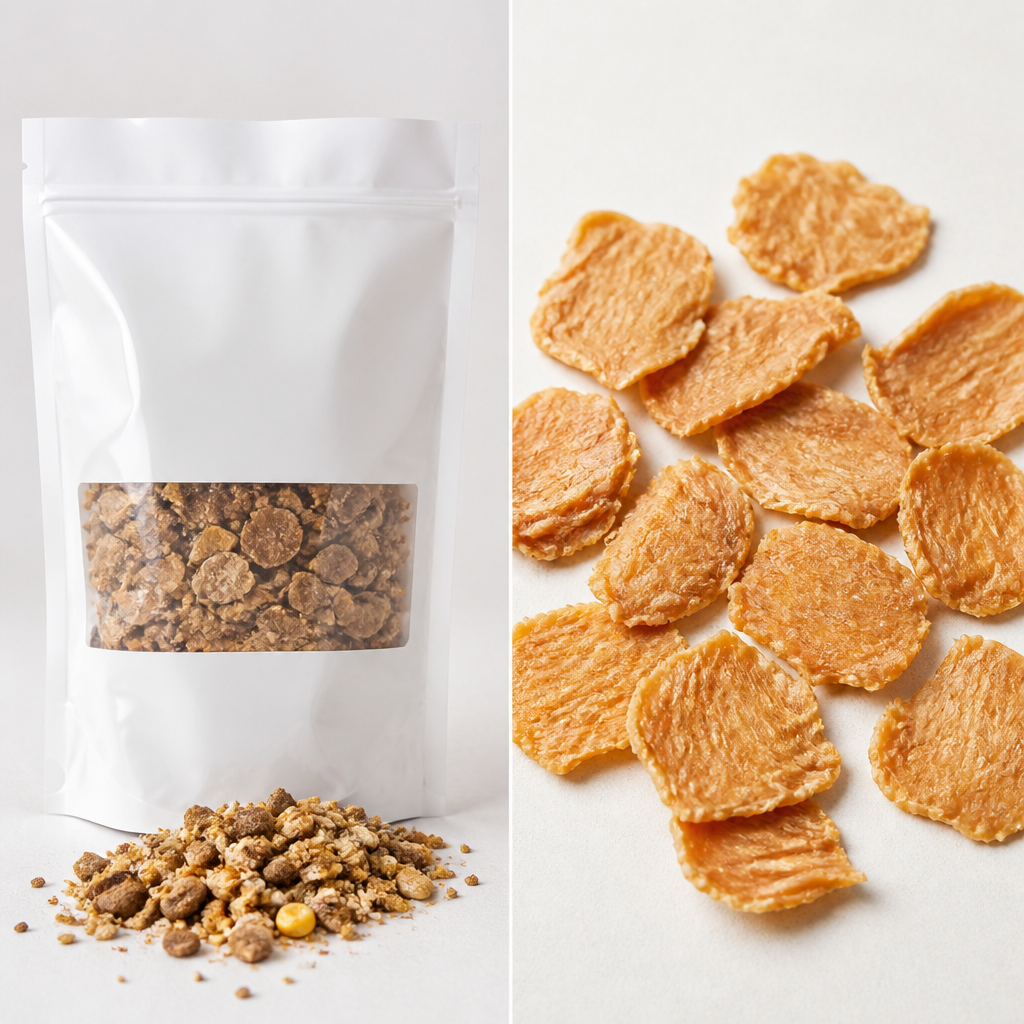
The Most Common Fillers to Watch For
Not all fillers are equally harmless. Some are simply nutritionally empty, taking up space in your dog's snack without doing any good. Others actively raise health concerns, particularly for dogs with sensitive stomachs, skin conditions, or allergies. Here are the ones that appear most often in popular commercial treats.
Corn, Wheat, and Soy
These three grains are the workhorses of the filler world. They're cheap, widely available, and easy to source in bulk, which is exactly why treat manufacturers love them. For dogs, though, they're among the most common dietary triggers for skin irritation, ear infections, and digestive discomfort. While some dogs tolerate them fine, there's genuinely no reason for a high-quality treat to include them at all.
Look for them listed as corn flour, wheat gluten, soy protein isolate, or simply "cereal by-products." Each one of these names means the same thing: a cheap grain filler that adds bulk at the expense of nutrition.
Added Sugars and Sweeteners
Dogs don't need sugar. They will happily eat a well-made meat treat without any added sweetness. Yet added sugars appear in a wide range of popular treats, sometimes under names that look innocuous on a label. Corn syrup, dextrose, maltodextrin, fructose, and molasses are all forms of sugar. They make treats more palatable to pets raised on processed food, and they help with texture and browning during manufacturing.
The health concerns here go beyond empty calories. Regular exposure to added sugars contributes to dental decay, weight gain, and energy spikes that are particularly unhelpful during training sessions. A treat that gives your dog a sugar rush is not a training treat. It's a distraction.
Glycerin and Propylene Glycol
These humectants are used to keep soft treats moist and chewy. Glycerin isn't necessarily harmful in small amounts, and vegetable-derived glycerin is considered safer than synthetic versions. Propylene glycol, however, has been associated with health concerns in cats and is best avoided for dogs too. If your dog's treats are suspiciously soft and moist without refrigeration, glycerin or propylene glycol is likely why.
Meat Meal and Animal Derivatives
These terms are some of the vaguest in pet food labelling. "Meat meal" can mean rendered leftovers from multiple unspecified animal sources. "Animal derivatives" is vaguer still. Neither tells you what species the protein comes from, how it was processed, or what quality standard was applied. If the label says "chicken," you know it's chicken. If it says "meat meal," you don't know much at all.
Pro tip: The simplest label test is this: can you picture exactly what's in the treat just by reading the ingredients? If yes, it's probably clean. If the list reads like a chemistry textbook, put it back on the shelf.
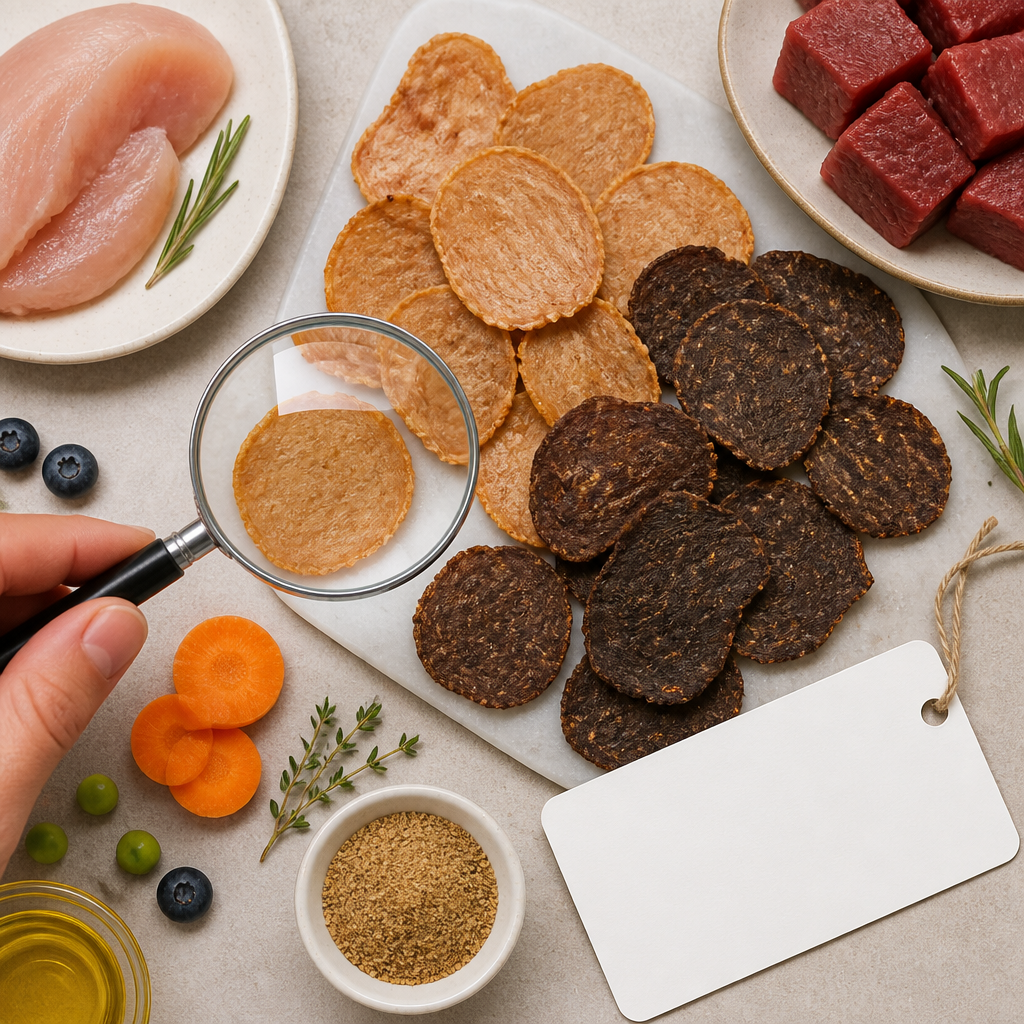
How Manufacturers Hide Fillers on Labels
The real skill in label-reading isn't just knowing which ingredients to avoid. It's understanding the techniques manufacturers use to make those ingredients less visible. There are two tactics in particular that catch even well-intentioned pet owners off guard.
Ingredient Splitting
Ingredient splitting is one of the most widespread tactics in the commercial pet treat industry, and it works like this. A manufacturer takes one cheap ingredient, such as sugar or corn, and breaks it into multiple separate forms. Each form appears on the list individually, making it look like a minor component of the recipe.
Consider a label that reads: chicken, corn syrup, wheat flour, dextrose, corn starch, fructose, glycerin. Chicken sits at the top, so the treat appears protein-forward. But if you add up the corn syrup, dextrose, corn starch, and fructose together, the combined sugar content would very likely outweigh the chicken entirely. Ingredient splitting is why a short ingredients list matters just as much as what's on it.
Vague "Natural" Language
Terms like "natural flavouring," "wholesome grains," or "enriched with vitamins" sound reassuring but carry almost no regulated meaning in the context of pet treats. "Natural flavouring" in particular is a catch-all term that can mask the absence of real meat flavour. A treat made from genuine, high-quality protein doesn't need artificial or vague flavourings because the ingredient itself provides the taste.
The simplest ingredients list wins. When a treat contains only one named, recognisable ingredient, there is nowhere for fillers to hide and nothing for pet owners to decode.
Front-of-pack claims like "grain-free" can also mislead. A treat that removes grains but replaces them with potato starch, tapioca, or pea protein as bulking agents is still using fillers. The specific filler has changed, but the principle hasn't. Always read the full ingredients list, not just the marketing panel.
Dog Treat Ingredients to Avoid: Your Full Checklist
Here's a practical reference you can use next time you're standing in a pet shop or scrolling through an online store. These are the dog treat ingredients to avoid, grouped by category so they're easier to scan.
Synthetic Preservatives
BHA (butylated hydroxyanisole), BHT (butylated hydroxytoluene), and ethoxyquin are chemical preservatives used to extend shelf life. They are completely unnecessary in treats that are properly air-dried or freeze-dried, which are shelf-stable by nature without any synthetic help. Look for treats preserved naturally through the drying process itself, with no additives needed.
Artificial Colours and Dyes
Dogs do not perceive colour the way humans do. They are not choosing their treat based on whether it's an appealing shade of red or green. Artificial colours serve no nutritional purpose whatsoever and have been linked to behavioural and allergic responses in sensitive dogs. Their only purpose is to make the treat look more appealing to the person buying it, not to the dog eating it.
Added Sugars
As outlined above, added sugars appear under many names. Corn syrup, dextrose, maltodextrin, fructose, sucrose, and molasses are all forms of added sugar to avoid. None of them belong in a quality dog treat.
Vague Protein Sources
"Meat meal," "poultry by-product meal," "animal fat," and "animal derivatives" all indicate an unspecified, potentially low-quality protein source. A quality treat will always name the exact protein: beef, chicken, turkey, or another named species.
Grains Used as Bulk Fillers
Corn flour, wheat flour, wheat gluten, soy protein, and rice bran used in bulk quantities add carbohydrate volume without meaningful nutritional benefit. In a meat treat especially, there is simply no reason for them to be there.
Pro tip: Count the ingredients. A genuinely clean treat will have very few, often just one. If the ingredients list runs to more than eight or ten items, take a closer look at what's actually on that list before buying.
Comparing Label-Reading Approaches
| Approach | What It Involves | How Effective Is It at Avoiding Fillers? |
|---|---|---|
| Reading the front of pack only | Relying on claims like "natural," "wholesome," or "grain-free" printed on the front label | Low. Front-of-pack claims are largely unregulated and often misleading. Fillers can hide behind any of these terms. |
| Checking the first three ingredients | Scanning whether a named protein appears at the top of the ingredients list | Medium. A useful starting point, but ingredient splitting means the full list still needs attention. A named protein at #1 doesn't guarantee the rest of the list is clean. |
| Reading the full ingredients list and counting items | Reading every ingredient, watching for splitting, vague terms, and any of the avoid list above | High. This takes a minute more but gives you a clear picture of what your dog is actually eating. A short list of named, recognisable ingredients is always the safest bet. |
No Filler Dog Treats in Australia: What to Look For
The good news is that genuinely clean, no filler dog treats are increasingly easy to find in Australia. The key is knowing what "no filler" actually means in practice, because some products use that phrase loosely on their packaging without the ingredients list to back it up.
A genuinely no filler dog treat will have a short ingredients list, with a single named animal protein as the only ingredient. It will be shelf-stable through the drying process alone, with no synthetic preservatives required. It will not include any grains, added sugars, glycerin, artificial colours, or vague protein terms. And it will be manufactured in Australia from traceable, named ingredients.
Air-Drying as a Filler-Free Method
Air-drying is one of the cleanest manufacturing methods available for pet treats. The process removes moisture from fresh meat slowly and gently, concentrating the protein and flavour naturally without the need for any additives, preservatives, or flavour enhancers. The result is a treat that is crunchy, long-lasting, and nutritionally dense, with nothing added and nothing to hide.
At Treaty Treats, this is exactly how every product is made. Our beef, chicken, and turkey treats are air-dried from 100% human-grade Australian meat, with absolutely no fillers, preservatives, or artificial anything. The ingredients list is short because it needs to be: one named protein, air-dried, batch-made, done. If your dog has a sensitive stomach or you're working through an elimination diet, single-ingredient treats like these take all the guesswork out of the equation.
Treats for Training vs. Everyday Rewards
One area where fillers cause a very practical problem is training. A training treat needs to be small, motivating, and digestible. A treat loaded with sugar, glycerin, and grain fillers might be palatable in the moment, but the sugar rush and subsequent crash can work against focus and learning. Clean, high-protein treats are naturally motivating to dogs because meat is what they're wired to find rewarding. Our single-ingredient chips and crumbles work especially well broken into small pieces for training sessions, delivering genuine reward value with no unnecessary extras.
Frequently Asked Questions
Are dog treat fillers actually harmful, or are they just low quality?
It depends on the specific filler and your dog's individual sensitivities. Some fillers, like bulk grains, are not acutely toxic but are nutritionally empty and can trigger allergies or digestive issues in susceptible dogs. Others, like synthetic preservatives BHA and BHT, raise more serious concerns. Even the "harmless" fillers are problematic in that they displace quality protein, meaning your dog eats more treat for less nutritional return. The safest position is to avoid them where you can, which is easy to do when you choose single-ingredient treats.
How do I know if my dog's current treats contain fillers?
Turn the bag over and read the full ingredients list. If you see any of the following, fillers are present: corn flour, wheat flour, wheat gluten, soy protein, corn syrup, dextrose, maltodextrin, BHA, BHT, ethoxyquin, glycerin, propylene glycol, "meat meal," "animal derivatives," or "natural flavouring." A clean treat will have a short list of named, recognisable ingredients with nothing you'd need to look up.
What does "grain-free" on a dog treat label actually mean?
"Grain-free" means the treat does not contain grains like wheat, corn, rice, or barley. However, it does not mean filler-free. Some grain-free treats replace grain-based fillers with starchy vegetables like potato, tapioca, or pea starch, which can bulk up the product in a similar way. A genuinely clean treat doesn't just remove grains. It removes all unnecessary bulking agents entirely.
My dog has a sensitive stomach. Can the right treats really make a difference?
Yes, and often quite noticeably. Many dogs with recurring digestive upsets, itchy skin, or loose stools improve significantly once common allergens like corn, wheat, and soy are removed from their diet, including their treats. Single-ingredient treats made from one named protein are the easiest way to run a proper elimination trial, because you know exactly what your dog is consuming. If symptoms improve, you can introduce other ingredients one at a time to identify any specific triggers.
Are human-grade ingredients in dog treats really better?
Human-grade means the ingredient meets the food safety standards required for human consumption. In practice, this means tighter quality controls, better traceability, and a higher standard of processing. It's the difference between meat sourced and handled as food and meat sourced as a feed-grade by-product. For a single-ingredient treat where the entire product is that one ingredient, human-grade sourcing matters a great deal because there are no other components to fall back on.
Can I give my cat the same no-filler treats I give my dog?
Many single-ingredient air-dried meat treats are suitable for both dogs and cats, but always check the product description and serving guidance. Cats have different nutritional requirements and are often more sensitive to additives and certain ingredients. At Treaty Treats, we make specific products for cats, including our turkey crumbles and beef toppers, which are formulated and portioned with feline needs in mind. If you're unsure, the shortest ingredients list with a single named protein is the safest choice for both species.
How should I store no-filler air-dried treats once opened?
Because properly air-dried treats don't rely on synthetic preservatives or humectants to stay shelf-stable, storage matters a little more than with heavily preserved treats. Keep them in a sealed container or resealable bag in a cool, dry spot away from direct sunlight. Most air-dried single-ingredient treats will stay fresh for several weeks after opening under these conditions. If you're in a particularly warm or humid climate, a cool pantry or even the fridge works well for extending freshness.
We'd love to hear from you. Have you noticed a difference in your dog or cat since switching to cleaner, filler-free treats? Share your experience in the comments below.
References
- What pet owners should know about harmful and unnecessary ingredients in commercial dog treats
- Common types of dog treats that pose health risks and what Aussie pet owners should avoid
- A practical guide to decoding dog treat labels and spotting low-quality ingredients
- How to read a dog treat label, including ingredient splitting and hidden preservatives
- Top risky and unnecessary ingredients found in commercial dog food and treats
Follow Us
Subscription Subscribe to our newsletter and receive a selection of cool articles every weeks

Real Talk & Tail Wags

dog treat enrichment ideas
Discover 5 practical dog treat enrichment ideas, from puzzle feeders to snuffle mats, that make treat time fun, rewarding and...

best dog treats Australia
Cheap dog treats can cause tummy upset, weight gain, and hidden costs. Learn what bargain snacks contain and how to...

dog treat transition guide
Switching dog treats naturally? Follow this gentle dog treat transition guide to avoid tummy trouble and keep your dog happy....


