
If your dog has been dealing with loose stools, post-treat vomiting, or that anxious look on their face after snack time, you are absolutely not alone. A sensitive stomach is one of the most common challenges Australian pet owners face, and treats are often the hidden culprit. The good news is that choosing the right dog treats for sensitive stomachs does not have to feel like reading a chemistry textbook. With a little know-how about what to look for and what to skip, snack time can be something both of you genuinely enjoy again.
Table of Contents
- Signs Your Dog Has a Sensitive Stomach
- Quick Takeaways
- Ingredients to Look For in Gentle Dog Treats
- Ingredients to Avoid at All Costs
- Single-Ingredient vs. Multi-Ingredient Treats: A Comparison
- How to Introduce New Treats Without Upsetting the Tummy
- Hypoallergenic Dog Treats in Australia: What the Label Really Means
- Frequently Asked Questions
- References
Signs Your Dog Has a Sensitive Stomach
Before we talk about treats, it helps to know what a sensitive stomach actually looks like day to day. Some signs are obvious, like vomiting or diarrhoea shortly after eating. Others are subtler and build slowly over weeks or months, which is why many pet owners do not immediately connect them to treats at all.
Common signs to watch for include loose or inconsistent stools, excess gas, bloating, a gurgling stomach, reluctance to eat, or your dog eating grass more than usual. Skin signals can also appear alongside digestive ones. Itchy skin, paw licking, dull coat, and recurring ear redness can all point to a food sensitivity, even when the main symptom is digestive upset.
A common mistake is to focus only on the main meal and ignore treats entirely. If your dog's dinner is carefully chosen but the treats are packed with fillers and artificial additives, you may be undoing a lot of good between meals. Treats are fed frequently, often multiple times a day during training, and their ingredient quality matters just as much as what goes in the bowl.
"The bowl might be dialled in, but if the treats are working against it, you have undone a lot of good between meals. For a sensitive gut, every unnecessary ingredient is something to react to."
If vomiting, diarrhoea, or significant changes in appetite last more than 24 to 48 hours, please check in with your vet. Ongoing digestive signs can point to an underlying condition that needs a proper diagnosis, not just a snack swap.
Quick Takeaways
| Key Insight | Explanation |
|---|---|
| Single-ingredient treats are the gentlest choice | With only one real ingredient, there is simply less for a sensitive stomach to react to, and it is easier to identify any triggers. |
| Avoid artificial preservatives like BHA, BHT, and ethoxyquin | These synthetic chemicals can disrupt gut health and trigger reactions in dogs with sensitivities. |
| Common fillers like corn, wheat, and soy are worth skipping | These are among the most common allergens for dogs and offer little nutritional value for a sensitive system. |
| Novel proteins can help when common proteins are the trigger | Proteins like turkey are often well-tolerated because many dogs have had less exposure to them compared to chicken or beef. |
| Air-dried treats preserve nutrition without additives | The drying process removes moisture naturally, so no artificial preservatives are needed. The result is a clean, easily digestible treat. |
| Introduce new treats one at a time, slowly | Changing multiple treats at once makes it almost impossible to figure out what caused a reaction. Give each new treat at least five days before adding another. |
| High-fat treats are hard on sensitive stomachs | Lean, high-protein treats are gentler on digestion and sit more lightly on delicate systems than fatty snacks. |
Ingredients to Look For in Gentle Dog Treats
Choosing gentle dog treats starts with the ingredient list. A short, readable list is always a good sign. If you can picture every ingredient in its natural form, you are already on the right track.
Real, Named Protein as the First Ingredient
The protein source should be front and centre on the label, and it should be specific. "Beef" or "chicken breast" tells you something real. "Meat meal" or "animal derivatives" tells you very little, and for a dog with a sensitive stomach, that vagueness is a red flag. At Treaty Treats, every treat starts and ends with a single named protein, so there is never any guesswork about what your dog is eating.
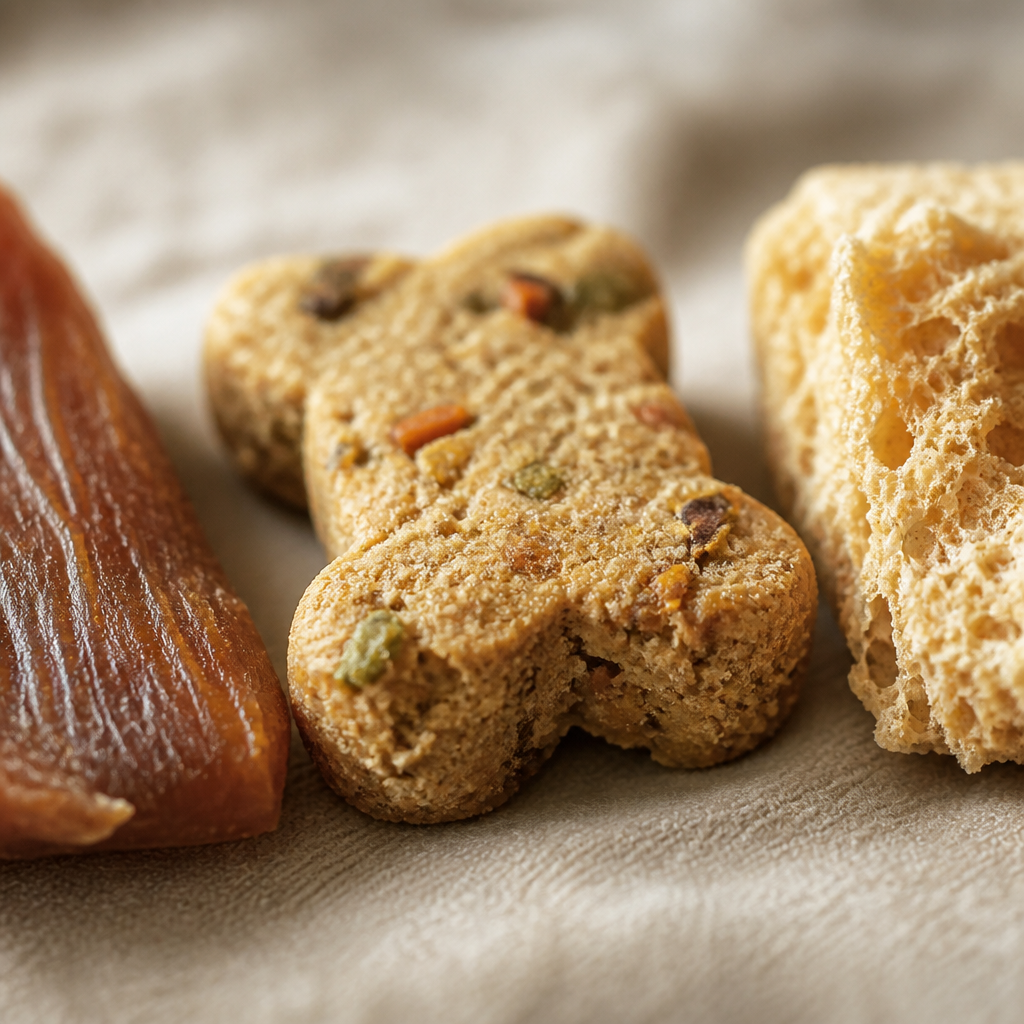
Lean proteins are particularly well-suited to sensitive dogs. Air-dried beef, chicken, and turkey are high in natural protein, low in unnecessary fats, and easy for the digestive system to process. Turkey in particular is often recommended as a gentler option because many dogs have had less dietary exposure to it compared to chicken or beef.

Human-Grade Ingredients
Human-grade simply means the ingredients are safe for human consumption. That standard matters because it signals a level of quality control and sourcing that goes beyond what many commercial pet products require. When treats are made from human-grade meat, you can be confident that what is going into your dog is clean, real food, not offcuts or low-grade material.
Treaty Treats uses 100% human-grade meat in every batch. That is not a marketing flourish. It is the most straightforward way to give a sensitive dog a treat that works with their system, not against it.
Pro tip: Always check where in the ingredient list the protein sits. If it is listed after a long run of starches or fillers, the treat is mostly filler with a token splash of meat. For a sensitive stomach, the protein should be the only ingredient, or at the very least the very first one listed.
Minimal Ingredient Lists
There is a real advantage to treats with fewer ingredients when your dog has a sensitive stomach. Complex treats often contain multiple ingredients that can be hard for sensitive dogs to digest, and every additional item on the list is another potential trigger. The fewer ingredients, the easier it is to identify what agrees with your dog and what does not.
Ingredients to Avoid at All Costs
Knowing what to avoid is just as useful as knowing what to look for. Some ingredients appear in treats so routinely that pet owners stop noticing them, but for a dog with a sensitive stomach, they can cause real discomfort.
Artificial Preservatives
Synthetic preservatives like BHA, BHT, and ethoxyquin are used to extend shelf life in many commercial treats. They are cosmetic ingredients that do nothing for your dog's nutrition and give the digestive system extra, unnecessary work. Look for treats that are naturally preserved through air-drying or freeze-drying rather than chemical means.
Cheap Grain Fillers
Corn, wheat, and soy are among the most common dog allergens and also among the most common ingredients in inexpensive commercial treats. They are used to bulk out treats at low cost, but they offer little nutritional value for your dog and can be genuinely difficult for a sensitive stomach to process. If you see corn, wheat, or soy appearing more than once in different forms on the same label (corn flour, corn starch, corn syrup), that treat is heavily filler-based.
Artificial Colours and Flavours
Artificial colours like Red 40 and Yellow 5 serve no nutritional purpose whatsoever. They are purely cosmetic, and some dogs react to them. Similarly, vague "natural flavour" listings can mask ingredients that a sensitive dog might struggle with. If a treat needs artificial flavouring to be appealing, that is a sign it is not made from quality meat in the first place.
Added Sugars and Sweeteners
Sugar and corn syrup add empty calories and can disrupt the balance of gut bacteria. Xylitol, an artificial sweetener found in some human-grade products that occasionally makes its way into pet treats, is extremely dangerous for dogs. Always check the label carefully for any kind of sweetener.
High-Fat Ingredients
Fatty treats like bacon-style snacks or heavily processed chews can be genuinely hard on a sensitive digestive system. For dogs with a history of pancreatitis or any condition where fat intake is medically important, this is not just a treat-shopping question. Your vet's guidance should set the rules in those cases.
Pro tip: When you pick up a new treat, flip the packet over before anything else and read the ingredient list from top to bottom. If you cannot recognise most of what is listed, or if the list is longer than a few items, that treat is probably not the right fit for a dog with a sensitive stomach.
Single-Ingredient vs. Multi-Ingredient Treats: A Comparison
Not all treats are built the same, and understanding the difference between treat types helps you make a confident choice for your dog. Here is a straightforward look at how single-ingredient, limited-ingredient, and standard commercial treats compare when it comes to sensitive stomachs.
| Treat Type | What It Contains | Suitability for Sensitive Stomachs |
|---|---|---|
| Single-ingredient treats (e.g., air-dried beef chips, turkey chips) | One named protein, nothing else. No fillers, no preservatives, no additives. | Best choice. Easiest to digest, simplest to identify as a trigger or non-trigger. Ideal for elimination diets and sensitive dogs. |
| Limited-ingredient treats (e.g., one protein plus one clean carb) | Two to four recognisable ingredients, no artificial additives. | Good choice. Still manageable for most sensitive dogs if all ingredients are clean and recognisable. |
| Standard commercial treats (e.g., packaged biscuit-style treats) | Multiple proteins, grains, binders, artificial flavours, colours, preservatives. | Risky for sensitive stomachs. Many ingredients, hard to identify triggers, common allergens often present. |
The pattern is clear. The simpler the treat, the gentler it tends to be on a sensitive digestive system. For dogs going through a difficult period with their stomach, starting with a single-ingredient treat and staying there until things settle is the most reliable approach.
How to Introduce New Treats Without Upsetting the Tummy
Even the cleanest, gentlest treat in the world can cause a reaction if you introduce it too quickly. A dog's gut microbiome gets used to certain ingredients, and changing things abruptly can disrupt the balance of healthy bacteria in the digestive system, leading to loose stools, vomiting, or bloating even from a treat that would otherwise suit them perfectly.
The One-at-a-Time Rule
Introduce only one new treat at a time. Changing multiple snacks at once makes it almost impossible to figure out what caused a reaction. If something goes wrong, you will have no way of knowing which new treat was the issue. Give each new treat at least five days before adding anything else to the rotation.
Start Small
Begin with a very small piece, significantly smaller than a normal serving. Break it into fragments and offer it at the end of a calm, positive moment like a walk or a training session. Watch for any changes in stool quality, skin, energy, or appetite over the next day or two before offering more.
For dogs with a particularly sensitive history, it can be helpful to keep a simple diary. Note what treats were given, in what quantities, and any changes you noticed afterward. This kind of record is invaluable if you need to visit your vet, because patterns that are hard to see in real time often become clear on paper.
Watch for Gradual Reactions
Not all reactions are immediate. Some dogs show signs within a few hours. Others show subtle changes that build over days or weeks. A dull coat, slightly looser stools, or a new tendency to lick their paws can all be signs of a food sensitivity that started with a treat change. The slower you go, the more clearly you can see what is and is not working.
If symptoms are severe, including persistent vomiting, diarrhoea lasting more than 48 hours, or any blood in the stool, contact your vet straight away rather than continuing to experiment at home.
Hypoallergenic Dog Treats in Australia: What the Label Really Means
"Hypoallergenic" is a word that gets used a lot on pet packaging, and it is worth understanding what it actually means before you rely on it. Technically, no protein is entirely hypoallergenic. What the term usually signals in practice is that a treat avoids the most common allergens, such as wheat, dairy, chicken in some cases, and soy, and uses proteins or ingredients that most dogs have had less exposure to.
Novel Proteins and Why They Help
A novel protein is simply a protein source your dog has not eaten before. Because dogs develop food sensitivities through repeated exposure over time, a protein that is new to your dog's system is less likely to trigger a reaction. Turkey is a great example, and it is one reason why Treaty Treats' turkey chips are particularly well-suited to dogs who have reacted to more common proteins like chicken or beef.
One practical catch worth mentioning: novel depends entirely on your dog's individual history. If your dog has eaten turkey in their kibble for years, turkey is no longer truly novel for them. Always check the labels of everything your dog currently eats before assuming a protein is new to them.
What Genuinely Gentle Dog Treats Look Like in Australia
For Australian pet owners looking for hypoallergenic dog treats in Australia, the most reliable approach is to focus on what is actually in the treat rather than what the marketing says on the front of the packet. A treat that contains one named, lean protein, no grains, no artificial additives, and is made in small batches with quality control you can trust is far more meaningful than a "hypoallergenic" claim with a long ingredient list behind it.
Treaty Treats' range of air-dried beef, chicken, and turkey chips is batch-made in-house, uses 100% real human-grade meat, and contains nothing else. For dogs with sensitive stomachs or a history of food sensitivities, that level of transparency is exactly what you want to see. You can explore the full range at treatytreats.com.au and find the right protein option for your dog's specific needs.
Frequently Asked Questions
What are the best dog treats for sensitive stomachs?
The best treats for sensitive stomachs are single-ingredient, made from a named lean protein, and contain no artificial preservatives, fillers, or colours. Air-dried meat treats, such as beef, turkey, or chicken chips made from 100% real meat, are a reliable starting point. The simpler the ingredient list, the gentler the treat on a sensitive digestive system.
Can dog treats cause diarrhoea or vomiting?
Yes, they can. Treats with artificial additives, high-fat content, grain fillers, or common allergens like wheat, soy, or dairy can all trigger digestive upset in sensitive dogs. Even a treat that is otherwise good quality can cause a reaction if it is introduced too quickly or given in too large a quantity at once. Starting small and going slowly with any new treat significantly reduces this risk.
Are grain-free dog treats better for sensitive stomachs?
For many dogs with sensitive stomachs, yes. Grains like wheat, corn, and soy are among the more common digestive triggers and allergens in dogs, and removing them from the treat equation often makes a noticeable difference. That said, grain-free on its own is not a guarantee. A treat can be grain-free and still contain multiple artificial additives or poor-quality protein. Always read the full ingredient list, not just the front-of-packet claims.
How do I know if my dog has a food sensitivity?
Common signs include loose stools, gas, vomiting, gurgling stomach sounds, reluctance to eat, and eating grass frequently. Skin symptoms can also appear alongside digestive ones, including itchy skin, paw licking, recurring ear redness, and a dull coat. Symptoms do not always appear immediately after eating, so if you suspect a food sensitivity, keeping a simple diary of what your dog eats and any symptoms you notice can help identify patterns over time. Your vet can guide you through a formal elimination diet trial if needed.
What proteins are easiest for dogs with sensitive stomachs to digest?
Lean proteins are generally the easiest on a sensitive digestive system. Turkey is often well-tolerated because many dogs have had less dietary exposure to it. Beef and chicken can work well too, provided they are sourced cleanly and served without additives. The key is choosing a single, high-quality protein source rather than a blend of multiple proteins, which makes it much easier to identify and manage any sensitivities.
Are air-dried treats safe for dogs with sensitive stomachs?
Air-dried treats are one of the safest options for sensitive dogs. The air-drying process removes moisture naturally, which means no artificial preservatives are needed. The result is a clean, shelf-stable treat that retains the nutritional value of real meat without anything extra added. For dogs with digestive sensitivities, the absence of fillers, binders, and synthetic additives makes air-dried single-ingredient treats an excellent choice.
Should I talk to my vet before changing my dog's treats?
If your dog has had persistent digestive symptoms, significant changes in appetite, weight loss, blood in the stool, or any other concerning signs, yes, absolutely speak to your vet before making changes at home. For dogs with mild, occasional sensitivity who are otherwise healthy, switching to a cleaner, single-ingredient treat is a reasonable first step. Your vet can advise on whether a formal elimination diet trial is needed and can rule out any underlying medical conditions.
We would love to hear from you. Has switching to single-ingredient treats made a difference for your dog? Share your experience in the comments or tag us on social media so we can celebrate those sensitive tummy wins together.
References
- Guide to choosing dog treats for dogs with sensitive stomachs, including information on novel proteins and lean options
- Practical breakdown of ingredients to avoid and safe treat options for sensitive dogs
- PetMD overview of food allergies and food intolerance in dogs, including signs and diagnosis
- American Kennel Club advice on safely transitioning dogs to new foods and managing elimination diets
- Tips for introducing new treats to dogs with sensitive stomachs without causing digestive upset
Follow Us
Subscription Subscribe to our newsletter and receive a selection of cool articles every weeks

Real Talk & Tail Wags

dog treat enrichment ideas
Discover 5 practical dog treat enrichment ideas, from puzzle feeders to snuffle mats, that make treat time fun, rewarding and...

best dog treats Australia
Cheap dog treats can cause tummy upset, weight gain, and hidden costs. Learn what bargain snacks contain and how to...

dog treat transition guide
Switching dog treats naturally? Follow this gentle dog treat transition guide to avoid tummy trouble and keep your dog happy....


