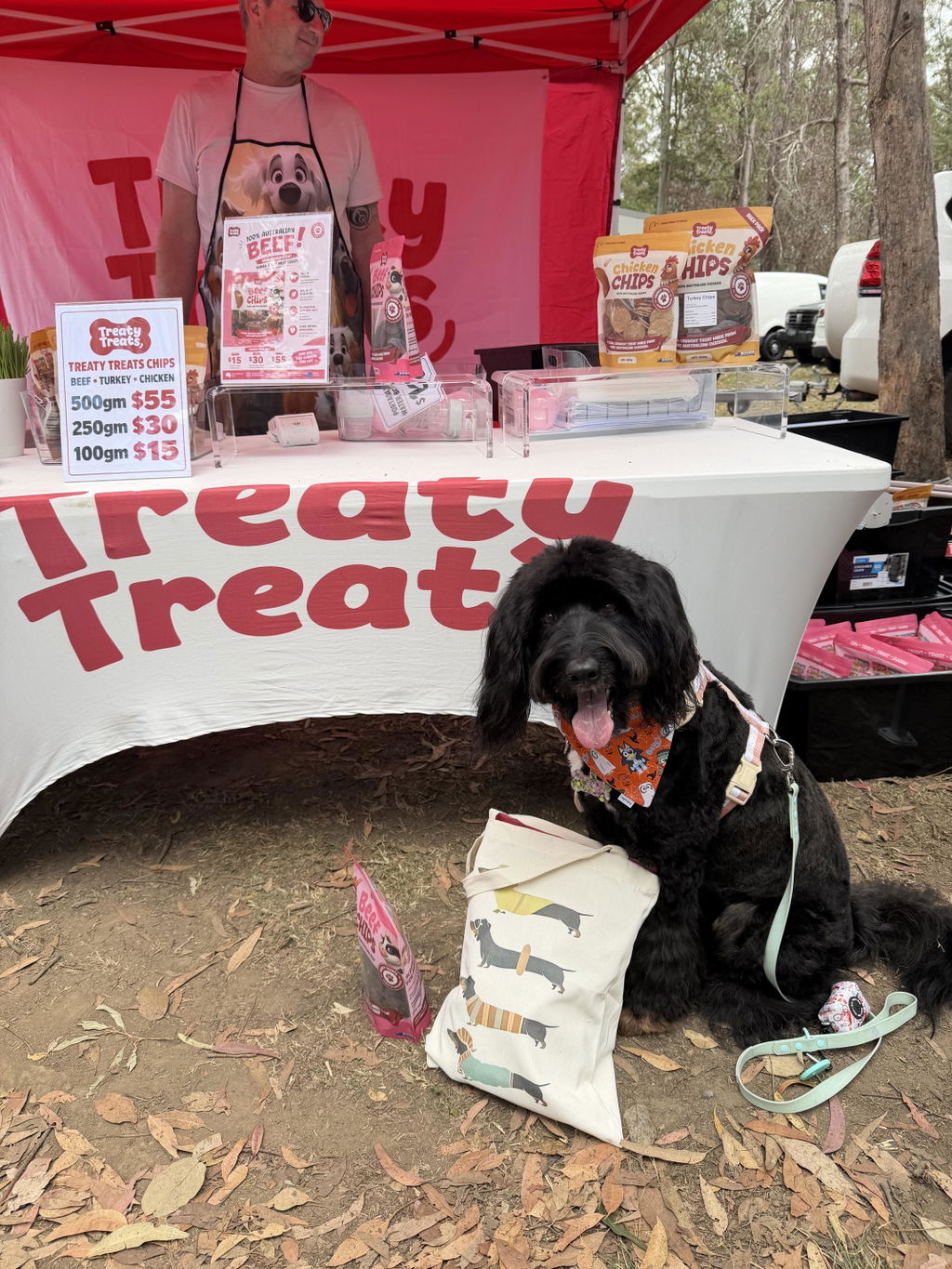
Ever noticed your dog scratching more than usual, or looking a little dull around the coat? Or maybe you've spotted them wincing when they climb into the car? You're not alone, and it's natural to wonder whether the food and treats you choose are part of the story. Dog treats for skin and coat are a popular search for good reason, because many owners want a reward that does a bit more than taste good. In this guide, we'll walk through what real-meat treats can realistically offer for skin, coat, and joints, what they can't do, and how to use them with confidence.
Table of Contents
- Quick Takeaways
- What Real-Meat Treats Bring to the Table
- Protein for Skin and Coat
- Fats and Micronutrients for a Healthy Coat
- Joint Health: What Treats Can and Can't Do
- Comparing Ways to Support Skin and Joints
- Feeding Real-Meat Treats Safely
- Frequently Asked Questions
- References
Quick Takeaways
| Key Insight | Explanation |
|---|---|
| Protein is the foundation | Hair and skin are largely made of protein, so a meat-based treat contributes useful building blocks. |
| Single ingredients make patterns easier to spot | When a treat has one ingredient, a change in itching or stools points to a much shorter list of suspects. |
| Coat changes take weeks | Hair growth and skin renewal are gradual, so judge a new treat after several weeks of consistent use. |
| Treats support, they don't treat | Real-meat treats complement a complete diet. They don't treat allergies, infections, or arthritis. |
| Weight is a major joint factor | Keeping your dog at a healthy weight reduces the daily load on joints, and small treats help you manage calories. |
| Persistent signs need a vet | Patchy hair loss, ongoing itching, or limping should be assessed before you rely on any treat. |
What Real-Meat Treats Bring to the Table
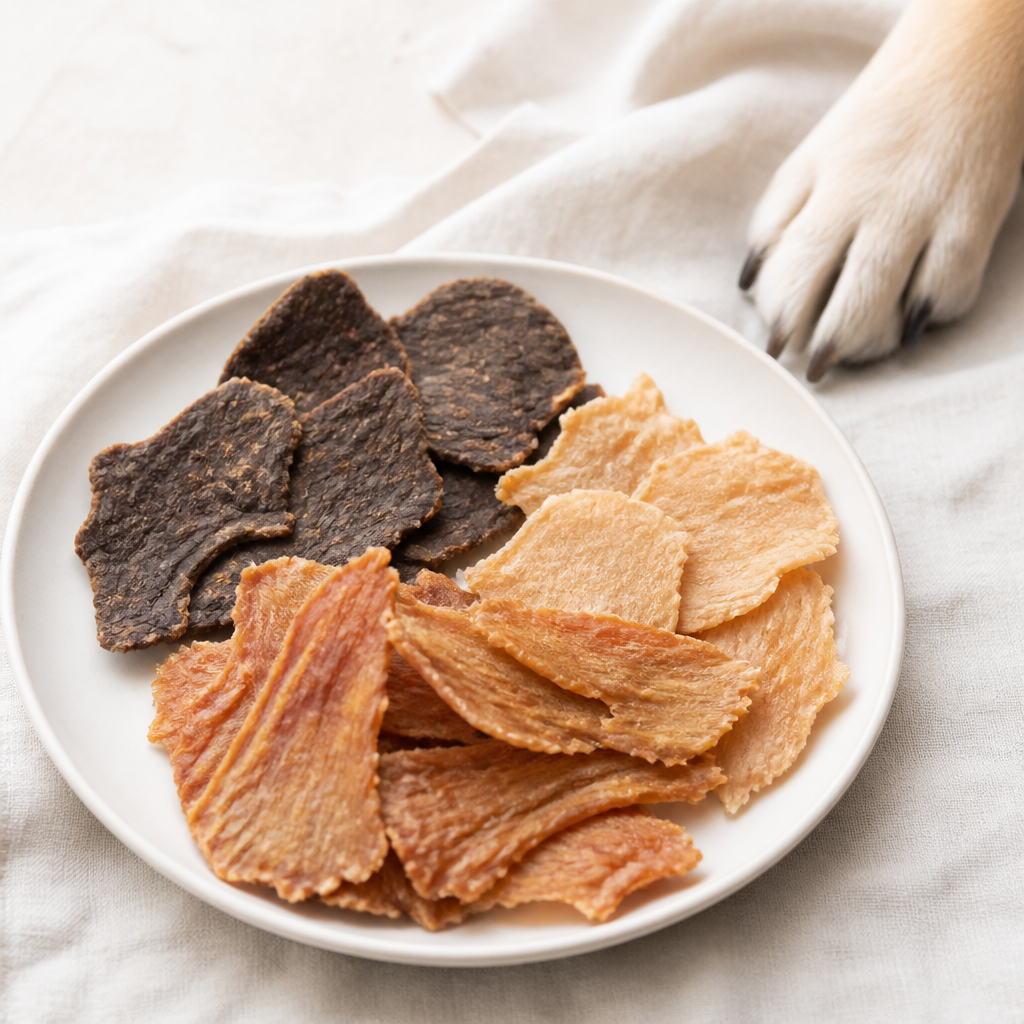
Let's start with the label, because that's where most of the answers are. Many dog treats are built around grains, starches, and flavourings, with the meat sitting well down the ingredient list. Our air-dried beef, chicken, and turkey chips take a different approach. Each one is made from a single ingredient, 100% real meat, with no fillers, preservatives, or artificial additives.

Why does that matter for skin and coat? Because the nutrients your dog's skin and hair rely on, especially protein, come straight from the meat. When a treat is mostly meat, you're offering your dog building blocks rather than mostly filler. That doesn't make it a cure for anything, but it does mean every treat is doing some useful work.
Why a single ingredient makes troubleshooting easier
In practice, the simplest way to find a food that upsets your dog is to change one thing at a time. A treat with a long ingredient list makes that almost impossible, because you're testing a dozen variables at once. With a single-ingredient chip, if your dog's ears get red or their stools loosen after a few days, you only have one suspect to check.
A common mistake is switching treats, food, and chews all in the same week. Then, when an itch appears, nobody knows where it came from. Keep the new treat as the only change for at least two to three weeks, and jot down what you see.
What "human-grade" means for your pantry
We describe our meat as human-grade, which means it's prepared to the same standard as food we'd be happy to eat ourselves. That's a useful signal about quality, but it isn't a health promise. Look at the whole label and the way a product is made, not just one word on the front.
Pro tip: Read the first ingredient, then keep reading. If the list ends after one named meat, you're comparing like with like when you look at other options.
A treat you can read at a glance is a treat you can trust to do its job, and it's far easier to troubleshoot when something changes.
Protein for Skin and Coat
If you only remember one thing about real-meat treats, make it this: hair and skin are largely made of protein. Your dog's coat is essentially a row of protein fibres growing out of the skin, and the skin itself is constantly renewing its outer layers. A steady supply of good-quality protein helps the body keep up with that work, which is why protein comes up so often when people talk about glossy coats.
Real meat is a natural source of protein, and air-dried chips concentrate that protein into a small, crunchy bite. Because the treat is mostly meat, a reward you give during training also contributes to your dog's day in a meaningful way. Protein only helps when the rest of the diet supports it, though. Your dog's main meals should be a complete and balanced food, and treats are the extra layer on top.
Spotting coat and skin signs worth noticing
Some changes are normal. Dogs shed, and coats look different across the seasons. In Australia, spring is a common time for heavier shedding as coats change, and that may be what you're seeing right now. The signs that deserve more attention are patchy hair loss, persistent flaking, redness, or a dog who keeps licking or scratching one spot.
When those signs stick around, we'd gently suggest a vet check rather than a treat swap alone. A vet can look for parasites, infections, and allergies, which treats can't rule in or out. Once you know what you're dealing with, real-meat treats can fit neatly into the plan.
How long before you notice a change
Patience matters here. Hair grows slowly, and skin cells take time to turn over, so improvements in coat condition are usually gradual rather than overnight. Give any new food or treat several weeks of consistent use before you decide whether it's helping. A photo once a week, taken in the same light, can reveal changes that memory alone would miss.
Pro tip: Take a photo of your dog's coat in natural daylight every Sunday. It sounds small, but it's the easiest way to see gradual change and avoid switching products too soon.
Fats and Micronutrients for a Healthy Coat
Protein gets most of the attention, but fats and vitamins play a big supporting role. Dietary fat carries certain vitamins and helps keep the skin's surface working properly, while vitamins and minerals support the cells that build healthy skin and hair. Veterinary nutrition resources commonly point to vitamin A for skin cell turnover and repair, vitamin E for healthy skin and a glossy coat, B vitamins for hair growth, and zinc for skin health.
Here's the honest part. Those nutrients come mainly from a complete and balanced diet, not from a single treat. A chip can contribute some natural nutrients, but it shouldn't be your dog's only source of anything, and the amounts in a treat are small.
Omega-3s: what our treats do and don't offer
Omega-3 fatty acids, often discussed for skin and coat, usually come from fish or fish oil. Our chips are made from beef, chicken, and turkey, so they aren't a fish-based source of omega-3s. If you're hoping to add omega-3s, have a conversation with your vet about your dog's complete diet or a supplement that suits them.
Knowing what a treat doesn't contain is just as useful as knowing what it does. It keeps your expectations realistic and helps you build a sensible plan without assuming one product does everything.
Why more is not better for vitamins
It's tempting to stack supplements on top of a good diet, especially when a coat looks dull. But vitamin A in particular can build up to harmful levels when it's over-supplied, so more isn't better. If you're already feeding a complete food plus a few extras, ask your vet to look at the total picture before adding anything new.
In practice, we'd keep treats simple and let the complete diet carry the bulk of the nutrition. That approach is easier on your wallet and gentler on your dog's digestive system.
Joint Health: What Treats Can and Can't Do
If your dog is slowing down on walks, or hesitating before jumping onto the couch, it's understandable to look for anything that might help. Joint health is a real concern, especially for active, larger, or older dogs. Real-meat treats can be part of a joint-friendly routine, but they aren't a treatment for arthritis, so it helps to be clear about the limits from the start.
A 2022 systematic review and meta-analysis looking at nutraceuticals for joint health found that collagen had weak efficacy, and that chondroitin-glucosamine had a very marked non-effect. That's a sobering result for anyone who has spent money on a joint product and hoped for the best. It's also why we'd rather be honest with you than oversell.
Collagen in meat: useful, but not a promise
Meat contains connective tissue, and connective tissue contains collagen. Some dog treats are made from collagen-rich cuts such as tendons, and those are often marketed for joints. The amount and type vary by cut, and the evidence for oral collagen is limited, so we can't claim that our chips will protect your dog's joints.
Weight is the biggest lever you control
Here's where treats can genuinely help. Every extra kilogram a dog carries adds load to its joints with every step. Calorie-dense treats can quietly add up, so the simplest joint support often comes from keeping your dog at a healthy weight. Treats help you do that when you use small pieces and count them as part of the daily food plan.
Ask your vet to show you how to check your dog's body condition, including feeling for the ribs and looking at the waist from above. It takes less than a minute and tells you more than a bathroom scale can.
When a joint problem needs a vet first
Limping, stiffness that lasts more than a day, reluctance to rise, or visible swelling around a joint should be checked by a vet. A veterinary review of joint supplements makes a useful point: they're often not worth the money for dogs with advanced arthritis in every joint, while earlier-stage cases call for a different conversation. Treats can sit alongside pain relief or other management your vet recommends, but they should never replace it.
Pro tip: Before you buy any joint-focused product, ask your vet what problem you're trying to solve. Stiffness after rest, a limp after exercise, and trouble on stairs can point in very different directions.
Comparing Ways to Support Skin and Joints
Real-meat treats are one option among several. Some owners reach for fish oil, others for joint supplements, and many simply rely on the main diet. Each has a place, but they do different jobs, so it helps to compare them side by side before deciding where to spend your money and effort.
Use the table below as a starting point, not a verdict. The right choice depends on your dog's age, weight, health history, and what your vet sees during an examination.
| Approach | What It Offers | Best Use and Limits |
|---|---|---|
| Single-ingredient real-meat treats | Natural protein and nutrients from meat, with no fillers or artificial additives, and easy to use in training | Good as a small, rewarding extra. Doesn't treat skin disease or arthritis on its own, and it counts toward daily calories |
| Omega-3 fish oil | Fatty acids from fish that are widely discussed for skin, coat, and joint comfort | Needs a vet's guidance on dose and suitability. Results can take weeks, and it isn't a substitute for a complete diet |
| Joint supplements with glucosamine and chondroitin | Targeted ingredients aimed at joint cartilage | Evidence in a 2022 systematic review was very limited, and value depends on disease stage. Discuss with a vet before buying |
Notice that none of these replaces a complete diet. A good food forms the base, and each extra is a choice layered on top of it.
Choosing between them without overspending
If budgets are tight, start with the basics: a complete diet, a healthy weight, and regular movement. Then add a single-ingredient treat your dog enjoys for training, which keeps rewards positive without adding fillers. Supplements can wait until your vet has a clear reason to suggest one.
A common mistake is buying three products at once and hoping one of them works. Introduce one change at a time, so you can actually tell what helped.
Matching choices to your dog's life stage
Puppies are still building their bodies, so their diet should come from a complete puppy food, with treats kept small. Adult dogs at a stable weight with a healthy coat often do well on a simple routine. Senior dogs may benefit from a closer look at joints and weight, and that's when a vet's input is most worth having.
Feeding Real-Meat Treats Safely
Real-meat treats are rich, so a little goes a long way. The goal is to enjoy the reward without letting treats crowd out the balanced meals your dog needs. Think of each chip as part of the day's total food, not an extra on top of it.
Start small and build up slowly
When you introduce any new treat, start with a few pieces a day and watch for two to three weeks. Look for normal stools, a comfortable belly, and skin that stays calm. If you notice loose stools, itching, or vomiting, pause the treat and talk to your vet before trying again.
For training sessions, break chips into smaller pieces. Tiny rewards keep your dog motivated and keep the calories where they belong.
Storage that keeps the crunch and the quality
Air-dried treats do best when they're kept sealed, in a cool, dry spot away from heat and humidity. Summer in many parts of Australia is hot and humid, so a sealed container and a quick sniff check for any stale or musty smell can save you from wasted treats.

When skin changes need a vet, not a treat
Hot spots, hair loss, persistent redness, or a dog who keeps chewing at one paw deserve a prompt vet visit. Those signs can have causes that treats can't address, such as allergies, parasites, or infections. Please don't wait for a treat change to fix something that needs a proper diagnosis.
Once your vet has a plan, let them know which treats you're using. That helps them make sense of what's happening and avoids guesswork.
Pro tip: Keep a simple treat diary for two weeks, noting the date, how many pieces your dog had, and any changes in skin, coat, stools, or energy. It's one of the most useful things you can bring to a vet appointment.
Frequently Asked Questions
Can dog treats for skin and coat really make a difference?
They can support skin and coat as part of a complete diet, mainly through protein and natural nutrients from meat. They aren't a treatment for skin disease, though. If changes are patchy, itchy, or persistent, see your vet first.
How long does it take to see changes in my dog's coat?
Coat and skin changes are usually gradual, so plan on several weeks of consistent feeding before judging results. Taking a photo in the same light each week makes subtle changes much easier to spot.
Will real-meat treats help my dog's joints?
Treats can support joint health indirectly, mostly by helping your dog stay at a healthy weight. They aren't a joint treatment, and the evidence for many joint ingredients is limited. Talk to your vet about any stiffness or limping.
Are these treats suitable for dogs with food allergies?
Single-ingredient treats make it easier to spot a trigger, but they don't cure allergies. If your dog has a confirmed or suspected food allergy, your vet may recommend a structured elimination diet, and every treat should be checked against that plan.
Can cats have real-meat treats too?
Our treats are designed for both dogs and cats, but cats have different nutritional needs from dogs. Check with your vet about how much is right for your cat, and keep treats to a small share of their daily food.
We'd love to hear what you've noticed in your own dog's coat, skin, or comfort since switching to real-meat treats, so please share your experience with us.
References
Follow Us
Subscription Subscribe to our newsletter and receive a selection of cool articles every weeks

Real Talk & Tail Wags

artificial additives dog treats
Find out what artificial additives in dog treats do inside your dog's body, from digestion to the liver, and how...

dog socialisation treats
Learn how to use treats to help your dog socialise with other pets and strangers, with calm, step-by-step tips from...

cost of pet treats Australia
Wondering if premium pet treats are worth the cost in Australia? Learn how to compare price per kilo, budget smarter...