
If you've ever stood in the pet treat aisle squinting at labels, wondering whether your dog is getting enough protein or far too much, you're in good company. Protein is one of those topics that sounds simple until you start digging in, and then the numbers, percentages, and life-stage guidelines can feel a little overwhelming. The good news? Once you understand the basics of high-protein dog treats and your dog's actual daily needs, making smart choices becomes a whole lot easier. This guide will walk you through exactly what protein does for your dog, how much they really need, and why the source and quality of that protein matters just as much as the number on the label.
Table of Contents
- Quick Takeaways
- Why Protein Matters for Dogs
- Dog Protein Requirements by Life Stage
- Quality vs. Quantity: Why the Source of Protein Counts
- How High-Protein Dog Treats Fit Into the Daily Picture
- Comparing Treat Types: What to Look For
- Signs Your Dog May Need More or Less Protein
- Frequently Asked Questions
- References
Quick Takeaways
| Key Insight | Explanation |
|---|---|
| Adult dogs need at least 18% protein (dry matter basis) | AAFCO guidelines set a minimum of 18% crude protein for adult maintenance, while puppies need at least 22.5%. |
| Active and working dogs need significantly more | High-activity breeds can need between 25% and 35% protein to support energy demands and muscle health. |
| Protein quality matters as much as quantity | Animal-based proteins provide a fuller range of essential amino acids than plant-based sources, making them more bioavailable for dogs. |
| A dog's coat is roughly 95% protein | Up to 30% of a dog's daily protein intake goes directly toward maintaining healthy skin and a glossy coat. |
| Single-ingredient treats offer complete transparency | When a treat contains only one named meat protein with no fillers or additives, you know exactly what your dog is getting. |
| Air-drying preserves protein structure and amino acids | The gentle, low-heat drying process keeps protein structures intact, supporting better digestibility compared to heavily processed alternatives. |
| Treats should complement, not replace, a balanced diet | High-protein treats add a real nutritional boost, but your dog's main meals should still meet their full daily protein requirements. |
Why Protein Matters for Dogs
Protein isn't just a buzzword on a pet food label. It's the foundation of almost every biological process your dog relies on, from growing muscle to fighting off illness. When your dog eats protein, their digestive system breaks it down into amino acids. Those amino acids then go to work powering everything from tissue repair to organ function, immune response, and even hormone production.
Dogs rely on protein to supply the ten essential amino acids their bodies cannot manufacture on their own. These include lysine, arginine, threonine, and others that must come directly from food. A diet that falls short on quality protein isn't just nutritionally incomplete, it can quietly affect your dog's energy levels, coat condition, and overall wellbeing over time.
One detail that often surprises pet owners: a dog's coat is made up of roughly 95% protein, and as much as 20 to 30% of their daily protein intake is dedicated to supporting skin and coat health. That shiny, thick coat you love is directly connected to how well your dog's protein needs are being met. High-protein treats made from real meat, like the air-dried beef, chicken, and turkey chips from Treaty Treats, do more than reward good behaviour. They contribute real, usable nutrition every time you give one.
"Protein is made up of amino acids that are essential for tissue growth and repair. High-quality animal sources often provide a better amino acid balance for dogs than plant-based alternatives."
It's also worth understanding that protein fuels more than muscles. During digestion, it breaks down into amino acids that power metabolic processes ranging from digestive health to bladder function. That's why choosing the right protein source, not just the highest percentage, is so important for your dog's long-term health.
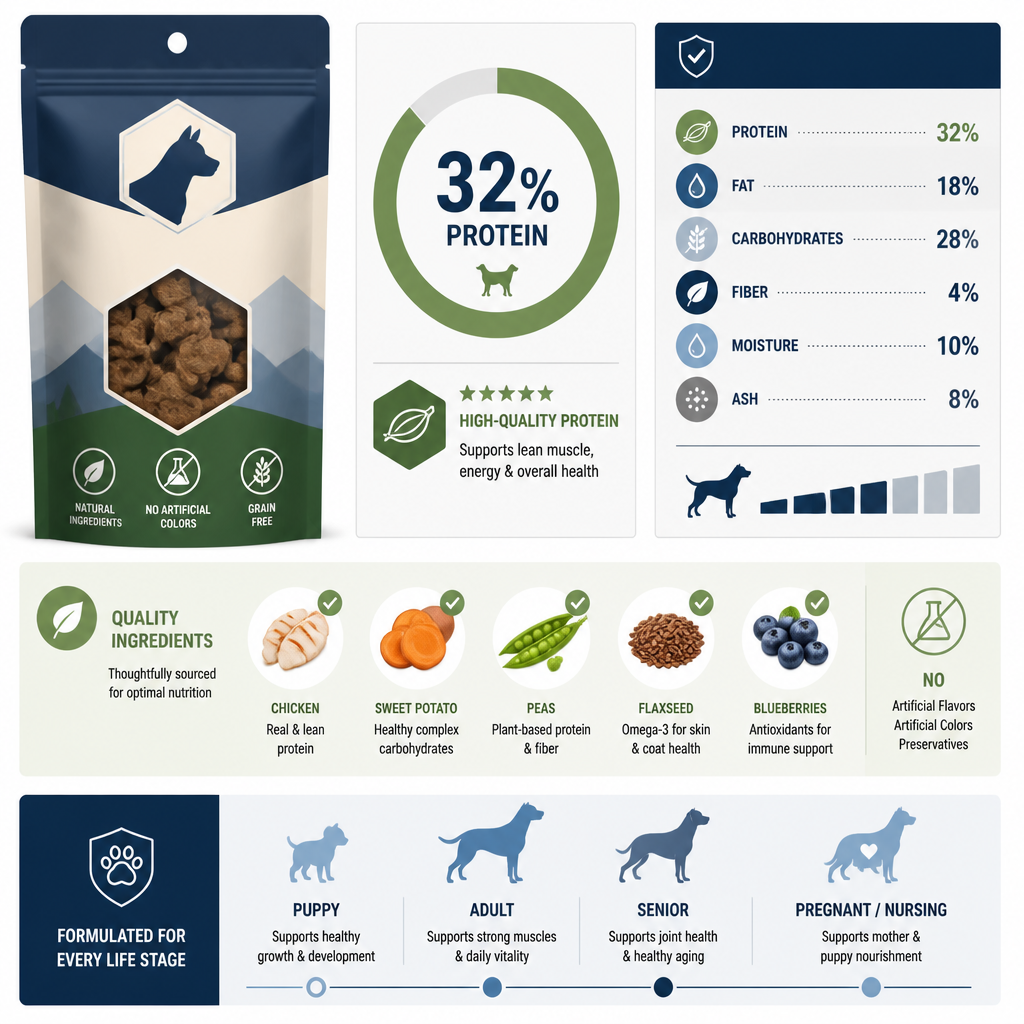
Dog Protein Requirements by Life Stage
One of the most common mistakes pet owners make is assuming all dogs need the same amount of protein. They don't. Dog protein requirements shift significantly depending on age, activity level, reproductive status, and overall health.
Puppies: Building Blocks for a Big Life
Puppies are growing fast, and their protein needs reflect that. AAFCO guidelines require at least 22.5% crude protein (on a dry matter basis) for growing puppies, which is roughly 25% more than the adult maintenance minimum. This higher intake supports rapid muscle development, tissue formation, and skeletal growth. If you're using treats during puppy training sessions, choosing high-protein, single-ingredient options means every small reward is still contributing to that essential growth.
Healthy Adult Dogs: The Maintenance Window
Once your dog reaches full size, typically around one year for most breeds and up to two years for large and giant breeds, their protein needs settle into a maintenance range. Most healthy adult dogs need a minimum of 18% crude protein in their diet on a dry matter basis, according to AAFCO guidelines. As a rough gram-based guide, dogs generally need around one gram of protein per pound of their ideal body weight per day. So a dog with an ideal weight of around 10 kilograms (about 22 pounds) would need roughly 22 grams of protein daily as a general baseline.
Active and Working Dogs: Higher Demands
High-activity breeds such as working dogs, sporting dogs, and highly energetic companion breeds often need considerably more protein. Depending on the level of activity, these dogs can need between 25% and 35% protein to support energy levels, muscle maintenance, and recovery. If your dog is active and you're reaching for treats during training, protein for dogs at this life stage should come from highly digestible animal sources, not plant-based protein concentrates that inflate a label number without delivering the same amino acid value.
Senior Dogs: Protein Still Matters
Many pet owners assume older dogs need less protein. In practice, seniors may actually benefit from maintaining good protein intake to help preserve muscle mass as their metabolism shifts. The general adult minimum of 18% is still a relevant starting point, though individual health conditions, particularly kidney issues, may require a tailored approach with veterinary guidance. A senior dog enjoying a small air-dried meat treat as part of their daily routine is still getting something genuinely useful, not just a snack.
Pro tip: If your dog is pregnant, nursing, or recovering from illness or surgery, their protein needs increase significantly. These are the times when treat quality matters most. Reach for single-ingredient, human-grade meat treats with no fillers so you know every bite counts.
Quality vs. Quantity: Why the Source of Protein Counts
Here's something the protein percentage on a label won't tell you: not all protein is equal. A treat with a high crude protein percentage sourced mainly from plant concentrates, like pea protein or soy, will not deliver the same nutritional benefit as a treat made from 100% real meat. Dogs are biologically wired to thrive on animal-based protein because it delivers a complete and balanced amino acid profile in a form their bodies can readily absorb.
Air-drying is a particularly gentle processing method that works in your dog's favour. Because the drying happens at lower temperatures rather than through intense heat, the protein structures remain largely intact. This makes the amino acids more bioavailable, meaning your dog's body can actually use more of what they're eating. Multi-ingredient treats that rely on grain fillers, artificial binders, or added flavourings don't offer the same digestibility or nutritional density.
When reading a treat label, the first thing to look for is a clearly named protein source at the top of the ingredient list: beef, chicken, turkey. If you can't immediately tell what animal the protein came from, that's a signal worth paying attention to. At Treaty Treats, every treat contains exactly one ingredient: the named meat itself. No preservatives, no additives, no ambiguity. What you see is what your dog gets.
Pro tip: When comparing treats, don't just look at the crude protein percentage. Ask yourself: is this protein from a named animal source? Is it the first and only ingredient? Single-ingredient, air-dried meat treats give you the clearest picture of what you're actually feeding your pet.
How High-Protein Dog Treats Fit Into the Daily Picture
Treats should never be expected to carry the full weight of your dog's daily nutrition. Their primary role is to reward, reinforce, and strengthen your bond with your pet. That said, the nutritional value of what you give as a treat still matters, especially when treats are a regular part of your dog's day.
A general guideline that many vets and nutritionists suggest is that treats should make up no more than 10% of your dog's total daily caloric intake. Within that 10%, choosing high-protein dog treats made from real meat means you're giving something that actively contributes to their wellbeing rather than just adding empty calories. Single-ingredient air-dried treats are naturally low in unnecessary carbohydrates and free of the fillers that bulk up less thoughtfully made products.
For training purposes, high-protein treats have an added advantage: protein is highly satiating. A small piece of air-dried meat has real flavour and nutritional density, which means your dog finds it genuinely rewarding without needing a large portion. This makes it easier to train with treats without accidentally overfeeding throughout the day. If your dog has a sensitive stomach, single-ingredient treats also minimise the risk of reactions because there are simply no hidden ingredients to trigger one.
You can explore Treaty Treats' full range of meat toppers and treat options to find what suits your dog's taste and routine best. Whether you're working on recall training, rewarding calm behaviour, or simply sharing a moment, there's a real-food option that fits.
Comparing Treat Types: What to Look For
Not all dog treats are made the same way, and the processing method has a real impact on the final protein quality, digestibility, and ingredient transparency. Here's a straightforward look at three common treat types so you can make a confident choice for your dog.
| Treat Type | Protein Source and Quality | Best Suited For |
|---|---|---|
| Air-Dried Single-Ingredient Treats (e.g., Treaty Treats beef, chicken, turkey chips) | 100% named animal protein, no fillers, no additives. Gentle drying preserves amino acid structure and supports high digestibility. | Dogs with sensitive stomachs, owners who want full ingredient transparency, training rewards, everyday high-value treats for dogs and cats. |
| Multi-Ingredient Commercial Treats | Variable. Often contains a mix of animal meal, grains, plant proteins, and added flavouring. Protein percentage can be inflated by plant concentrates. | Occasional rewards where nutritional precision is less of a priority. Not ideal for sensitive dogs or elimination diets. |
| Grain-Based Biscuit Treats | Lower protein, often derived primarily from grain flour with a small amount of added meat flavouring or meat meal. High in starch and carbohydrates. | Low-value background rewards. Not suitable as a primary treat for dogs with sensitivities, weight concerns, or high protein needs. |
The takeaway from this comparison is clear: when you want your dog's treat to contribute real nutritional value, the ingredient list should be short, specific, and animal-protein-first. Air-dried, single-ingredient treats consistently offer the most transparent and bioavailable form of protein in a treat format.
Signs Your Dog May Need More or Less Protein
Paying attention to your dog's coat, energy levels, and digestion can give you useful signals about whether their protein intake is well matched to their needs. These aren't diagnostic tools, and any concerns should always be discussed with your vet, but they're worth being aware of.
Signs That Protein Intake May Be Too Low
A dull, dry, or thinning coat is one of the more visible signs that a dog may not be getting enough quality protein. Since so much daily protein goes toward skin and coat maintenance, a deficit often shows up there first. You might also notice low energy, slower muscle recovery after exercise, or a general lack of vitality. Dogs on very low-protein diets may also seem hungrier than usual, because protein is one of the most satisfying macronutrients for satiety.
Signs That Protein Intake Should Be Monitored
For most healthy dogs, excess protein that isn't needed for daily functions is simply converted to energy or passed through the urine, and this doesn't cause problems. However, dogs with existing kidney disease may need their protein intake carefully managed, as their kidneys may struggle to process the metabolic by-products of high protein metabolism. If your dog has been diagnosed with a kidney condition, always follow your vet's specific dietary guidance rather than a general guideline.
Dogs that are gaining unexpected weight on a high-treat routine may also benefit from a review of their total daily intake. Even nutritious, high-protein treats add calories, so portion awareness matters alongside treat quality.
The 10% Rule in Practice
A practical way to keep treats balanced within your dog's overall diet is to think of them as filling a small but meaningful portion of that daily nutritional picture. Using single-ingredient, human-grade treats means that even within that 10% treat allowance, you're feeding something that genuinely supports your dog's health rather than just occupying caloric space. You can check out the subscribe and save options at Treaty Treats if you'd like to make sure you always have quality treats on hand without running out.
Frequently Asked Questions
How much protein does a dog need per day?
A helpful general guide is that dogs need approximately one gram of protein per pound of their ideal body weight each day. For percentage-based guidance, healthy adult dogs need a minimum of 18% crude protein in their diet on a dry matter basis, according to AAFCO guidelines. Active or working dogs may need between 25% and 35% depending on their activity level and breed.
Are high-protein dog treats suitable for all dogs?
For most healthy dogs, high-protein treats made from real, single-ingredient animal sources are a safe and beneficial choice. Dogs with certain health conditions, particularly kidney disease, may need their overall protein intake monitored by a vet. If your dog has a known health condition or is on a special diet, it's always best to check with your vet before introducing new treats.
What makes single-ingredient air-dried treats different from regular dog treats?
Single-ingredient air-dried treats contain only one named meat protein with no fillers, preservatives, or artificial additives. The gentle air-drying process preserves the protein's natural structure, which supports better digestibility and amino acid availability compared to heavily processed treats made with grain fillers and artificial flavourings. You always know exactly what your dog is eating.
Can high-protein treats help with dog training?
Yes, they're particularly well suited to training. Protein is highly satiating and naturally flavourful, which means dogs find single-ingredient meat treats genuinely motivating as rewards. Because they're nutritionally dense, you can use small portions effectively without needing to give large amounts, making it easier to train consistently throughout the day without overfeeding.
Do puppies need different treats from adult dogs?
Puppies have higher protein requirements than adult dogs because they're supporting rapid growth and development. High-protein, single-ingredient meat treats made from human-grade, real meat are a great fit for puppies because they provide the quality protein young dogs need without unnecessary additives. Just be mindful of portion sizes relative to your puppy's small body weight and make sure treats remain a supplement to a complete, balanced puppy diet.
Is plant-based protein in dog treats as good as animal protein?
For dogs, animal-based protein consistently provides a more complete and bioavailable amino acid profile than plant-based protein. While plant proteins are not harmful and can contribute to overall protein totals, they don't deliver the same range of essential amino acids in forms that are as easily used by a dog's body. If you see pea protein, soy, or corn gluten meal high on a treat's ingredient list, the crude protein percentage may look impressive on paper but the real nutritional value is lower than a treat built on named animal protein.
How many treats should I give my dog per day?
A widely used guideline is that treats should account for no more than 10% of your dog's total daily caloric intake. The exact number of individual treats this translates to will depend on your dog's size, their daily calorie needs, and the caloric density of the treat itself. With naturally low-filler, single-ingredient treats like air-dried meat chips, you get a lot of nutritional value per small piece, so a little goes a long way.
We'd love to hear from you. What's your dog's favourite protein, and have you noticed any changes in their coat or energy since switching to a higher-quality treat? Drop a comment and share your experience with the Treaty Treats community.
References
- AAFCO dog food nutrient profiles and protein requirements explained by life stage
- How much protein dogs need daily and how high-protein diets work
- How protein supports a dog's muscles, coat, and overall health
- What to look for in air-dried dog treats and how ingredient quality affects health
- Nutritional requirements for small animals including protein guidelines for dogs by life stage
Follow Us
Subscription Subscribe to our newsletter and receive a selection of cool articles every weeks

Real Talk & Tail Wags

dog treat enrichment ideas
Discover 5 practical dog treat enrichment ideas, from puzzle feeders to snuffle mats, that make treat time fun, rewarding and...

best dog treats Australia
Cheap dog treats can cause tummy upset, weight gain, and hidden costs. Learn what bargain snacks contain and how to...

dog treat transition guide
Switching dog treats naturally? Follow this gentle dog treat transition guide to avoid tummy trouble and keep your dog happy....


