
Picking up a bag of pet treats and flipping it over should feel reassuring, not overwhelming. But for a lot of pet parents, the back of the packet is a wall of unfamiliar words, cryptic codes, and vague terms that leave you guessing whether what's inside is actually good for your dog or cat. You're not alone in that feeling, and the good news is that once you know what to look for, reading pet treat ingredients becomes second nature. This guide walks you through every section of a treat label, from the ingredient list to the guaranteed analysis, so you can make genuinely informed choices for your pet every single time.
Table of Contents
- Why Pet Treat Labels Matter More Than You Think
- Quick Takeaways
- The Ingredient List, Decoded
- Preservatives in Dog Treats: What to Keep and What to Skip
- The Sneaky Trick Called Ingredient Splitting
- Understanding the Guaranteed Analysis
- Red Flag Ingredients to Spot Straight Away
- Label Comparison: Three Types of Treats Side by Side
- What a Clean Label Actually Looks Like
- Frequently Asked Questions
- References
Why Pet Treat Labels Matter More Than You Think
Treats are not just a reward. For many pets, they make up a meaningful portion of daily food intake, especially for dogs in training or cats who get regular top-ups throughout the day. That means the quality of what's in the bag genuinely matters for long-term health.
Here in Australia, pet food manufacturers are guided by the Australian Standard AS5812, which sets out requirements for manufacturing and labelling. Under this standard, ingredients must be listed in descending order by weight, and labels must disclose the presence of food additives including flavours, colours, and preservatives. Knowing this framework gives you a solid foundation before you even look at a single ingredient.
The challenge is that unlike complete dog foods, treats and snacks face lighter regulatory scrutiny than your pet's main meal. That means the responsibility for choosing well sits largely with you as the buyer. A little label literacy goes a very long way.
Quick Takeaways
| Key Insight | Explanation |
|---|---|
| First ingredient = most abundant | Ingredients are listed by weight from highest to lowest. Whatever comes first makes up the largest portion of the treat. |
| Named proteins beat vague ones | "Beef" or "chicken" tells you exactly what your pet is eating. "Meat by-products" or "animal derivative" does not. |
| Artificial preservatives are avoidable | BHA, BHT, and ethoxyquin are synthetic preservatives found in many commercial treats. Air-dried, single-ingredient treats need none of them. |
| Short ingredient lists are a good sign | A treat with two or three recognisable ingredients is easier to evaluate and far less likely to contain hidden additives. |
| Ingredient splitting inflates filler position | When a filler like corn is listed as "corn flour," "corn starch," and "corn gluten" separately, it can appear lower on the list than it really deserves. |
| The guaranteed analysis reveals protein quality | A high crude protein percentage from a named meat source is far more valuable than the same number from grain-based proteins. |
| Xylitol is a non-negotiable red flag | This sugar substitute is highly toxic to dogs and can appear under the names "birch sugar" or "birch bark extract" on labels. |
The Ingredient List, Decoded
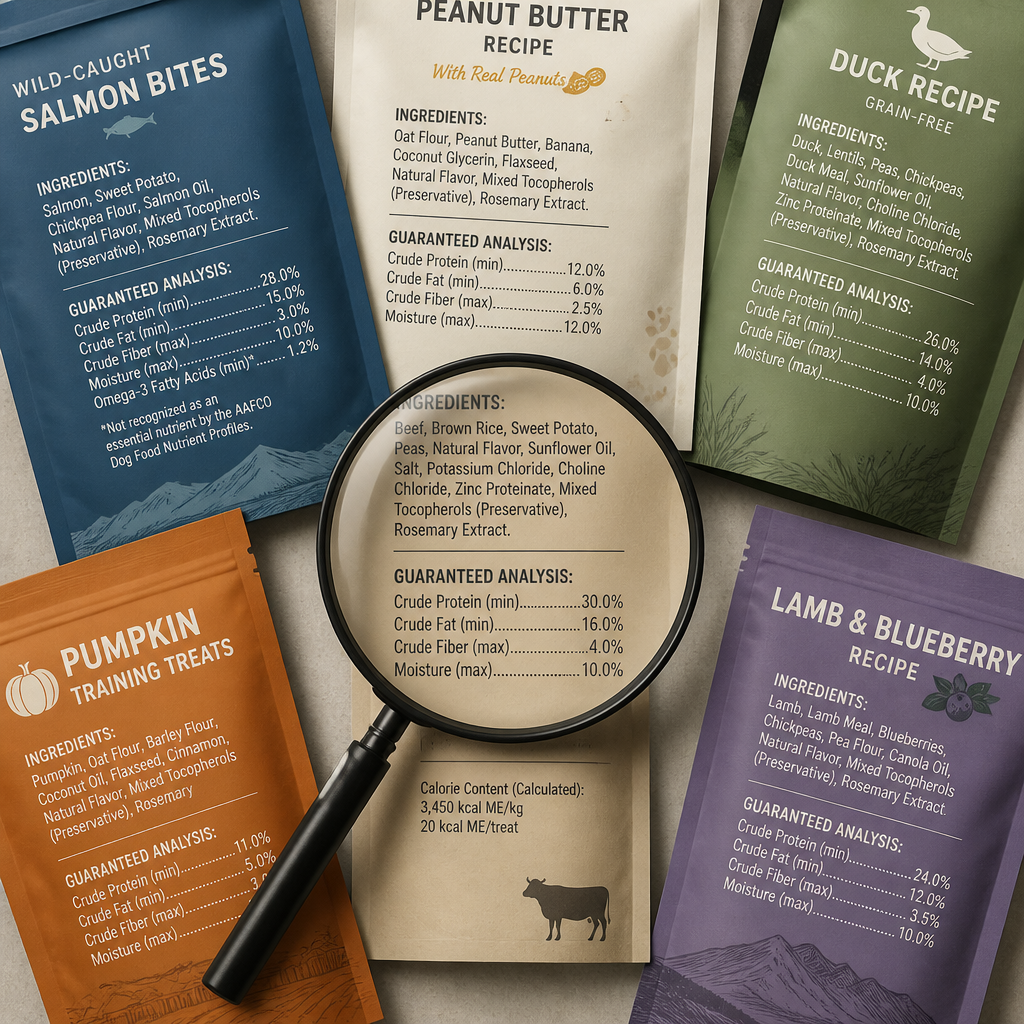
The ingredient list is where the real story lives. In Australia, as in most markets, ingredients must appear in descending order by weight before cooking. So the first ingredient is always the most abundant component in the treat.
When you see a named animal protein like "beef," "chicken," or "turkey" listed first, that's a meaningful signal. It means real meat makes up the majority of what your pet is eating. When the first ingredient is something like "cereal," "corn," "soy," or a vague term like "animal protein," the treat is built on a very different foundation.
Named vs. Unnamed Proteins
"Chicken" means whole chicken meat. "Poultry meal" means a rendered, dried form of poultry that may include various parts of the bird. "Meat by-products" or "animal derivative" is even less specific, offering no information about which animal or which parts were used.
For pet parents managing food sensitivities or allergies, this specificity matters enormously. If your dog reacts to chicken but not beef, a vague "poultry" listing makes it impossible to know whether the treat is safe. Named proteins give you control over what you're introducing.
Pro tip: For pets with known sensitivities, choose treats where the entire ingredient list is a single named protein. One ingredient means zero guesswork about what triggered a reaction.
Fillers and What They Signal
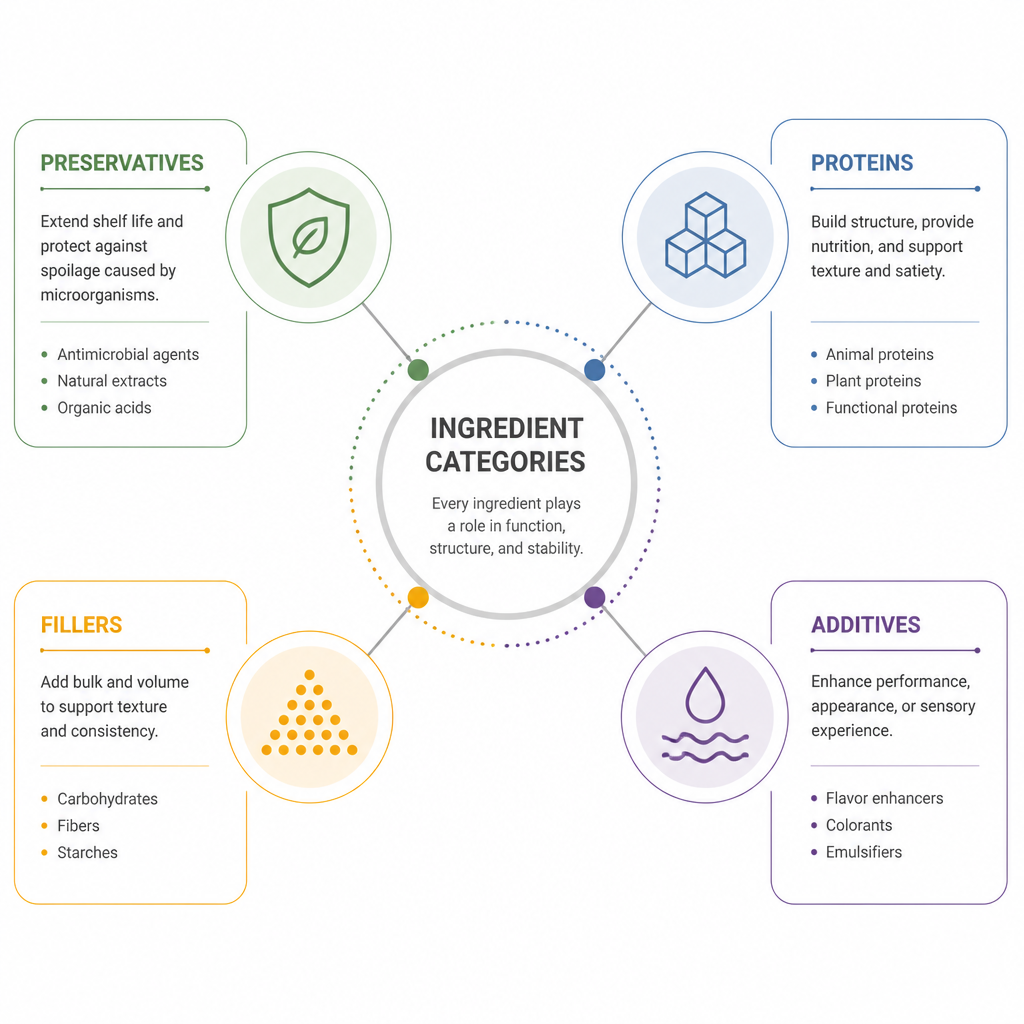
Fillers are ingredients that add bulk to a product without adding meaningful nutrition. Common examples include corn, soy, wheat, and various starches. They're not always harmful, but they do dilute the protein content and can cause sensitivities in pets with sensitive stomachs.
Treats heavy in corn, soy, or wheat may not offer much nutritional value and can sometimes cause sensitivities in dogs. When you spot these ingredients sitting at the top of a list, the treat is more filler than food.
Preservatives in Dog Treats: What to Keep and What to Skip
Preservatives extend shelf life, and not all of them are a problem. The ones worth understanding fall into two clear camps: artificial and natural.
Artificial Preservatives to Watch Out For
The three most commonly discussed artificial preservatives in pet treats are BHA (Butylated Hydroxyanisole), BHT (Butylated Hydroxytoluene), and ethoxyquin. BHA and BHT are manufactured chemicals added to fats as preservatives, and there are ongoing concerns about their long-term effects. Ethoxyquin is a chemical preservative that has been banned from use in human foods, and there are concerns that it has been linked to cancer when consumed over time.
One particularly frustrating aspect is that ethoxyquin is sometimes added to ingredients like fish meal before the product arrives at the manufacturing facility. In some cases, manufacturers are not required to list it on the label because they didn't add it themselves. This is exactly why choosing treats from brands that are transparent about their full manufacturing process matters so much.
The cleanest way to avoid chemical preservatives is to choose a treat format that doesn't need them. Air-dried and dehydrated single-ingredient treats remove moisture so thoroughly that spoilage is prevented naturally, with no chemistry required.
Natural Preservatives: The Better Option
Natural preservatives include vitamin C (ascorbic acid), vitamin E (mixed tocopherols), and rosemary extract. These are far preferable to their synthetic counterparts. If a treat does include a preservative, these are the ones you'd rather see.
That said, the gold standard is a treat that needs no preservative at all because its format makes one unnecessary. At Treaty Treats, our air-dried beef, chicken, and turkey chips are preserved entirely through the air-drying process itself. Removing moisture is all it takes to keep them shelf-stable and safe, with nothing added.
The Sneaky Trick Called Ingredient Splitting
Ingredient splitting is one of the most common ways a lower-quality ingredient can hide in plain sight. Here's how it works: imagine a treat that contains a significant amount of corn. Instead of listing "corn" as a single ingredient, the manufacturer lists it as "corn flour," "corn starch," and "corn gluten meal" separately. Each sub-form of corn appears lower on the ingredient list than it would if they were counted together.
The result is that a grain-heavy filler appears to be a minor ingredient, while the named protein at the top of the list looks more dominant than it truly is. The treat might say "beef" first, but combined, the various corn derivatives outweigh it.
The simplest defence against this is to count up how many variations of the same base ingredient appear in the list. If you see three or four forms of the same grain or starch, add them mentally and consider where they'd collectively sit in the ranking.
Pro tip: When you spot a treat listing "wheat flour," "wheat bran," and "wheat germ" separately, mentally combine them. Chances are wheat would rank much higher on the list, and possibly above the protein source.
Understanding the Guaranteed Analysis
The guaranteed analysis sits separately from the ingredient list and gives you a snapshot of the treat's nutrient composition. At minimum, it must state the minimum percentages of crude protein and crude fat, and the maximum percentages of crude fibre and moisture.
What Crude Protein Really Tells You
The crude protein figure tells you the total protein content but not where that protein comes from. This is an important nuance. A treat with 40% crude protein from real beef is nutritionally very different from one claiming 40% protein derived largely from plant-based ingredients or low-quality meals.
This is why the ingredient list and guaranteed analysis must be read together. A high protein number is only meaningful when the first ingredient is a named, whole animal protein.
Moisture and Why It Matters for Comparison
Moisture content dramatically affects how nutrient figures compare across different treat formats. A soft, moist treat might show 30% crude protein but contain 50% moisture, which means the dry-matter protein content is considerably higher in reality. An air-dried treat with very low moisture will show a higher protein percentage on the label simply because the water has been removed.
When comparing treats, check the moisture figure first. A treat with 5% moisture and 60% crude protein is genuinely high-protein. A treat with 70% moisture and 15% crude protein is mostly water.
Red Flag Ingredients to Spot Straight Away
Some ingredients are worth pausing on any time you see them. This list isn't exhaustive, but these are the ones that appear most commonly in lower-quality treats and that the most health-conscious pet parents tend to avoid.
Xylitol is the most urgent one. This sugar substitute can cause rapid hypoglycemia and liver failure in dogs within hours of ingestion. It also appears on labels under the names "birch sugar" and "birch bark extract," so knowing all three names is essential. There is no safe amount for dogs.
Propylene glycol is used to keep soft treats moist and is also used as an automotive antifreeze. It's considered harmful for cats and is associated with red blood cell damage in felines. Check your cat's treats in particular.
Artificial dyes like Red 40, Yellow 5, Yellow 6, and Blue 2 are added purely for human visual appeal. Dogs are functionally unable to perceive most of these colours, and the dyes add no nutritional value whatsoever. A brightly coloured treat is not a nutritionally superior treat.
Vague flavour enhancers listed as "natural flavour" or "artificial flavour" offer no transparency about the actual source. In an ideal world, the treat tastes good because the core ingredient is good, not because a flavouring agent was added.
Label Comparison: Three Types of Treats Side by Side
| Label Feature | Highly Processed Commercial Treat | Mixed-Ingredient "Natural" Treat | Single-Ingredient Air-Dried Treat |
|---|---|---|---|
| First ingredient | Cereal or corn derivative | Chicken meal or meat derivative | 100% beef, chicken, or turkey |
| Preservatives | BHA, BHT, or ethoxyquin | Mixed tocopherols or rosemary extract | None needed |
| Ingredient list length | 20+ ingredients | 8-15 ingredients | 1 ingredient |
| Artificial colours or flavours | Often present | Sometimes present | None |
| Protein source clarity | Vague ("animal protein") | Partially named ("chicken meal") | Fully named and specific |
| Suitable for sensitive stomachs | Often not | Sometimes, depending on recipe | Yes, especially with elimination diets |
| Moisture level | Variable, often high in soft treats | Moderate | Very low, naturally preserved |
What a Clean Label Actually Looks Like
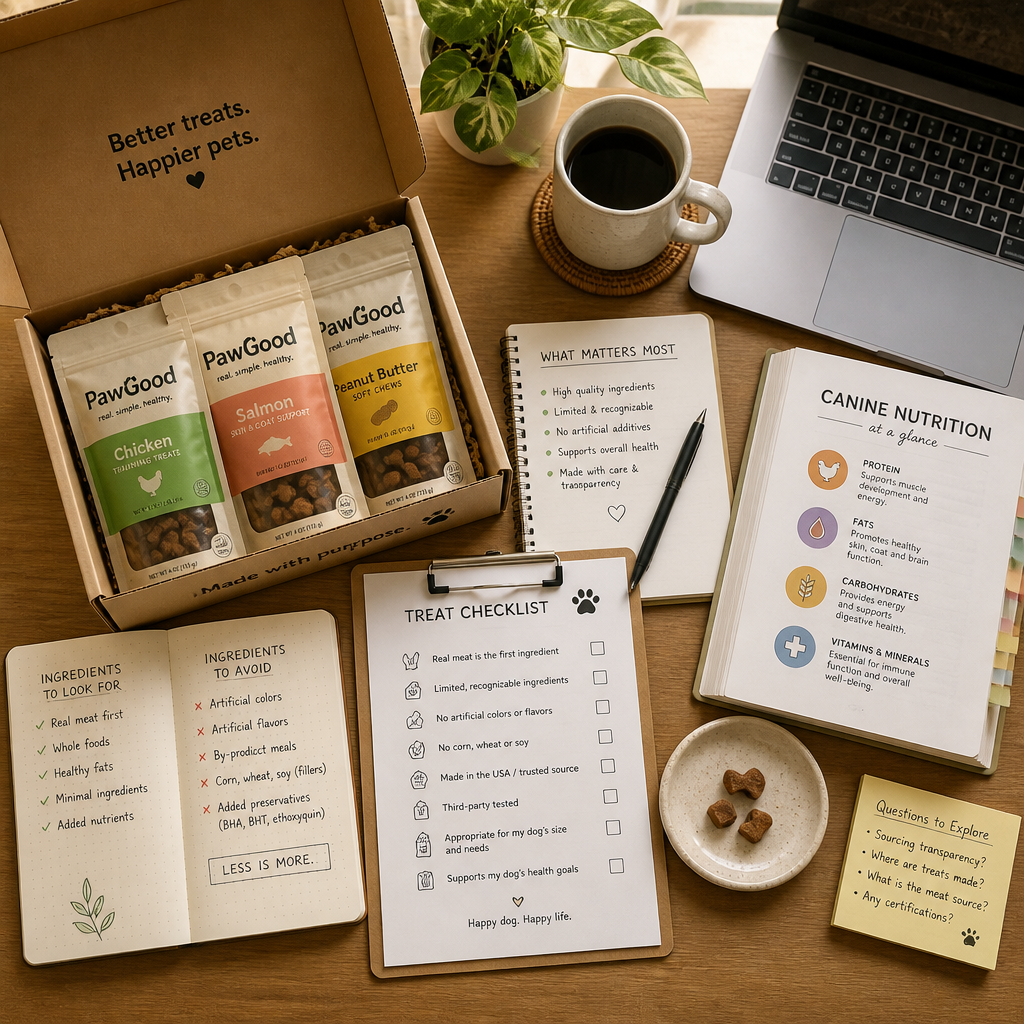
A clean label is not a marketing phrase. It's a specific, identifiable thing. A clean-label treat has a short ingredient list of items you can recognise without a chemistry degree. Ideally, the protein source is named, whole, and comes first. There are no synthetic preservatives, no artificial colours, and no flavour enhancers. The guaranteed analysis shows high protein from a clearly identified animal source, and the moisture is low enough to reflect genuine nutrient density.
A true single-ingredient treat contains exactly one component, typically one named animal protein, with nothing else added, not even a preservative. That's the clearest version of a clean label you can find. When you pick up a bag of our Treaty Treats beef, chicken, or turkey chips, the ingredient list is exactly that: one ingredient. No fillers, no additives, no guesswork.
For training purposes, this also means you know precisely what you're rewarding your pet with at every repetition. If a sensitivity or digestive reaction occurs, the single-ingredient format makes it straightforward to identify and eliminate the cause. If everything goes well, you know the treat is doing genuine nutritional good alongside being a reward.
For cats in particular, treat selection is a topic many owners underestimate. Cats are obligate carnivores with a much higher requirement for animal-based protein than dogs. A grain-heavy treat is a poor match for a cat's actual nutritional needs. The Treaty Treats approach of using only real, human-grade meat aligns directly with what a cat's biology actually calls for.
It also helps to know that "human-grade" is a meaningful claim, not just a buzzword. It means the ingredients were deemed fit for human consumption at the point of processing. That is a higher bar than the standard applied to many conventional pet food ingredients.
Frequently Asked Questions
What does "by-product" mean on a dog treat label?
A by-product refers to parts of an animal other than skeletal muscle meat. This can include organs, which are actually highly nutritious, but the term can also cover lower-quality material. The issue is that "by-product" on a label doesn't tell you which animal or which parts were used. A treat listing "beef liver" is more informative and more trustworthy than one listing "meat by-products."
Are natural preservatives in pet treats safe?
Generally, yes. Natural preservatives like mixed tocopherols (vitamin E) and ascorbic acid (vitamin C) are well-tolerated and genuinely safer than synthetic alternatives like BHA and BHT. If a treat must contain a preservative, these are the ones you'd prefer to see. That said, a treat that needs no preservative at all because of its format, such as an air-dried single-ingredient treat, is the cleanest option available.
How do I read a dog treat label if my dog has a food allergy?
Start with the ingredient list and look for the specific protein or ingredient your dog reacts to. Be aware that some ingredients appear under multiple names, so it's worth looking up alternate names for common allergens. The safest approach for dogs with confirmed allergies is to choose single-ingredient treats where there is nothing hidden and nothing ambiguous. This way, you can conduct a true elimination trial if you need to identify triggers.
Is a long ingredient list always a red flag?
Not automatically, but it does require more scrutiny. A longer list means more opportunity for low-quality fillers, hidden preservatives, and ingredient splitting. It also makes it harder to evaluate the true protein content at a glance. A shorter list from identifiable, whole ingredients gives you much more confidence about what you're feeding. In practice, if the list runs to twenty or more ingredients, the treat warrants a careful read-through before it goes into your trolley.
What is "guaranteed analysis" and why should I check it?
The guaranteed analysis tells you the minimum percentages of crude protein and crude fat, and the maximum percentages of crude fibre and moisture in the treat. It's a useful nutritional snapshot, but it needs to be read alongside the ingredient list. A high crude protein figure is only meaningful when the protein is coming from a named, whole animal source. Always check moisture levels too, especially when comparing soft and dry treat formats, because moisture content significantly affects how nutrient percentages compare.
Can cats eat the same treats as dogs?
Some single-ingredient meat treats are suitable for both dogs and cats, but you should always check the label and confirm the treat was formulated with cats in mind. Cats have very specific nutritional needs as obligate carnivores, and some ingredients safe for dogs can be harmful to cats. Propylene glycol, for example, is particularly concerning for felines. A named, whole-meat treat with no additives is generally the safest shared option, but always verify before treating your cat.
Does "made in Australia" mean the ingredients are also Australian?
Not necessarily. "Made in Australia" confirms the product was manufactured domestically, which is a meaningful quality and safety signal. However, it says nothing about where the raw ingredients were sourced. A treat made in Australia from imported ingredients is labelled the same way as one using locally sourced meat. If Australian-sourced ingredients matter to you, look for specific claims about ingredient origin on the packaging or reach out to the brand directly.
We'd love to know what you've found most confusing about pet treat labels. Drop a comment or send us a message on social media to share what you've discovered or what you'd still like us to explain.
We would love your feedback and any insights you would share with others. What perspective would you add?
References
- Australian pet food labelling requirements under the AS5812 Standard, published by the Pet Food Industry Association of Australia
- Practical guide to reading a dog treat label, covering ingredient order, preservatives, and country of origin
- Pet food ingredient and label guide from PetMD, covering preservatives, processed ingredients, and what to avoid
- Guaranteed analysis and nutritional labelling requirements explained by AAFCO
- Australian pet food regulation overview from CHOICE, covering labelling rules and ingredient standards
Follow Us
Subscription Subscribe to our newsletter and receive a selection of cool articles every weeks

Real Talk & Tail Wags

dog treat enrichment ideas
Discover 5 practical dog treat enrichment ideas, from puzzle feeders to snuffle mats, that make treat time fun, rewarding and...

best dog treats Australia
Cheap dog treats can cause tummy upset, weight gain, and hidden costs. Learn what bargain snacks contain and how to...

dog treat transition guide
Switching dog treats naturally? Follow this gentle dog treat transition guide to avoid tummy trouble and keep your dog happy....


