
Have you ever picked up a packet of dog treats, flipped it over, and found yourself staring at an ingredient list longer than your weekly grocery receipt? You're not alone, and that moment of confusion is actually a really important signal. Minimal ingredient dog treats are not a passing trend or a premium gimmick. They're simply the most honest way to feed your dog a snack. If you can't picture what an ingredient looks like in nature, chances are your dog's body can't make much sense of it either. The good news? Choosing simpler treats is one of the easiest upgrades you can make for your dog's everyday health.
Table of Contents
- What Are Minimal Ingredient Dog Treats?
- The Problem with Long Ingredient Lists
- Why Fewer Ingredients Support Better Digestion
- How to Read a Clean Dog Treat Label
- Single Ingredient vs. Multi-Ingredient Treats: A Comparison
- Minimal Ingredients and Training Treats
- Clean Dog Treats in Australia: What to Look For
- Frequently Asked Questions
- References
What Are Minimal Ingredient Dog Treats?
| Key Insight | Explanation |
|---|---|
| One ingredient means total transparency | When the label says "beef," that's the entire ingredient list. No hidden extras, no guessing what's really in there. |
| Fewer ingredients mean fewer allergen risks | Dogs with food sensitivities react to specific proteins or fillers. A shorter list makes it far easier to identify and avoid triggers. |
| Simple treats are gentler on the gut | Minimally processed, whole-food treats are easier to digest and place less stress on a sensitive stomach. |
| Artificial preservatives are avoidable | Common synthetics like BHA, BHT, and ethoxyquin extend shelf life but raise long-term health concerns. They simply aren't needed in a properly air-dried treat. |
| Artificial colours serve no nutritional purpose | Dogs experience the world primarily through smell, not sight. Dyes add zero value and exist only for the human eye. |
| High-protein, natural treats support muscle and energy | Real meat treats deliver protein in a form the body recognises, supporting lean muscle and sustained energy without unnecessary carbohydrate fillers. |
| Simple labels make training easier to track | When you know exactly what's in a treat, you can track your dog's intake precisely, especially important when managing weight or allergies during training. |
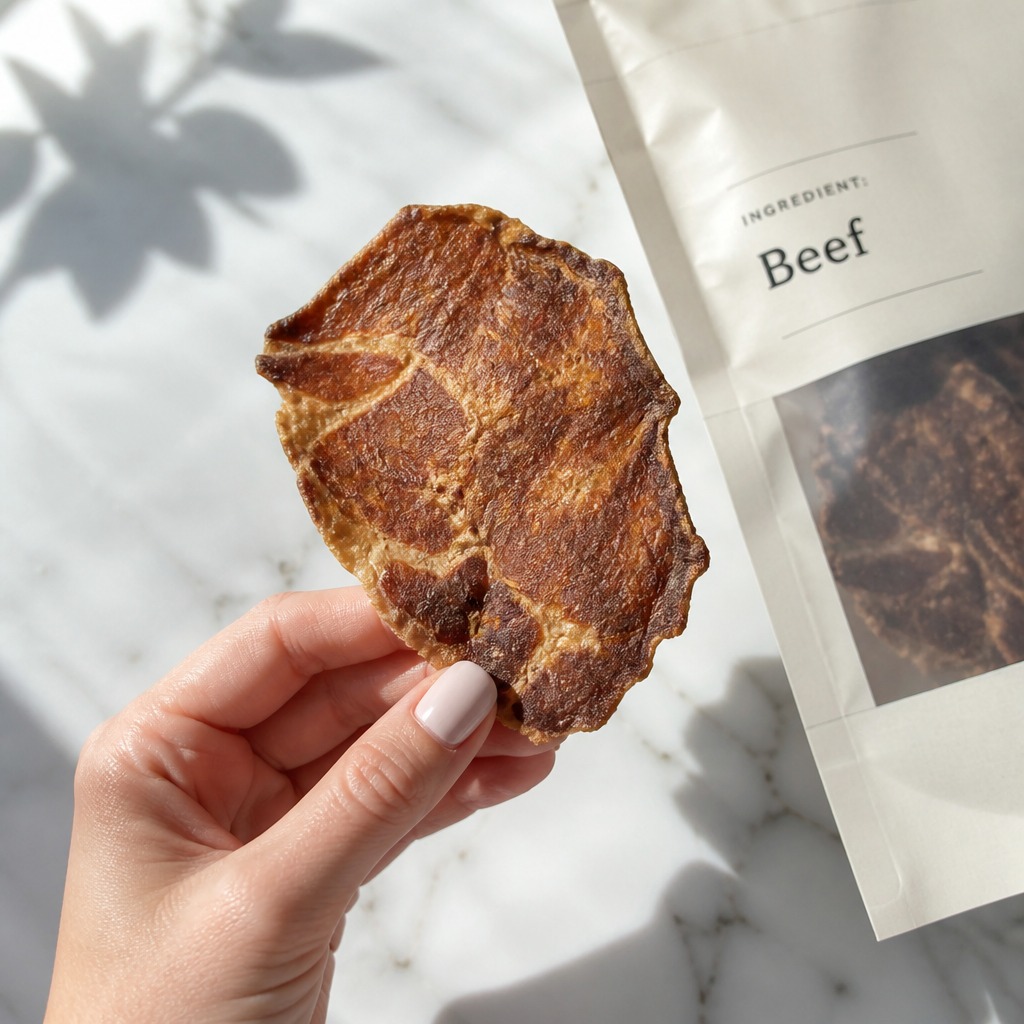
A minimal ingredient dog treat is exactly what the name suggests: a snack made from as few ingredients as possible, ideally just one. Think a single piece of air-dried beef, a chicken chip, or a turkey slice with absolutely nothing added. No binders, no flavour enhancers, no mystery powders to stretch the batch. Single ingredient treats are made from one whole food source, which means you always know exactly what your dog is eating.
This approach sits at the heart of what we do at Treaty Treats. Every treat in our range is made from one ingredient: 100% real, human-grade meat, air-dried in small batches right here in Australia. That's the whole story, and we think that's exactly how it should be.
The Problem with Long Ingredient Lists
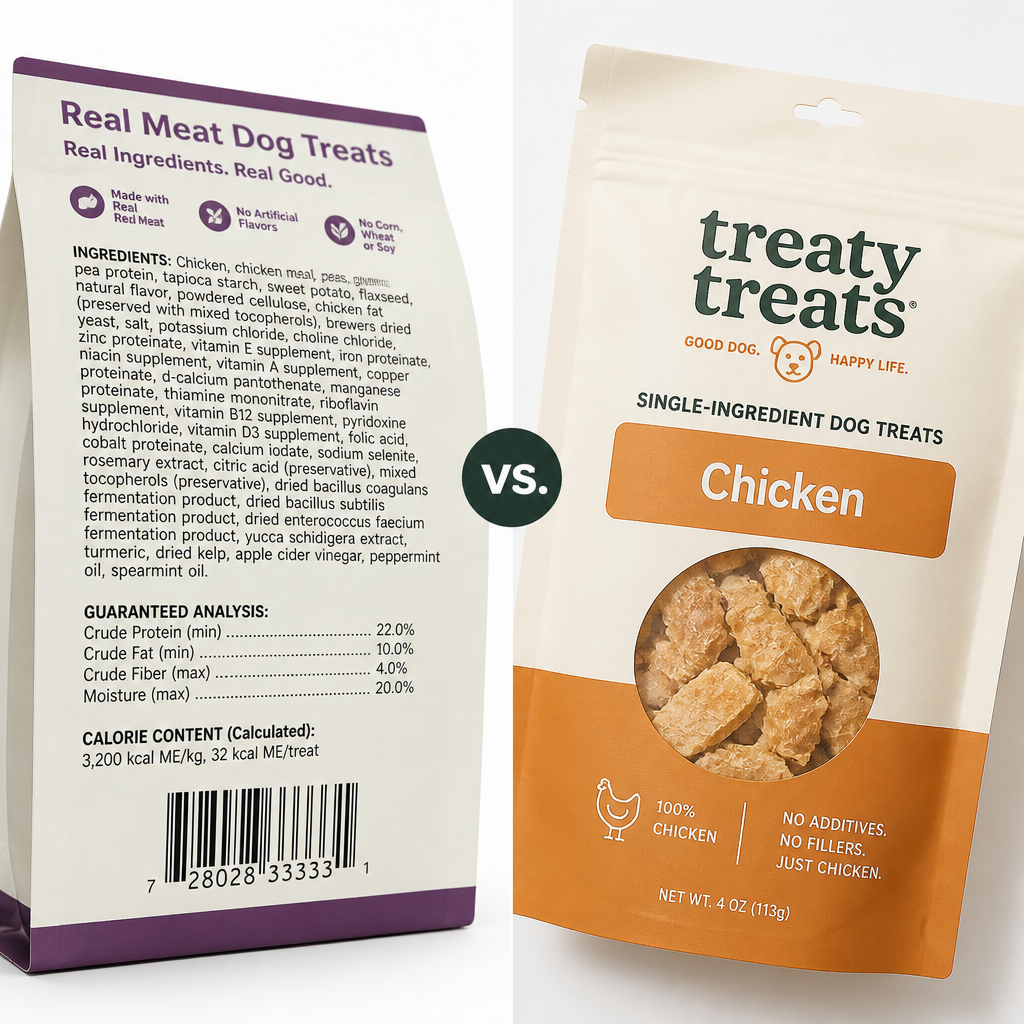
Walk through any pet aisle and you'll find treats with ingredient lists that read like a chemistry worksheet. Glycerol, sodium tripolyphosphate, propylene glycol, artificial smoke flavour. These aren't nutrients. They're processing aids, texture enhancers, and shelf-life extenders added for the manufacturer's convenience, not your dog's benefit.
The concern with these additions is real. Artificial preservatives such as BHA, BHT, and ethoxyquin are synthetic chemicals used to extend shelf life, and they've been linked to health concerns in dogs including skin irritation and digestive upset. A dog's digestive system simply wasn't designed to process processed fillers, fake flavours, or chemical preservatives day after day.
What "Filler" Actually Means
Fillers are ingredients added to bulk up a treat without adding meaningful nutrition. Common culprits include corn, wheat, soy derivatives, and various starches. They make a treat feel more substantial while keeping production costs down. For your dog, though, they offer little beyond empty calories and, for sensitive animals, a potential source of ongoing gut irritation.
Vague terms on labels are another red flag worth knowing. Phrases like "meat by-products," "animal digest," or "poultry meal" are far less specific than a named protein like chicken or beef. That vagueness can signal lower-quality sourcing or a blend of parts that isn't clearly identified. If a label says "chicken flavour" instead of "chicken," that usually means the real source of that taste isn't actually named meat at all.
"When the ingredient list says beef, that's all your dog is eating. Pure beef, nothing else. This transparency gives pet owners peace of mind and control over their dog's diet."
Pro tip: A treat with five or fewer ingredients is generally a good starting point. A treat with one named, recognisable ingredient is even better. If you wouldn't know what an ingredient is without a chemistry degree, that's a clear sign to put the packet back.
Why Fewer Ingredients Support Better Digestion
If your dog has ever had a bout of loose stools, excessive wind, or a sensitive tummy that comes and goes, the treats you're giving could be part of the picture. Many pet owners spend time and money investigating their dog's main meals without ever considering the treat bag sitting beside the food bowl.
Single ingredient treats place far less demand on the digestive system. Because they're minimally processed and made from whole food sources, they're closer to what a dog's body naturally understands. There's simply less for a sensitive stomach to object to when a treat contains one real animal protein and nothing else.
The Link Between Gut Health and Treat Ingredients
A dog's gut microbiome, the community of beneficial bacteria that supports digestion, immunity, and even mood, thrives on recognisable, whole-food inputs. When you regularly introduce synthetic preservatives, artificial colours, and hard-to-digest fillers, you're asking that microbiome to deal with inputs it wasn't built for.
Dogs with food sensitivities or allergies especially benefit from simpler treats. Fewer ingredients mean fewer potential allergens. When something does cause a reaction, it's also far easier to identify the culprit when your treat list reads "beef" rather than a 15-item paragraph. This makes clean dog treats an essential tool for owners managing elimination diets or working with their vet to pinpoint a food sensitivity.
Pro tip: If your dog is showing signs of a food sensitivity, switch to a strict single-ingredient treat during any elimination trial. It removes one major variable from the equation and gives you cleaner data on what's causing the issue.
How to Read a Clean Dog Treat Label
Reading a pet treat label doesn't have to be stressful, but it does take a few minutes of attention. The ingredient list is your most important tool, and knowing what to look for makes the whole process much simpler.
Green Flags: What You Want to See
Look for a named animal protein at the top of the list: chicken, beef, turkey, salmon. The ingredient list is ordered by weight, so whatever appears first makes up the largest portion of the treat. In a natural dog snack done right, the named protein should also be the only ingredient.
Minimal processing is another green flag. Air-drying, for example, removes moisture slowly at low temperatures, preserving natural proteins and nutrients without adding anything to the treat. The result is a crunchy, shelf-stable snack with nothing synthetic required.
Red Flags: What to Watch Out For
Watch for the word "flavour" anywhere near a protein name. "Chicken flavour" is not the same as "chicken." Artificial colours listed as numbered dyes add zero nutritional value and exist purely for visual appeal to the human shopper. Vague terms like "animal derivatives" or "meat by-products" offer no transparency about what your dog is actually eating.
Artificial preservatives are worth checking specifically. BHA, BHT, and ethoxyquin are the most common and the most questioned. Natural preservation through air-drying or freeze-drying achieves the same shelf-stable result without synthetic chemicals. If a treat uses these artificial options, ask why, because there are better alternatives available.
Single Ingredient vs. Multi-Ingredient Treats: A Comparison
| Feature | Single Ingredient Treats | Multi-Ingredient Processed Treats |
|---|---|---|
| Ingredient transparency | Complete. You know exactly what your dog eats. | Often limited. Vague terms like "animal derivatives" are common. |
| Allergen risk | Very low. Easy to identify and avoid any single trigger. | Higher. Multiple ingredients increase the chance of a hidden allergen. |
| Digestive impact | Gentle. Minimally processed, close to a whole-food source. | Variable. Fillers and additives can strain sensitive digestive systems. |
| Artificial preservatives | None needed in air-dried or freeze-dried treats. | Often present: BHA, BHT, ethoxyquin, propylene glycol. |
| Protein quality | High. Named, whole-meat protein with no dilution. | Diluted by fillers, starches, and by-products. |
| Suitability for training | Excellent. Light, high-value, and easy to portion. | Less consistent. Caloric density varies widely with filler content. |
Minimal Ingredients and Training Treats
If you use treats as part of training, reward moments, or just as everyday love, the quality of that treat matters more than many owners realise. During a training session, your dog might receive a treat every few minutes. Over the course of a week, those small bites add up to a significant portion of their overall nutrition.
High-protein, simple pet treat ingredients make training treats more effective and more trustworthy. A treat made purely from dried chicken or beef carries a strong, natural aroma that dogs respond to enthusiastically, without any artificial flavour enhancers needed. Real meat smell is one of the most powerful motivators for dogs during focus-heavy training, which means you don't need to reach for anything artificial to hold their attention.
Keeping Calorie Count Clean
Single ingredient treats are also far easier to track calorically. When a treat is 100% air-dried beef, you know you're feeding protein with minimal carbohydrate content. Multi-ingredient treats padded with starches and fillers can deliver hidden calories that disrupt weight management, especially in dogs that need portion control.
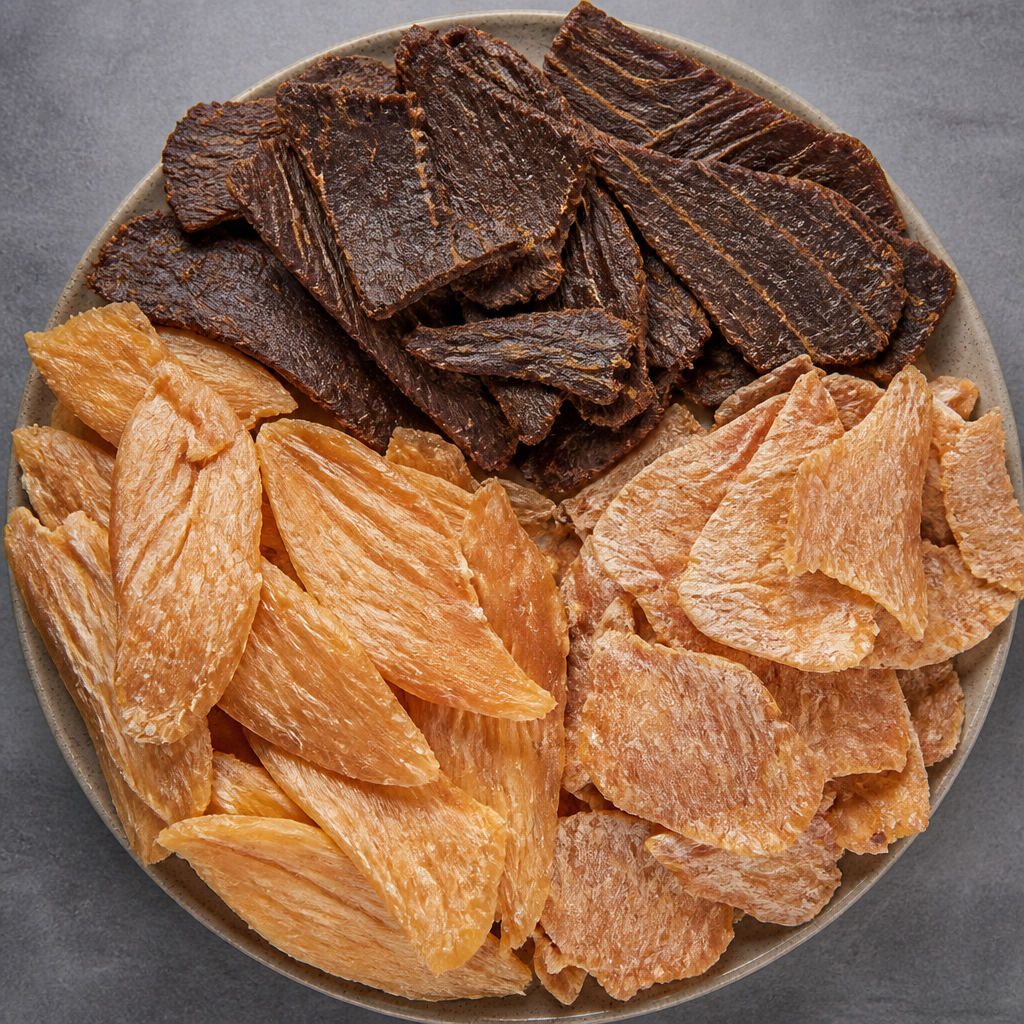
Our beef, chicken, and turkey chips at Treaty Treats are batch-made in-house with this exact use case in mind. They're light, crunchy, aromatic, and easy to break into small reward-sized pieces without turning into a sticky mess in your pocket. That's what a good training treat looks like.
Clean Dog Treats in Australia: What to Look For
For Australian pet owners, choosing clean dog treats in Australia comes with a few extra considerations worth knowing. Not all treats sold here are made here, and the country of manufacture genuinely matters when it comes to ingredient standards and supply chain transparency.
Phrases like "Packed in Australia from imported ingredients" are not the same as made in Australia. Some treats manufactured overseas can contain preservatives, artificial colours, and animal by-products that would not meet the expectations of most health-conscious Australian pet owners. Transparency about origin is a basic standard to hold any treat brand to.
What Batch-Making Means for Quality
Batch-making, producing treats in small, controlled quantities rather than industrial volumes, gives producers far greater control over ingredient quality and freshness. At Treaty Treats, every batch is made in-house using human-grade meat, which means the raw ingredient meets the same standard as meat prepared for human consumption. That's a meaningfully higher bar than most pet treat producers set.
When you're shopping for natural dog snacks in Australia, look for clear answers to three questions: What's the ingredient? Where is it sourced from? Where is it made? If a brand can't answer all three simply and directly, that's a reason to keep looking.
Pro tip: Human-grade meat as a starting ingredient is one of the clearest quality signals available in the pet treat space. It means the animal protein used was fit for human consumption before it went into your dog's treat, which tells you a lot about the standards being applied throughout the process.
Frequently Asked Questions
What are minimal ingredient dog treats?
Minimal ingredient dog treats are snacks made from as few ingredients as possible, ideally just one named, whole-food source like beef, chicken, or turkey. They contain no artificial preservatives, fillers, colours, or flavour enhancers. The goal is total transparency: you know exactly what your dog is eating with every single bite.
Are single ingredient treats safe for dogs with allergies?
Yes, they're often the safest option for dogs with food sensitivities or allergies. Because there's only one ingredient, you can easily identify whether your dog reacts to a specific protein. This makes single ingredient treats the go-to choice during elimination diet trials and for dogs with ongoing digestive sensitivities.
How do air-dried treats compare to baked or extruded treats?
Air-drying removes moisture slowly at low temperatures, which preserves natural proteins and nutrients without requiring artificial preservatives to extend shelf life. Baked and extruded treats are often processed at higher heat and may include starches, binders, and preservatives to hold their shape and stay shelf-stable. Air-dried single ingredient treats are generally simpler, higher in protein, and gentler on digestion.
Can I use single ingredient treats for training?
Absolutely, and they work really well for it. Single ingredient meat treats carry a strong natural aroma that dogs find highly motivating. They're easy to break into small pieces, which means you can reward frequently during a training session without overfeeding. Because they're high in protein and low in starchy fillers, they also won't cause the energy spikes and dips that sugary or carbohydrate-heavy treats can.
How many treats should I give my dog per day?
A commonly used guideline is that treats should make up no more than 10% of your dog's daily calorie intake. Because single ingredient meat treats are high in protein and low in fillers, a little goes a long way. Break larger pieces into smaller reward portions during training, and adjust your dog's main meal slightly if you've had a treat-heavy day. Always check with your vet if your dog has specific dietary needs or is managing a health condition.
Are Treaty Treats products suitable for cats as well as dogs?
Yes. Our air-dried beef, chicken, and turkey chips are suitable for both dogs and cats. Cats are obligate carnivores with an even stronger biological need for animal protein than dogs, which makes single ingredient meat treats a particularly good fit for feline nutrition. The light, crunchy texture works well for cats as an everyday reward or a training incentive.
What does "human-grade" mean on a pet treat label?
Human-grade means the meat used in the treat was sourced and handled to a standard considered fit for human consumption. It's a meaningfully higher quality benchmark than "feed-grade" ingredients, which are the standard for most commercial pet food. Human-grade meat starts from a cleaner, more tightly regulated point in the supply chain, which translates directly to a higher-quality ingredient in your pet's treat.
We'd love to hear from you. Drop a comment and let us know what you look for on a treat label, or share how the switch to simpler ingredients has made a difference for your dog or cat.
We would love your feedback and any insights you would share with others. What perspective would you add?
References
- Why single ingredient dog treats offer cleaner, more transparent nutrition for your pet
- Which ingredients to avoid in dog treats and what to choose instead
- How to read a pet treat ingredient label and spot red flags
- Why what you feed your dog between meals matters for gut health
- Australian-made vs imported dog treats: what the label differences really mean
Follow Us
Subscription Subscribe to our newsletter and receive a selection of cool articles every weeks

Real Talk & Tail Wags

dog treat enrichment ideas
Discover 5 practical dog treat enrichment ideas, from puzzle feeders to snuffle mats, that make treat time fun, rewarding and...

best dog treats Australia
Cheap dog treats can cause tummy upset, weight gain, and hidden costs. Learn what bargain snacks contain and how to...

dog treat transition guide
Switching dog treats naturally? Follow this gentle dog treat transition guide to avoid tummy trouble and keep your dog happy....


