
You want to give your dog or cat something genuinely good for them, not just something that looks appealing on the shelf. The tricky part is that nutritious dog treats don't always announce themselves clearly. Bags use words like "natural," "wholesome," and "premium," yet the ingredient list sometimes tells a completely different story. If you've ever stood in the pet aisle squinting at tiny print and felt unsure, you're not alone. This simple checklist is here to change that. We'll walk you through exactly what to look for, what to skip, and how to feel confident every time you reach for a treat.
Table of Contents
- Quick Takeaways
- Why the Label Is Your Best Friend
- The Healthy Pet Treats Checklist
- Ingredients to Avoid in Pet Treats
- Treat Types Compared: What Actually Delivers Nutrition
- Treats for Sensitive Stomachs and Picky Eaters
- Frequently Asked Questions
- References
Quick Takeaways
| Key Insight | Explanation |
|---|---|
| First ingredient = most important | Ingredients are listed by weight, so the first item on the list makes up the largest proportion of the treat. A named protein like "beef" or "chicken" should be at the top. |
| Short ingredient lists are a good sign | The fewer the ingredients, the less room there is for fillers, artificial additives, or hidden sugars. Single-ingredient treats are the gold standard for transparency. |
| Avoid BHA, BHT, and ethoxyquin | These are synthetic preservatives found in many cheaper treats. Choose treats preserved naturally, or those that need no preservatives at all due to their low moisture content. |
| "Natural" is not a regulated term in Australia | Australian Consumer Law requires claims to be accurate, but "natural" alone is not strictly defined for pet treats, so always verify by reading the actual ingredient list. |
| Protein should lead, fillers should not appear | High-quality treats get their bulk from real meat, not from corn, wheat, soy, or rice starch. Fillers add weight without adding meaningful nutrition. |
| Ingredient splitting hides poor quality | Manufacturers sometimes list one cheap ingredient in multiple forms (corn syrup, dextrose, fructose) to push it lower on the list. A single-ingredient treat removes this risk entirely. |
| Treat calories count toward daily intake | Treats are supplemental food. Knowing what is in them, including calorie density and protein percentage, helps you balance your pet's overall daily nutrition. |
Why the Label Is Your Best Friend
The packaging on a pet treat bag is designed by a marketing team. The ingredient list, on the other hand, is regulated. In Australia, pet food labels fall under the Australian Standard AS 5812:2017 for manufacturing and labelling of pet food, as well as the Australian Consumer Law enforced by the ACCC, which prohibits misleading or deceptive conduct. That means the ingredient list must accurately reflect what's inside, and ingredients must be listed in descending order by weight using plain, recognisable names.
So while the front of a bag might shout "premium protein treat," the back tells you whether that protein is a named whole meat or something far more vague. That's your real starting point every single time.
The front-of-pack claims are a starting conversation, not a verdict. Flip to the back and let the ingredient list do the talking. Once you know what to look for, reading a label takes less than thirty seconds.
What "Descending Order by Weight" Actually Means for You
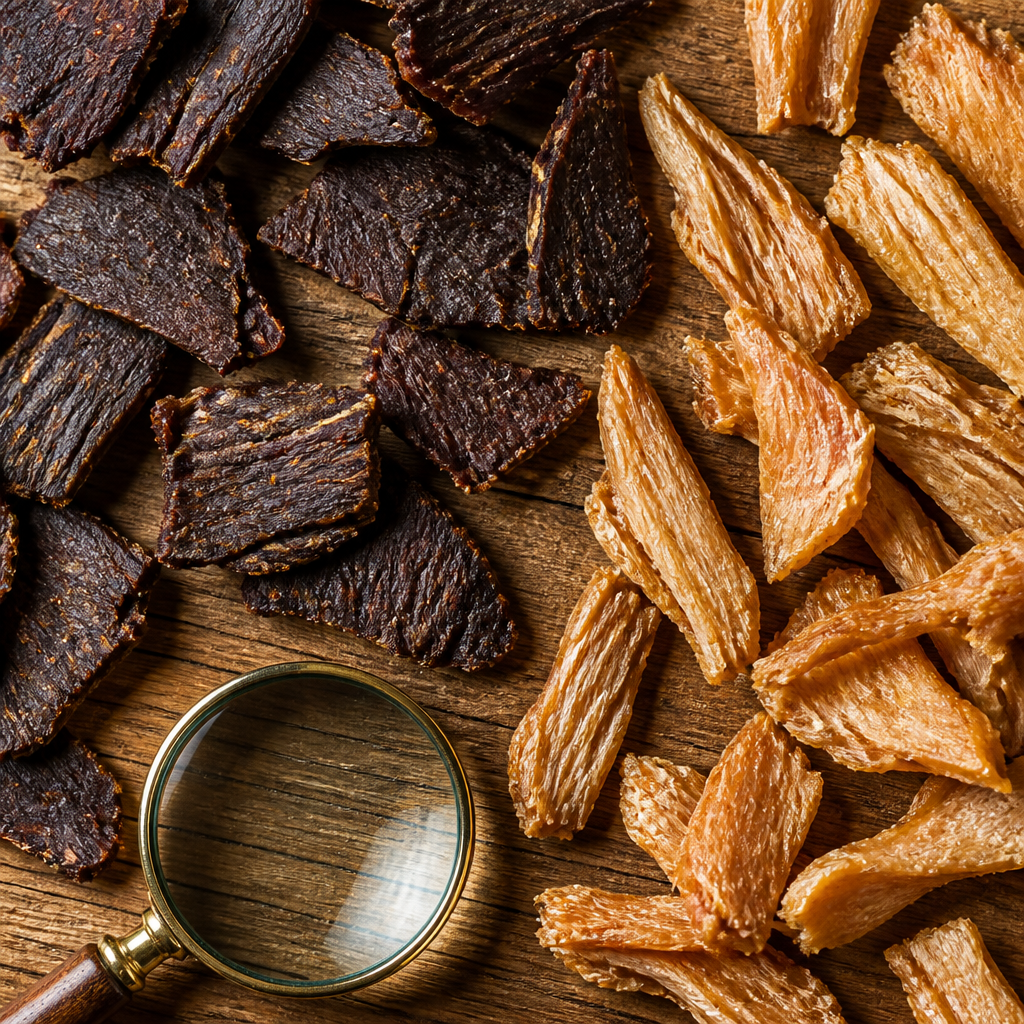
When a treat lists "beef" as the first ingredient, that ingredient is the heaviest component in the mix before processing. If something like "corn starch" or "sugar" appears early in the list, those fillers make up more of the treat by weight than you might expect from the branding. A genuinely nutritious treat will have a real, named protein source leading the way, with nothing unnecessary following it.
Watch out for what's known as ingredient splitting, where one cheap component (like sugar) is broken into multiple forms such as corn syrup, dextrose, and fructose to distribute its weight across the list and push it lower in ranking. Single-ingredient treats sidestep this completely because there is nothing to split.
Pro tip: If the ingredient list has more than eight or ten items, read every single one before you put the bag in your basket. The longer the list, the higher the chance of something unnecessary hiding near the middle.
The Healthy Pet Treats Checklist
Here's the practical checklist we'd run through ourselves before choosing any treat. Think of it as a quiet thirty-second quality scan you can do right there in the aisle or on a product page.
Check One: Is the Protein Named and Specific?
A quality treat will name its protein source clearly. "Beef," "chicken," or "turkey" are specific. "Meat," "animal protein," or "meat by-products (beef, poultry and/or lamb)" are not. That "and/or" language means the manufacturer can use whichever protein is cheapest at the time of production, so the content can vary between batches without any change to the label.
Named proteins signal that a producer knows exactly what went into each batch and is confident enough to say so plainly.
Check Two: Is the Ingredient List Genuinely Short?
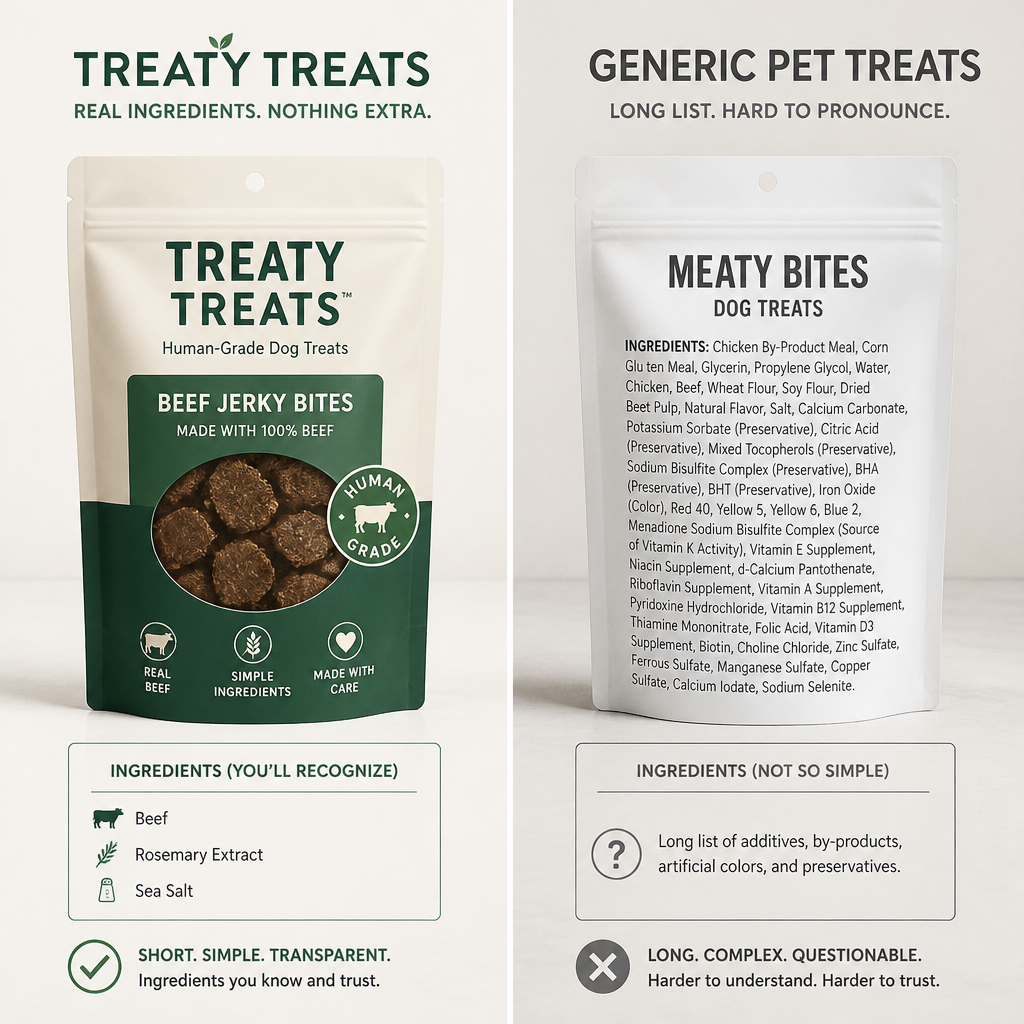
Fewer ingredients is almost always better for treats. A treat designed purely to deliver protein and nutrition doesn't need a long list of binders, emulsifiers, or flavour enhancers. If you see more than a handful of items and can't recognise half of them, that's a signal worth paying attention to.
Check Three: Are There Any Artificial Preservatives?
BHA, BHT, and ethoxyquin are synthetic preservatives used to extend shelf life in many commercial pet treats. Some pet owners prefer to avoid these entirely given concerns about cumulative exposure over a pet's lifetime. Natural preservation options, such as vitamin E (mixed tocopherols) or vitamin C (ascorbic acid), are gentler alternatives. Air-dried, low-moisture treats often don't require any preservatives at all because the drying process itself removes the moisture that bacteria and mould need to thrive.
Check Four: No Fillers Masquerading as Nutrition
Corn, wheat, soy, and excess starch can all appear in pet treats. These ingredients are not harmful in small amounts for most pets, but they do not contribute meaningful protein or micronutrients. In a high-calorie treat that takes up a large portion of your pet's daily food allowance, filler-heavy recipes mean your pet is getting less real nutrition per bite than the packaging might suggest.
Check Five: Is There a Guaranteed Analysis?
A guaranteed analysis lists the minimum percentages of crude protein and crude fat, plus the maximum levels of crude fibre and moisture. For a protein-forward treat, you want to see a high crude protein percentage. If this section is absent or vague, that's worth noting. Treats that are proud of their nutritional profile will show it clearly.
Pro tip: For air-dried or dehydrated treats, moisture content will be very low. That means the protein percentage on a dry-weight basis is often impressively high. If you compare it to a soft treat with 40-50% moisture, the dry treat's numbers will look very different. Always compare like for like.
Ingredients to Avoid in Pet Treats
Knowing what not to buy is just as useful as knowing what to look for. Here are the ingredients that are worth avoiding, along with a plain explanation of why each one raises a flag.
Artificial Colours and Flavour Enhancers
Colourings are added entirely for the benefit of the human buying the product, not the animal eating it. Dogs and cats don't care whether their treat is a vivid red or brown. Artificial colours like Red 40 or Yellow 5 add nothing nutritional and can cause sensitivities in some animals. Similarly, added "natural flavour" or "artificial flavour" often signals that the real protein content isn't enticing enough on its own.
Sugars and Sweeteners
Xylitol is toxic to dogs and should never appear in any treat. But even non-toxic sweeteners like cane sugar, molasses, or corn syrup contribute empty calories and encourage a preference for sweetness that doesn't reflect a natural diet. Look carefully for any form of sugar or syrup in the list, especially in soft or semi-moist treats.
Glycerin from Unknown Sources
Glycerin is commonly used to keep soft treats chewy and shelf-stable. It can be vegetable-based or petroleum-derived. While small amounts are not harmful, its presence signals a highly processed product. If the glycerin source isn't specified, it's worth pausing.
Vague Meat Descriptions
Terms like "meat meal," "animal digest," or "poultry by-products" without a named species attached are red flags for inconsistent sourcing. A producer who uses premium ingredients will name them specifically, every time.
Treat Types Compared: What Actually Delivers Nutrition
Not all treat formats are equal when it comes to nutritional integrity. The way a treat is made directly affects what survives to the finished product. Here's a straight comparison of the most common formats you'll find when shopping for dog treat quality in Australia.
| Treat Type | Nutritional Profile | What to Watch For |
|---|---|---|
| Air-dried single-ingredient | High protein, minimal processing, no added preservatives needed. Nutrients are well retained because low heat is used over a longer drying time. | Very little to watch for if the ingredient list is genuinely one item. Confirm the protein source is named specifically. |
| Soft or semi-moist treats | Higher moisture content means lower protein density per gram. Often require humectants, preservatives, or added sugars to stay shelf-stable. | Check for BHA, BHT, propylene glycol, glycerin, or multiple forms of sugar. These are common in this treat category. |
| Baked biscuit-style treats | Usually grain-based with a lower protein percentage. Can be fine as an occasional reward but shouldn't be the primary treat in a high-protein feeding routine. | Fillers like wheat flour, corn starch, and soy often appear early in the ingredient list. Protein sources, if present, may be secondary by weight. |
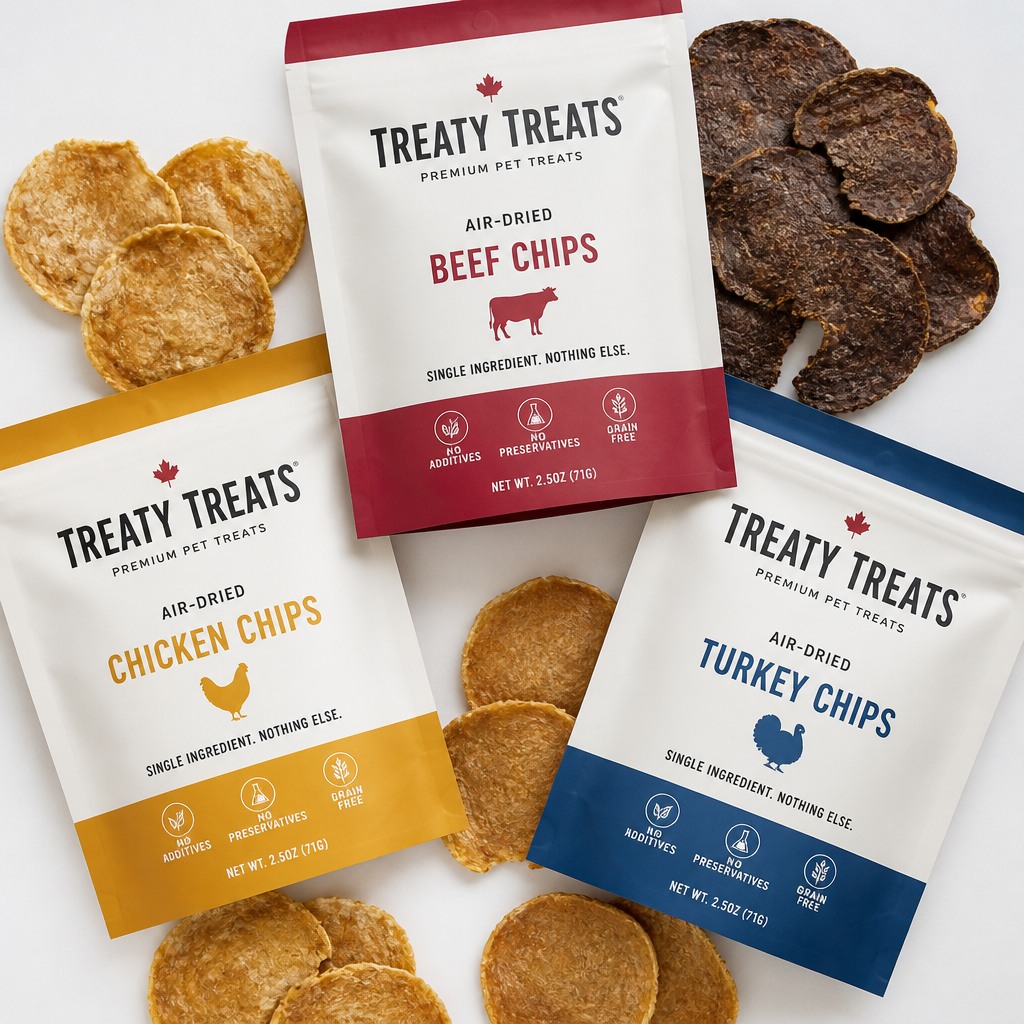
The clear winner for nutritional integrity in this comparison is the air-dried single-ingredient format. There's nowhere for poor ingredients to hide, no moisture stabilisation chemistry required, and the protein content speaks for itself. At Treaty Treats, our beef, chicken, and turkey chips are made using exactly this approach: one ingredient, air-dried in small batches, with nothing added. That's it.
A treat with one real ingredient and nothing else is the most honest product a pet food maker can offer. There's no room for shortcuts, and your pet gets exactly what the label says, every single time.
Treats for Sensitive Stomachs and Picky Eaters
If your dog or cat has a sensitive stomach, the treat conversation matters even more. Many digestive upsets in pets are traced back not to their main food, but to treats with multiple ingredients, artificial additives, or inconsistent protein sources. When you're managing a sensitive animal, simplicity is genuinely the safest approach.
Why Single-Protein Treats Help Identify Sensitivities
If your pet reacts to something in their diet, a single-ingredient treat makes it much easier to rule out the cause. If the treat contains only one named protein and no other inputs, you know immediately whether that protein is a trigger. With a multi-ingredient treat, identifying the culprit becomes much harder. Many Australian vets recommend single-protein treats specifically for pets undergoing elimination diet trials for this reason.
High-Protein Treats as a Training Tool
Treats used in training need to be genuinely appealing and small enough to use in volume. A high-protein, low-filler treat offers two advantages here: real meat flavour that motivates, and a calorie-dense profile that means your pet stays satisfied without overfeeding. You can use our Turkey Topper as a meal-time booster or break our chips into smaller pieces for training repetitions, keeping the ingredient profile clean throughout the session.
If you're exploring how to make treats work harder in your daily routine, our guide on common treat-giving mistakes covers some easy adjustments that make a real difference.
Pro tip: For pets with known food sensitivities, always introduce a new treat protein slowly, even a clean single-ingredient one. Offer a small amount for a few days and watch for any changes in digestion, coat, or energy before making it a daily staple.
Frequently Asked Questions
What makes a dog treat genuinely nutritious rather than just marketed as healthy?
A genuinely nutritious treat has a named protein source as the first and ideally the only ingredient, contains no artificial preservatives, colours, or flavour enhancers, and carries a guaranteed analysis showing a meaningful crude protein percentage. The marketing on the front of the pack doesn't make a treat nutritious, but the ingredient list on the back will confirm it quickly.
How do I know if a treat label is being honest with me?
In Australia, pet food labels are subject to the Australian Consumer Law, which prohibits misleading claims. This means the ingredient list must reflect actual contents, and any claim like "premium" or "organic" must be substantiated. Reading the full ingredient list rather than relying on front-of-pack language is the most reliable way to check for yourself. If the ingredients read like a chemistry lab experiment, that's a useful signal.
Are single-ingredient treats better for dogs with allergies?
Yes, single-ingredient treats are widely recommended for dogs with food allergies or sensitivities. Because there is only one input, it is straightforward to identify whether that protein is tolerated or not. Multi-ingredient treats make it much harder to pinpoint a reaction trigger because any one of the components could be the cause.
What are the worst ingredients to find in a pet treat?
Xylitol is genuinely dangerous and should never appear in a treat. Beyond that, synthetic preservatives like BHA and BHT, artificial colourings, vague meat descriptions without a named species, added sugars or syrups, and propylene glycol are all worth avoiding. The concern is not usually a single exposure but cumulative daily intake over a pet's lifetime.
How many treats can I give my dog or cat per day without disrupting their diet?
A common guideline is that treats should make up no more than around ten percent of a pet's total daily calorie intake, with their main balanced meal covering the rest. The exact number of treats depends on the calorie density of the treat and your pet's size, age, and activity level. With a high-protein, low-filler treat, even a small number of pieces delivers meaningful nutrition rather than empty calories, so quality matters here as much as quantity.
Does air-drying really preserve more nutrients than baking or cooking at high heat?
Air-drying uses lower temperatures over a longer period, which removes moisture without the intense heat that can degrade certain proteins and vitamins. The process concentrates the natural nutrients of the meat rather than cooking them away. It also removes the need for chemical preservatives because the very low moisture content makes the environment inhospitable for bacteria and mould. This is one of the main reasons we use air-drying at Treaty Treats for all our beef, chicken, and turkey chips.
Can cats eat the same single-ingredient treats as dogs?
Yes, provided the protein is appropriate and there are no added ingredients that cats cannot tolerate. Plain, single-ingredient air-dried meat treats made from beef, chicken, or turkey are suitable for both dogs and cats. Cats are obligate carnivores with an even higher protein requirement than dogs, so a genuinely meat-forward treat is actually well suited to their nutritional needs. Always check the feeding guidelines and portion sizes for your cat's weight and life stage.
We'd love to hear from you: what's the one thing on a treat label that always makes you put it back on the shelf? Share your experience in the comments below.
References
- How to read a pet food label and decode ingredients for your dog or cat (Pet Circle Australia)
- Australian pet food label requirements and packaging standards explained (Ofpack)
- How to read a dog treat label and spot low-quality ingredients (Farm Hounds)
- Pet food ingredient and label guide for dog owners (PetMD)
- How to read dog treat labels like a pro pet parent (Northern Biscuit)
Follow Us
Subscription Subscribe to our newsletter and receive a selection of cool articles every weeks

Real Talk & Tail Wags

dog treat enrichment ideas
Discover 5 practical dog treat enrichment ideas, from puzzle feeders to snuffle mats, that make treat time fun, rewarding and...

best dog treats Australia
Cheap dog treats can cause tummy upset, weight gain, and hidden costs. Learn what bargain snacks contain and how to...

dog treat transition guide
Switching dog treats naturally? Follow this gentle dog treat transition guide to avoid tummy trouble and keep your dog happy....


