
You flip over the bag of dog treats at the supermarket, squint at the ingredients list, and feel a quiet knot of worry form. Propylene glycol. BHA. Sodium metabisulphite. You know these things probably aren't great, but the label also says "natural flavour" and the dog on the packaging looks very happy. So you put the bag in the trolley and tell yourself it's probably fine. We get it, and we want to gently say: it might be time to look a little closer. Preservative free dog treats aren't just a feel-good marketing claim. The difference between preserved and unpreserved treats can genuinely affect your dog's long-term health, and once you understand why, you won't be able to un-see it on those labels.
Table of Contents
- Quick Takeaways
- What Are Preservatives in Dog Treats?
- Common Synthetic Preservatives and Their Risks
- How Preservative Free Treats Stay Fresh Naturally
- The Link Between Additives and Sensitive Stomachs
- Reading the Label: What to Look For
- Comparison: Conventional vs. Preservative Free vs. Single-Ingredient Treats
- Frequently Asked Questions
- References
Quick Takeaways
| Key Insight | Explanation |
|---|---|
| Synthetic preservatives carry real health concerns | Health issues linked to synthetic preservatives in dog treats include liver damage, cancer, cell damage, and digestive upset. This is not alarmism; it is the reason many health-aware owners are switching. |
| Air-drying is preservation without chemicals | A properly air-dried treat removes moisture to a level that inhibits bacterial growth, meaning no chemical assistance is needed to keep it shelf-stable. |
| Single-ingredient treats are the simplest check | If the only ingredient on the label is the meat itself, there is nowhere for hidden preservatives to hide. One ingredient means one thing. |
| Sensitive stomachs often respond to additives, not the protein | Dogs that react badly to standard treats frequently have no issue with the protein itself. It is often the synthetic preservatives and fillers causing the digestive upset. |
| Some preservatives are not required on the label | Preservatives added to individual ingredients before they reach the manufacturer may not need to appear on the finished product label. Choosing single-ingredient, batch-made treats sidesteps this issue. |
| "Natural flavour" does not mean preservative free | A treat can carry natural flavour claims while still containing synthetic preservatives. Always read the full ingredient list, not just the front-of-pack claims. |
| High-protein, no-additive treats support training too | Clean, high-value treats with no fillers are more motivating for training and better tolerated in repeated, small doses throughout a session. |
What Are Preservatives in Dog Treats?
Preservatives are substances added to food to slow spoilage, prevent mould growth, and extend shelf life. In the pet treat industry, they serve a very practical commercial purpose: products need to survive months on a warehouse shelf, then more months in a retail store, before they ever reach your dog. Without some form of preservation, most treats would not make it that far.
There are two broad categories. Natural preservatives include things like vitamin E (tocopherols) and vitamin C (ascorbic acid), which occur naturally in food and help prevent fats from going rancid. Synthetic preservatives are manufactured chemical compounds added specifically to prolong shelf life. The concern, as we will explore below, sits firmly in that second category.
It is also worth knowing that some preservatives added to raw ingredients before they arrive at a manufacturer may not need to appear on the finished product label. This is a genuine gap in transparency, and it is one reason why single-ingredient treats made from whole, unprocessed meat are a cleaner option. There is simply no ingredient chain long enough to hide anything in.
Common Synthetic Preservatives and Their Risks
If you have ever spent time reading dog treat labels, you have probably come across a few of these names. Here is what the research community and veterinary circles have said about them.
BHA and BHT
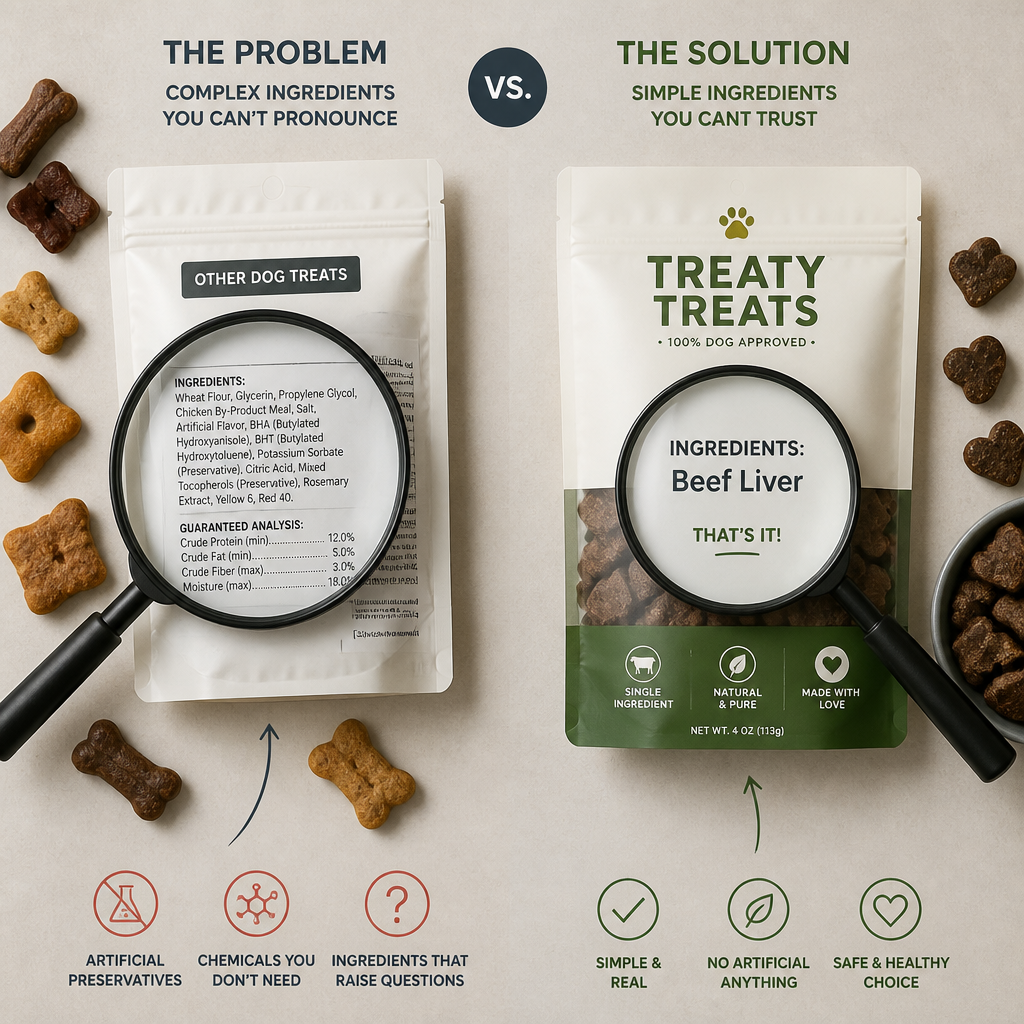
BHA (butylated hydroxyanisole) and BHT (butylated hydroxytoluene) are synthetic antioxidants widely used to prevent fats from going rancid. They are inexpensive and effective at extending shelf life, which is why they appear in so many commercial pet products. Artificial preservatives BHA and BHT are considered more likely carcinogens among the commonly used synthetic options, and concerned consumers have pointed to studies linking cancer risk with larger quantities consumed. While regulatory bodies have approved their use at specific limits, many health-conscious pet owners prefer not to take that gamble with their dog's daily treat.
Ethoxyquin
Ethoxyquin is a synthetic antioxidant that has been used in pet food and treats for decades. Veterinarians have raised concerns that it may be linked to skin problems, allergic reactions, kidney disease, and behavioural issues in pets. Notably, it has been banned in human food in a number of countries, yet it continues to appear in some pet products in parts of the world. It is most commonly found in products that include fish meal.
Propylene Glycol
Propylene glycol is added to soft, moist dog treats to retain their chewy texture and inhibit bacterial growth. It tastes slightly sweet, which dogs tend to like. However, propylene glycol reduces the moisture in the gut environment that healthy bacteria need to do their job. Ongoing concerns link it to cancerous lesions and intestinal blockages in dogs. It has been prohibited in cat food in many jurisdictions, yet it can still surface in dog treats.
Sodium Metabisulphite and Other Sulphites
Sulphites are preservatives that can trigger allergic reactions and are known to destroy thiamine (vitamin B1) in food, which is an essential nutrient for dogs. They are commonly used in semi-moist treats and some jerky-style products. A few health-related issues that have been linked to synthetic preservatives in dog treats more broadly include liver damage, cancer, cell damage, damage to the circulatory and nervous systems, and digestive upset, including diarrhoea and inflammation.
"The dehydration process is the preservation method. Additives are not needed and should not be present." A clear, practical reminder that clean preservation is possible without a single chemical on the label.
Pro tip: When you scan an ingredient list, search for BHA, BHT, ethoxyquin, propylene glycol, and sodium metabisulphite first. If any of those appear, put the bag back. Your dog's liver will thank you.
How Preservative Free Treats Stay Fresh Naturally
Here is the good news that does not get said loudly enough: you do not need synthetic chemicals to keep a meat treat safe and shelf-stable. The method is simpler and older than any lab-made compound, and it is the same method used at Treaty Treats.
Air-drying is a gentle preservation method that slowly removes moisture from raw ingredients using controlled airflow and low heat. Unlike traditional baking or extrusion, which use extreme temperatures that can destroy natural nutrients, air-drying keeps the nutritional profile of the meat largely intact. The result is a shelf-stable product that retains far more of its original vitamins, amino acids, and protein structure.
The science behind it is straightforward. Bacteria, mould, and yeast all need water to grow and spoil food. When moisture is removed to the right level, microbial growth simply cannot happen, and no chemical assistance is needed. A well-dried treat at the correct moisture level can remain shelf-stable for a year or more without any chemical assistance. The drying process itself is the preservation.
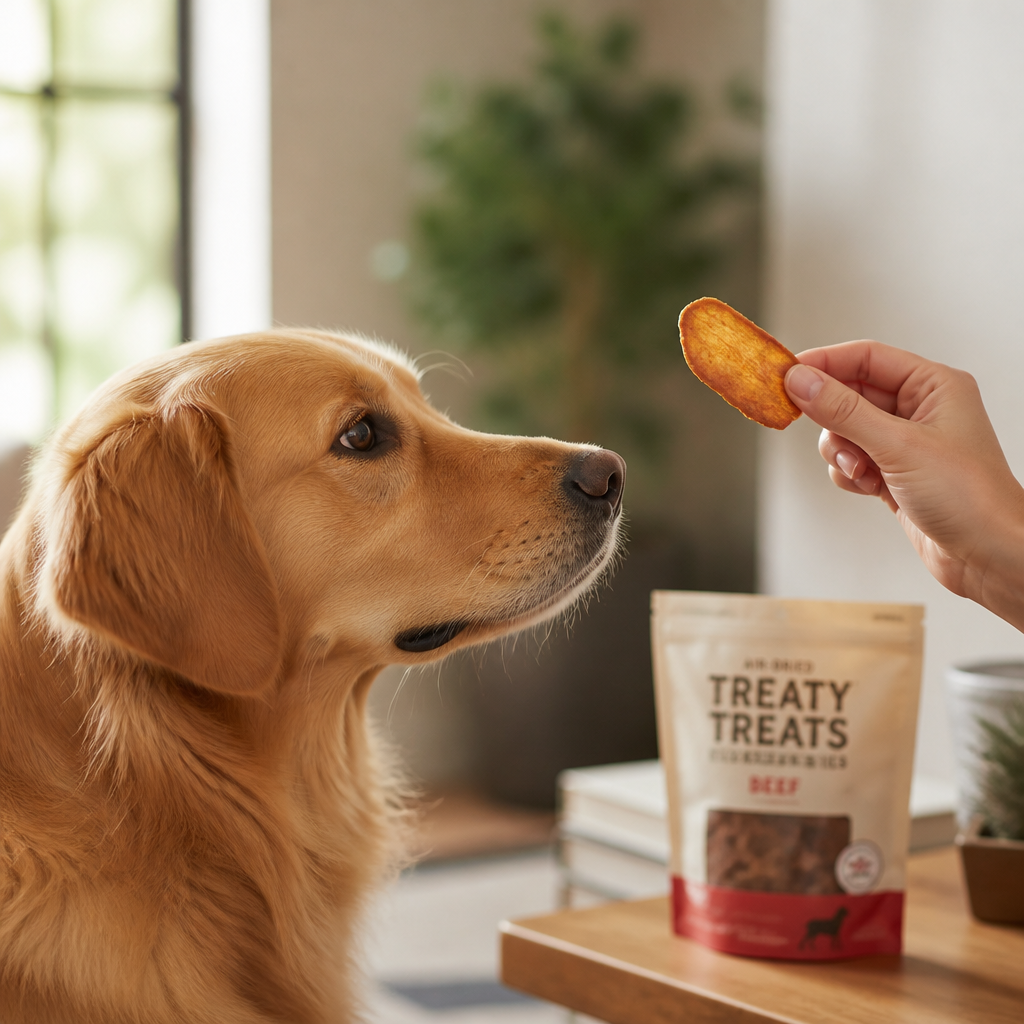
Unlike high-heat cooking or extrusion (the process used to make most kibble and many conventional pet treats), air-drying uses temperatures low enough to preserve enzymatic activity, vitamins, and amino acid structures. The result is a treat that is nutritionally closer to fresh meat than most people expect from something sold in a bag.
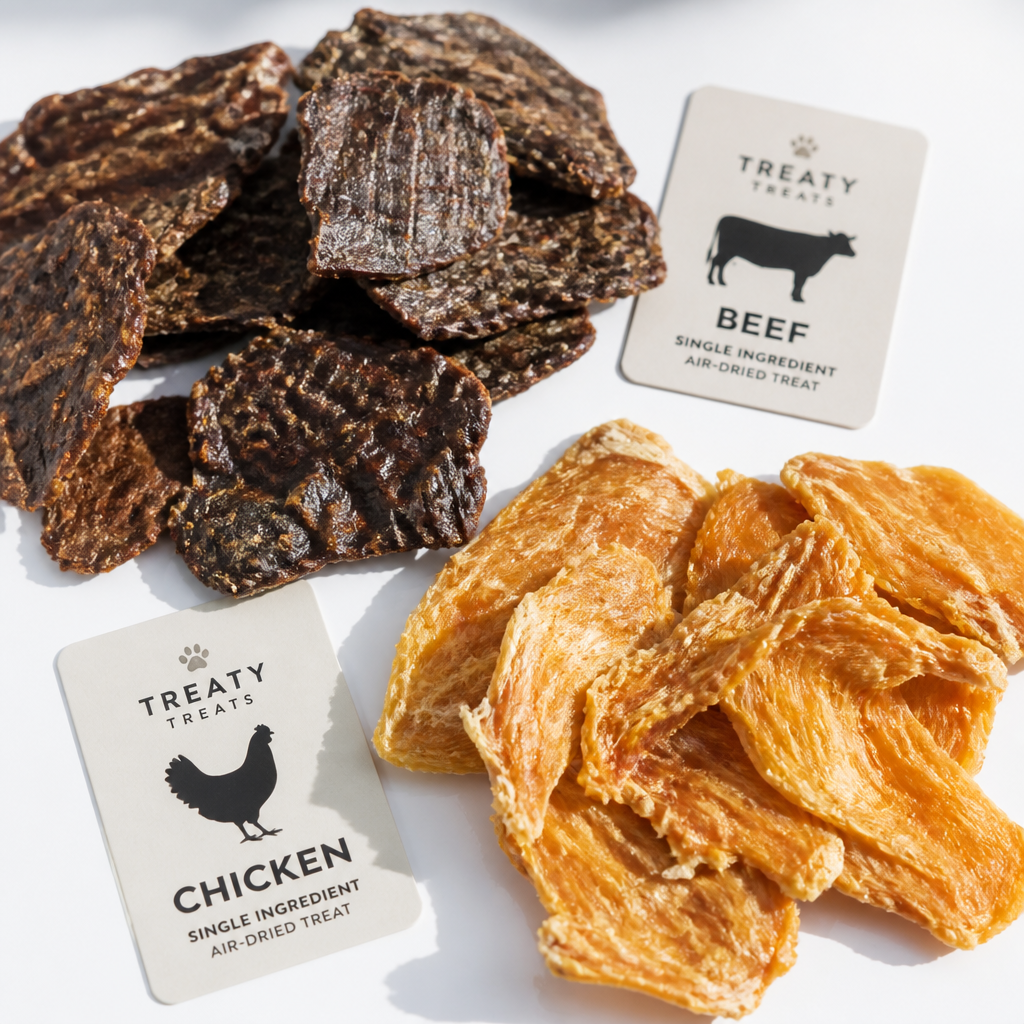
At Treaty Treats, every batch of beef, chicken, and turkey chips is air-dried in-house. There are no outsourced manufacturing shortcuts, no added preservatives, and no fillers to compensate for lower-quality ingredients. What goes in is single-ingredient meat. What comes out is a naturally crunchy, high-protein treat that stays fresh because of how it was made, not because of what was added.
Pro tip: Once you open a bag of preservative free, air-dried treats, store them in a cool, dry place with the bag resealed or in an airtight container. Because there are no synthetic preservatives extending the shelf life after opening, good storage habits keep your treats at their best.
The Link Between Additives and Sensitive Stomachs
If your dog has a sensitive stomach, you have probably been through the elimination game. You try one treat, they get runny stools. You try another, they get itchy skin. It is exhausting, and it is easy to conclude that your dog just has a complicated system. But often, the culprit is not the protein. It is what came along with it.
Low-quality ingredients, including chemical preservatives and artificial additives, frequently cause problems for dogs with delicate digestive systems. The unnatural compounds in synthetic preservatives can trigger digestive upset, inflammation, diarrhoea, and food allergies. So a dog that seems to react badly to chicken treats is not necessarily reacting to the chicken. They may be reacting to the BHA, the propylene glycol, or the half-dozen other additives sharing that ingredient list.
This is why no additives dog treats are often the first recommendation for dogs with known sensitivities. When the treat is a single ingredient, there is nothing to react to except the protein itself. If that goes well, you know the protein is fine. If it does not, you have one clear variable to work with. That kind of clarity is genuinely helpful when you are trying to figure out what works for your pet.
Single-ingredient air-dried meat treats are also particularly well-suited for training use with sensitive dogs. Because they are small, dense, high-value, and free from anything that could upset the gut, you can use them repeatedly throughout a session without worrying that you are loading your dog up with additives. Clean treats, repeated often, with no digestive aftermath. That is the sweet spot for training.
Reading the Label: What to Look For
Reading pet food labels gets easier once you know what you are looking for. Here is a practical guide to spotting clean dog treats Australia pet owners can actually trust.
The Shorter the List, the Better
A single-ingredient treat should have exactly one ingredient: the meat. Beef. Chicken. Turkey. Full stop. If the list runs to ten items and you cannot pronounce half of them, that is a signal to keep looking. Genuine single-ingredient treats do not need bulking agents, flavour enhancers, or chemical stabilisers.
Watch for Vague Terms That Hide Additives
Terms like "natural flavour," "mixed tocopherols," and "rosemary extract" are not necessarily harmful, but they are also not the same as a clean, transparent ingredient list. Some of these are used legitimately as natural preservatives. Others are used to dress up a product that contains far less wholesome things alongside them. Read past the front-of-pack claims and go straight to the ingredient panel.
Country of Origin and Manufacturing
Australia has specific standards for pet food manufacture, but not all treats sold here are made here. Some are imported from regions with different regulatory requirements around preservatives and additives. Batch-made, in-house production with local oversight, like what Treaty Treats does, removes that uncertainty entirely.
Human-Grade Ingredients
When a treat is made from human-grade meat, it means the ingredient met the standards required for human consumption before it became a pet product. This is a meaningful quality signal. Ingredients that would not pass human food inspection are far more likely to require heavy preservative treatment to mask quality issues. Human-grade ingredients generally do not need that kind of propping up.
Comparison: Conventional vs. Preservative Free vs. Single-Ingredient Treats
| Feature | Conventional Commercial Treats | Preservative Free Multi-Ingredient Treats | Single-Ingredient Air-Dried Treats (e.g. Treaty Treats) |
|---|---|---|---|
| Preservatives present | Often yes, including BHA, BHT, propylene glycol, sulphites | No synthetic preservatives, but may use natural ones | None. Air-drying is the preservation method |
| Ingredient transparency | Low. Long ingredient lists with vague terms | Medium. Cleaner, but multiple ingredients still present | Highest. One ingredient, nothing hidden |
| Suitability for sensitive stomachs | Poor. Multiple potential triggers in one treat | Better than conventional, but still some variables | Best. One protein source means one clear variable |
| Nutritional integrity | Low. High-heat processing destroys nutrients | Varies by processing method | High. Low-heat air-drying preserves protein, vitamins, and amino acid structure |
| Training suitability | Adequate for short sessions but may cause digestive upset with repeated use | Good for most dogs | Excellent. High-value, clean, suitable for extended training sessions |
| Human-grade ingredients | Rarely | Sometimes | Yes, at Treaty Treats |
Frequently Asked Questions
Are preservative free dog treats actually safe without added chemicals?
Yes, absolutely. Air-dried and dehydrated treats are preserved through the removal of moisture, not through chemical additives. When moisture is reduced to the correct level, bacteria and mould cannot grow. A well-made air-dried treat can be shelf-stable for a year or more with no chemical help. The key is that the drying process must be done properly, which is why batch-made, in-house production matters.
How do I know if a dog treat really has no preservatives?
The most reliable signal is a single-ingredient product made from a named whole protein, such as beef, chicken, or turkey. With only one ingredient, there is no place for synthetic preservatives to hide. For multi-ingredient treats, look for transparency from the manufacturer about their production process. Brands that make treats in-house and in small batches tend to have much greater control and visibility over what goes into every batch.
Can preservatives in dog treats cause allergies?
They can, yes. The unnatural compounds in synthetic preservatives can trigger digestive upset, inflammation, diarrhoea, and food allergies in dogs. If your dog reacts to certain treats but does fine with plain cooked meat, synthetic additives and preservatives in those treats are a very reasonable place to look. Switching to a single-ingredient, preservative free treat often helps clarify whether the protein or the additives were the problem.
Do preservative free dog treats have a shorter shelf life?
They typically have a shorter shelf life than heavily preserved commercial treats, but a well air-dried product can still remain stable for a meaningful period when stored correctly. Keep opened bags sealed and stored in a cool, dry spot, away from direct sunlight. Treat them the way you would treat a quality dried food product for yourself, and they will stay in great condition.
Are single-ingredient air-dried treats good for training?
They are one of the best options for training, especially with sensitive dogs. They are small enough to use in high repetition, high-value enough to hold a dog's attention, and clean enough to use throughout a long session without causing digestive upset afterward. Because there are no fillers, you are not loading your dog with empty bulk between rewards. Every small piece delivers real protein and real nutritional value.
What is the difference between air-dried and dehydrated dog treats?
The two processes are closely related. Both remove moisture to create a shelf-stable product without chemical preservatives. Air-drying typically uses gentle airflow at low temperatures over a longer period, while dehydration may use slightly higher temperatures over a shorter time. Both, when done well, preserve far more nutritional value than baking or extrusion. The important thing is that neither requires synthetic preservatives to work.
Why do some "natural" dog treats still contain preservatives?
The word "natural" on a pet product label is not a regulated term the way "organic" is. A treat can use natural flavour claims and still contain synthetic preservatives. Additionally, preservatives added to individual ingredients before they reach the manufacturer may not always appear on the finished product label. The safest way to avoid this ambiguity entirely is to choose single-ingredient treats with a fully transparent ingredient list and a manufacturer who makes the product in-house.
We would love to hear from you. Has switching to preservative free treats made a difference for your dog? Share your experience in the comments below.
References
- Whole Dog Journal overview of artificial preservatives in dog food and how to identify them on labels
- Grubby Farms guide to harmful synthetic preservatives and filler ingredients found in commercial dog treats
- Australian breakdown of common chemical preservatives in dog treats and why avoiding them supports long-term pet health
- Farm Hounds explanation of how dehydration acts as a natural preservation method without chemical additives
- Plato Pet Treats honest guide to how air-drying works and why it preserves nutrients without synthetic preservatives
Follow Us
Subscription Subscribe to our newsletter and receive a selection of cool articles every weeks

Real Talk & Tail Wags

dog treat enrichment ideas
Discover 5 practical dog treat enrichment ideas, from puzzle feeders to snuffle mats, that make treat time fun, rewarding and...

best dog treats Australia
Cheap dog treats can cause tummy upset, weight gain, and hidden costs. Learn what bargain snacks contain and how to...

dog treat transition guide
Switching dog treats naturally? Follow this gentle dog treat transition guide to avoid tummy trouble and keep your dog happy....


