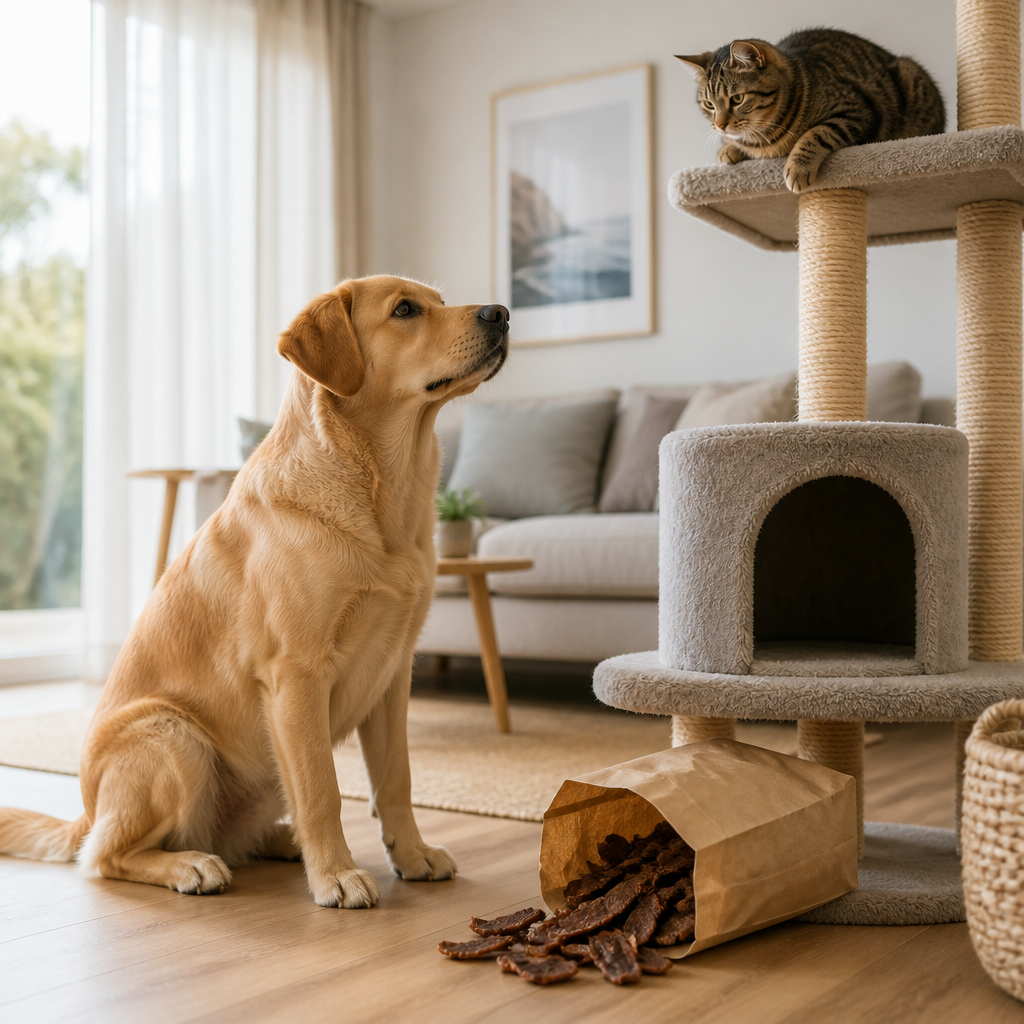
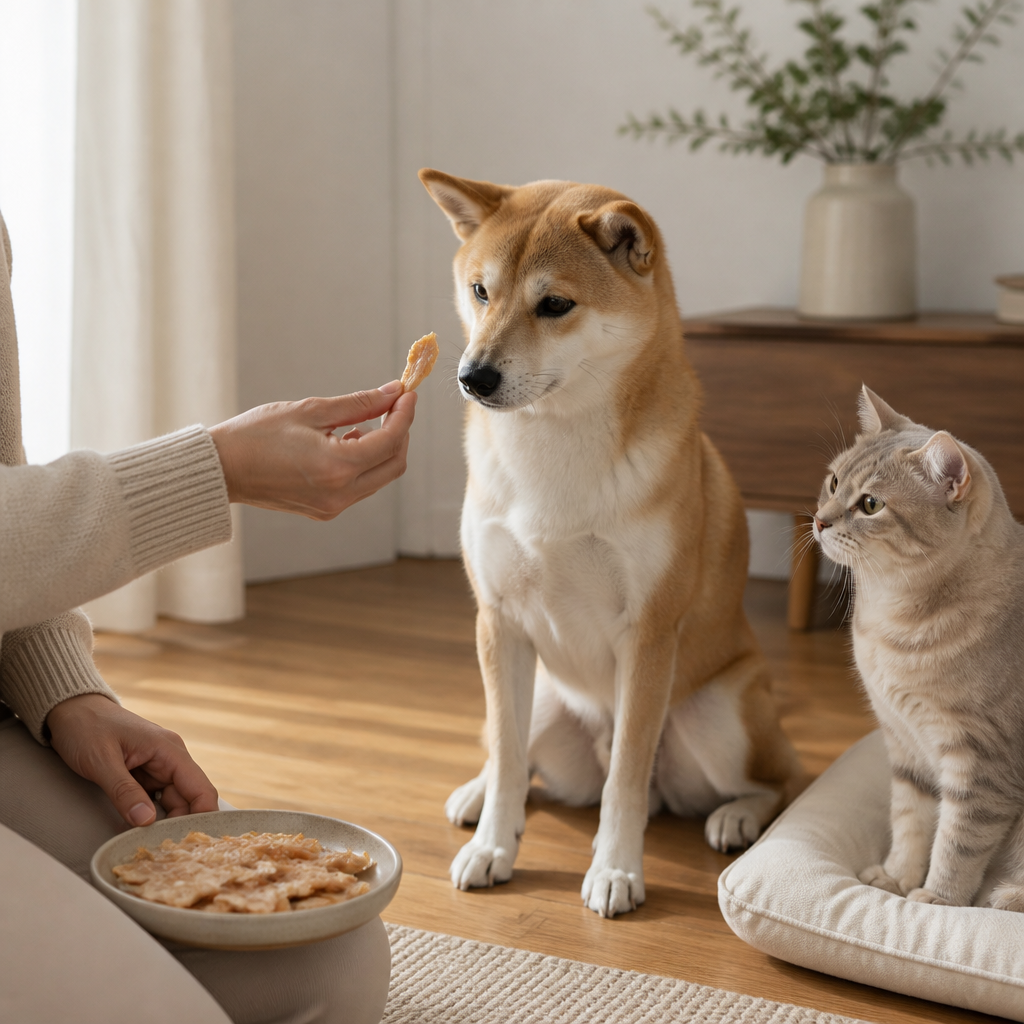
Picture this: your curious Labrador is sitting right beside the cat tree, staring at a treat bag while your cat watches from the top shelf with total disdain. Treat time can quickly turn into a small negotiation. If you're trying to find treats for dogs and cats that suit both of them, you're definitely not alone, and it's very fixable. With a few simple habits, both pets can enjoy a reward they love, without the mix-ups, the stolen snacks, or one pet feeling left out.
Table of Contents
- Quick Takeaways
- Why One Treat Does Not Fit Both
- Feeding Routines That Work
- Choosing Treats for Each Pet
- Keeping Treats Separate
- Training With Treats for Both Pets
- Portion Control and Weight
- Spotting Trouble Early
- Frequently Asked Questions
- References
Quick Takeaways
| Key Insight | Explanation |
|---|---|
| Choose treats built around animal protein | Cats are obligate carnivores, so meat-first treats suit both pets better than veggie-heavy options. |
| Size treats for the smallest pet | Pick a chip or piece that your cat can chew comfortably, then let your dog enjoy the same size. |
| Give each pet a separate feeding spot | Distance and privacy cut down on guarding, stealing, and rushed eating. |
| Keep treats above counter height or behind a barrier | Dogs can't reach the top shelf, and cats can use vertical space safely without pilfering from the dog bowl. |
| Count every treat in the daily total | Two pets means twice the chances for extra calories, so trim the main meal to match. |
| Reward the quiet pet too | The shy or senior pet often gets overlooked, so schedule a little one-on-one treat time for them. |
Why One Treat Does Not Fit Both
It's tempting to grab one bag and hand out the same thing to everyone, and honestly, most of us do that at first. The trouble is that dogs and cats have quite different nutritional needs. Cats are obligate carnivores, which means they rely on animal-based nutrition to stay healthy, while dogs are more flexible eaters.
Cats Need Animal-First Rewards
That's why we keep our own range built around single-ingredient, air-dried meat. A cat doesn't need carrots or green beans to be happy, and a treat with a long list of plant fillers can feel like a bit of a letdown to them. For a cat, a crunchy piece of real chicken or beef is usually the reward they'll remember.
Dogs can happily enjoy that same meat-based chip, and many also love the occasional vegetable. A veterinary clinic's guidance on healthy treats lists carrots, green beans, and cucumber as examples of pet-friendly vegetables, but that list is aimed at dogs. Cats are meat-focused eaters, so veggie add-ins are rarely the right reward for them.
Size and Texture Are Not Interchangeable
Size matters more than most people expect. A treat that's a satisfying crunch for a medium dog can be too large or too hard for a small cat to chew comfortably. In practice, the safest habit is to choose treats sized for the smallest pet in the house, then break larger pieces into smaller bites for your dog if needed.
Texture matters too. Some dogs gulp down hard treats whole, which is a problem for a cat who wants to nibble slowly. Air-dried chips are a nice middle ground because they're light, crisp, and easy to portion.
Pro tip: Before you buy a new treat, check whether the first ingredient is a single animal protein. Simple labels make it much easier to share treats safely between two very different eaters.
Shared treats work best when they are simple enough for both pets to enjoy, and they never replace a balanced main diet.
Feeding Routines That Work
If you've ever watched a dog inhale a cat's breakfast in four seconds flat, you know how quickly treat time can turn into a free-for-all. Good news: a few routine changes can calm things down quickly. Most of the drama in multi-pet homes comes from pets who don't know what to expect, so predictability is your best friend.
Give Each Pet Their Own Feeding Spot
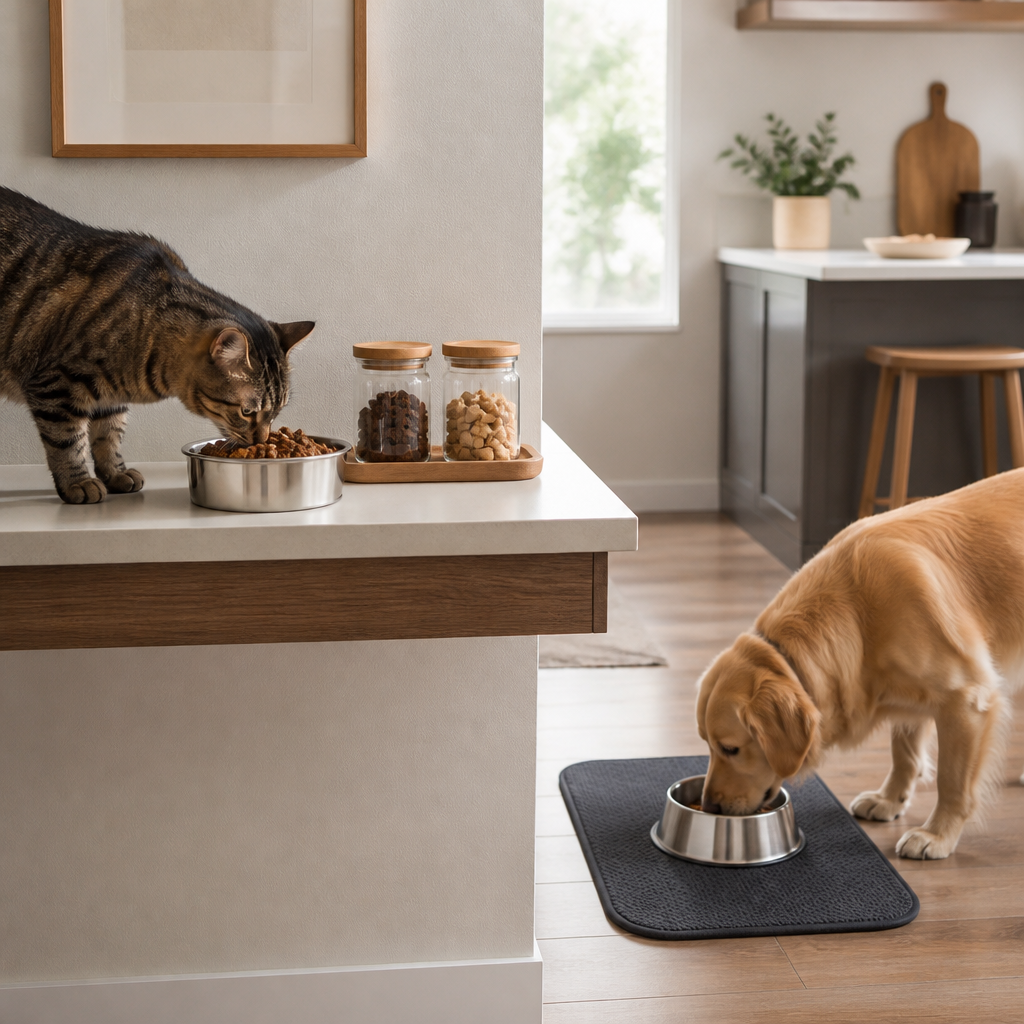
Separate feeding stations are one of the easiest fixes you can make. Put the dog's bowl in one room and the cat's in a quieter corner, ideally where the other pet can't see or smell it. This cuts down on guarding and stops the dog from wandering over to the cat's dish after the cat has left.
When a cat eats in peace, they're less likely to rush, and a cat that isn't rushing is far less likely to hide food or wander away with a treat. Keep the spots consistent every day, so both pets learn where their food lives.
Build a Predictable Treat Schedule
Animals are creatures of habit, and multi-pet households run smoother when treats happen at predictable times. Try giving the dog a treat after a walk and the cat a treat during a set evening window. When both pets know what's coming, there's less begging, less jumping, and less stress for everyone.
A simple rhythm also makes it easier to notice when someone is getting more than their share. Write it on the fridge if that helps. You've got this, and a visible routine takes the guesswork out of it.
Choosing Treats for Each Pet
You have a few sensible options when it comes to treats for dogs and cats in the same home. Some households keep one shared treat for both pets, while others buy species-specific lines and store them in separate places. There's no single right answer, but the comparison below should help you decide which approach fits your home.
Single-Ingredient Treats Are Easier to Share
Shared treats are the simplest option when they're made from one ingredient. You don't need to read two different ingredient lists or worry about a dog accidentally getting a cat-specific formula with added extras. Single-ingredient, air-dried meat is a good example, because it's clean, predictable, and easy to size for both pets.
The main thing to watch is portion size. Even a healthy shared treat adds up when two pets are getting it, so keep the amount small and consistent for both.
Comparing Three Approaches
Here's how the most common options stack up for a typical mixed household with one dog and one cat.
| Approach | How It Works | Best For |
|---|---|---|
| Shared single-ingredient treats | One simple meat-based treat is offered to both pets, sized for the smaller animal. | Busy households that want one bag, one rule, and fewer mix-ups. |
| Species-specific treats kept apart | Dog treats and cat treats are stored separately and offered only to the matching pet. | Homes where one pet has a sensitive stomach, a weight goal, or a strict diet plan. |
| Dog-only vegetable extras | Plain carrot, green bean, or cucumber pieces are offered to the dog, while the cat gets meat-based rewards. | Dogs who enjoy crunchy produce and households that want a lower-calorie option for the dog. |
For most homes, the shared single-ingredient approach is the easiest win. If one pet has a medical need, separating the treats is the safer call, and your vet can help you decide which treats fit.
Keeping Treats Separate
Storage is where many multi-pet households quietly lose the battle. A treat jar on the bottom shelf is an open invitation for a determined dog, and a cat who figures out a cupboard latch can be just as creative. A few simple setup changes solve most of this without any stress.
Use Height and Barriers
Store treats above counter height in a sealed container, and keep the dog's and cat's bags in different places if you can. Dogs can't reach a high shelf, and cats are often happy to use vertical space as long as they're not climbing over the dog's bowl to get there. A baby gate or closed cupboard door can help if your cat is a determined climber.
Clear containers with lids are useful, but make sure the lids seal well. Air-dried treats stay crisp longer in a sealed jar, and a loose lid can make the treats taste stale quickly.
Watch for Stolen Snacks
Stolen snacks are rarely a dog's fault alone. Often the cat has left a half-eaten treat on the floor, or the dog has learned that the cat's dish is an easy target. Pick up leftovers after each session, and don't leave treats lying around for either pet to claim.
If you spot a pattern, such as the dog always heading straight for the cat's corner, move that station. Small adjustments like these usually end the drama faster than any training trick.
Training With Treats for Both Pets
Training is one of the best reasons to keep treats handy, but it can get messy when a dog and a cat are both trying to learn at once. The good news is that both pets can learn from treats, provided you structure the sessions with care. Keep the rewards small, the sessions short, and the pets in separate spaces when possible.
Keep Sessions Short for Each Learner
Dogs usually enjoy longer training sessions than cats do, but a cat's focus can disappear quickly. Try five-minute bursts for the cat, with one clear behavior at a time, such as coming to a name or sitting on a mat. Save the longer dog sessions for when the cat is resting or in another room.
Cats also respond well to a click or a soft word paired with a small piece of meat-based treat. Keep each reward tiny, because a few crumbs go a long way for a cat who's watching their weight.
Reward the Calm Pet, Too
Training often rewards the most active pet, which means the calm dog or the quiet cat can end up with nothing. Make a point of rewarding relaxed behavior, like lying on a bed while the other pet trains. This teaches both pets that calm is worth something, and it keeps the house more peaceful.
Use treats to reinforce good manners around each other, such as a dog walking past a cat without chasing. Give the reward while both pets are still calm, not after a chase has started. That's the moment that builds real progress.
Portion Control and Weight
Extra treats are one of the most common ways a pet slowly gains weight without anyone noticing. In a home with two pets, the math gets easier to forget. Each pet might only get a few pieces, but those pieces add up across the day, especially when they're shared between a busy dog and a cat who's always hanging around the kitchen.
Count Treats in the Daily Total
Treat portions should be part of the daily food plan, not an extra on top. If your dog gets a few chips after a walk, reduce the main meal by a similar amount. The same goes for the cat. This simple habit keeps the total intake steady and makes weight changes easier to spot.
A practical tip is to set aside a small container of treats each morning. Once it's empty, the treats are done for the day, which removes the guesswork from every extra "just one more."
Keep an Eye on the Quieter Pet
The pet who begs the loudest often gets the most treats, and the quiet pet can end up eating less than they need or more than they should. Notice who is getting what, and check in with the less vocal animal. A cat who suddenly becomes a stealthy snack hunter may be getting bored or hungry, and a quick look at their routine can help.
Weigh your pets now and then, or check body condition at home, so you're not relying on guesses. Small changes early are much easier than a big change later.
Spotting Trouble Early
Most treats are a happy addition to a pet's day, but not every treat suits every animal. Sensitive stomachs, food sensitivities, and dental issues can all show up after a change in treats. The sooner you notice, the easier it is to adjust without stress for either pet.
Signs a Treat Is Not Agreeing With a Pet
Watch for soft stools, vomiting, itchy skin, or a pet who suddenly turns away from treats they used to love. Changes in appetite or energy are worth noting too. Keep a simple note of which treat was introduced and when, so you can connect the dots if something goes wrong.
Introduce any new treat slowly, with a few pieces at a time for both pets. Waiting a few days between new treats makes it much easier to tell which one caused a reaction.
When to Call Your Vet
Call your vet if symptoms continue, if your pet seems unwell, or if you're unsure which treats suit a pet with a medical condition. Bring the packaging with you so the vet can check the ingredients. Your vet knows your pets' histories, so they're the best person to advise on a diet change for an animal with special needs.
Pro tip: Keep a shared treat log on your phone for two weeks after any new introduction. Note the date, the treat, and how each pet responded. It's a small habit that makes vet visits much more useful.
Frequently Asked Questions
Can I give my dog and cat the same treats?
You can, as long as the treat is simple, made from a single animal protein, and sized for the smaller pet. Many households share a basic meat-based chip without any trouble. Keep the portions small and count them in each pet's daily food.
Why does my cat ignore vegetable treats?
Cats are meat-focused eaters, so vegetables usually don't appeal to them much. Dogs are often more open to produce like carrots or green beans. If your cat turns up their nose at veggies, that's normal, and a meat-based treat is usually a better reward for them.
How do I stop my dog from stealing the cat's treats?
Start by giving each pet a separate feeding spot and picking up any leftover treats right away. Move the cat's station somewhere the dog can't easily reach, and consider a baby gate. Reward your dog for leaving the cat's space alone, and be patient, because habits take a little time to shift.
Are treats safe for a senior cat and a young dog in the same house?
Often they can share simple treats, but you may need to adjust the size and texture. Senior pets may have dental or digestive changes, so softer or smaller pieces can be easier. If you're unsure, check with your vet before sharing a treat with an older or unwell pet.
How many treats should each pet get in a day?
Treats should be a small part of the overall daily food plan, not an extra on top of it. Your vet can help you work out the right amount for each pet based on age, size, and activity level. Once you have that number, count every treat toward it, including the ones given during training.
Have you found a treat routine that keeps both of your pets happy? We'd love to hear what's worked in your home, and what hasn't.
References
Follow Us
Subscription Subscribe to our newsletter and receive a selection of cool articles every weeks

Real Talk & Tail Wags

artificial additives dog treats
Find out what artificial additives in dog treats do inside your dog's body, from digestion to the liver, and how...

dog socialisation treats
Learn how to use treats to help your dog socialise with other pets and strangers, with calm, step-by-step tips from...

cost of pet treats Australia
Wondering if premium pet treats are worth the cost in Australia? Learn how to compare price per kilo, budget smarter...